The Napoles and Campania Delegation of the Sacred Military Constantinian Order of Saint George organizes, in eleven Thursdays, from May 28, 2026 to April 15, 2027, the Second Constantinian Formation Course dedicated to the history, spirituality, and aims of the Order.
The Course is specifically dedicated to new Knights, postulants, and those who wish to approach the Order, so that they may be formed and “always ready to give an account to anyone who asks you for a reason for the hope that is in you. But do this with gentleness and respect, keeping a good conscience, so that, when you are slandered, those who revile your good conduct in Christ may be put to shame” (cf. 1 Pt 3:15-16).
Moreover, participation in the Course is recommended for Knights and Dames already part of the Order, who will find here suggestions and information that may be of interest and use to them.
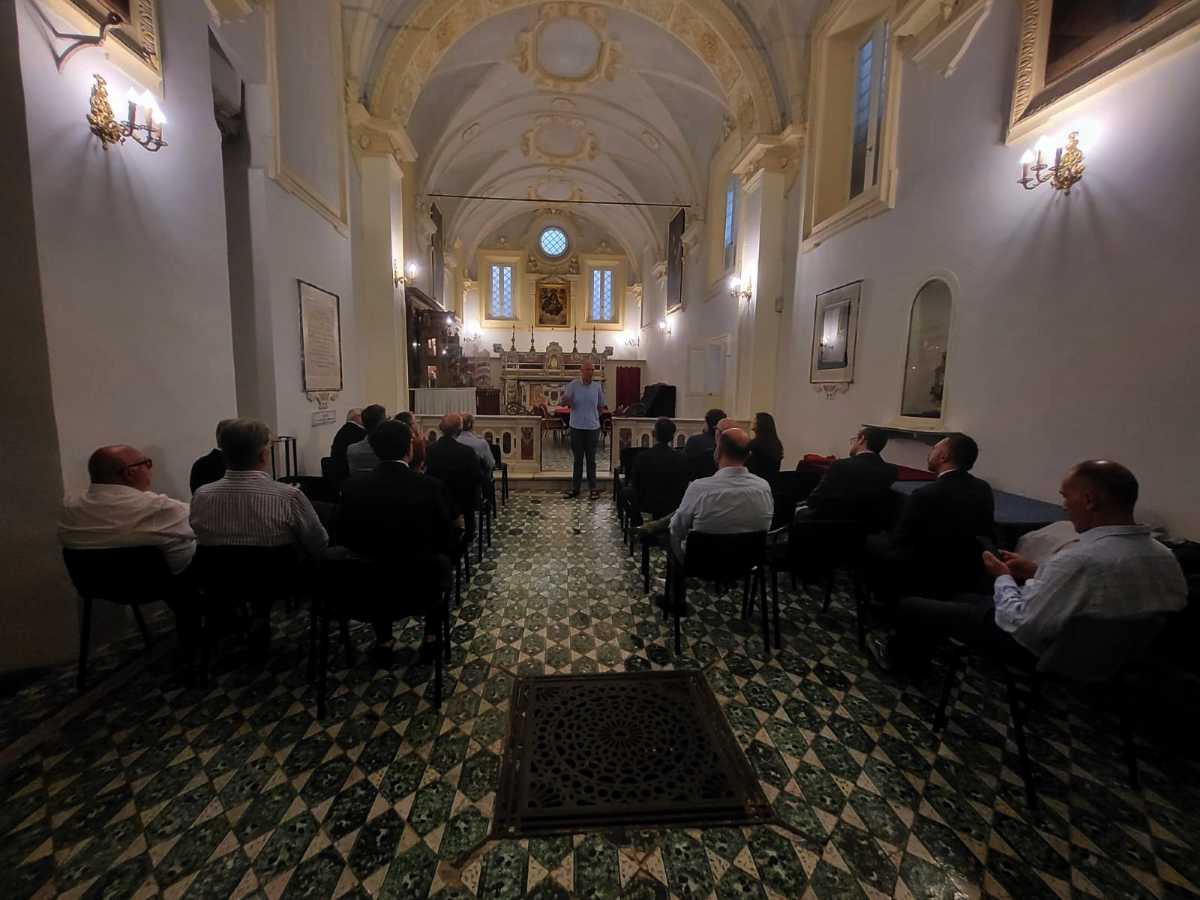
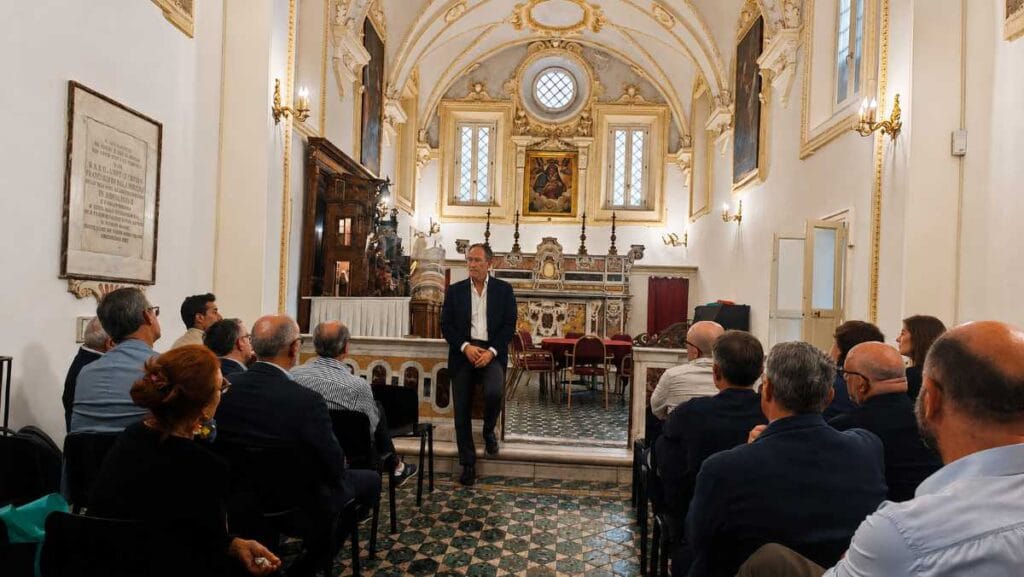
The second gathering – religious-spiritual – took place on Thursday, June 25, 2026 at 6:00 p.m. in a Chapel in the Basilica of San Giovanni Maggiore, home to the Constantinian Grand Magistral Chapel in Naples, Italy, at the former Oratory of the Confraternity of the 66 Priests (Rampe San Giovanni Maggiore/Largo San Giovanni Maggiore).
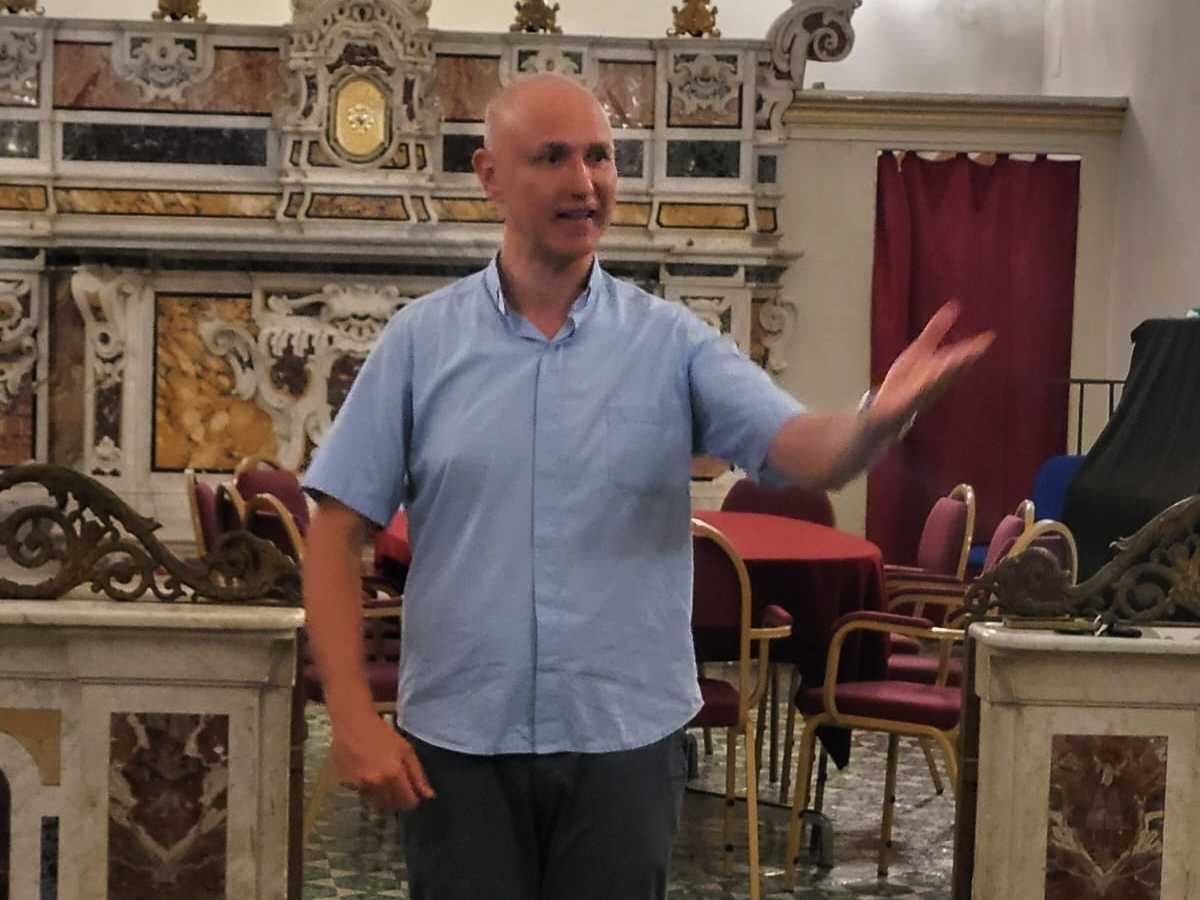
The second gathering was led by the Parish Priest of San Giovanni Maggiore, Father Salvatore Giuliano, Chaplain of Merit, who guided the participants in a reflection on the meaning of the Christian knightly vocation and the path of Faith that every Knight and Dame is called to live as an authentic testimony of the Gospel.
Formation is a fundamental aspect to operate the good better, in an ancient Order, with a spirit and tools ever new, ready to respond to the needs of the times.
Formation constitutes, in fact, one of the foundational pillars of the Order’s life. Only through constant personal, cultural, and spiritual growth is it possible to safeguard faithfully a centuries-old tradition and, at the same time, respond effectively to the challenges of our time, keeping alive the spirit of the Order.
The Constantinian Formation Course is born with the aim of offering participants solid and conscious preparation, so that they may fully understand the value of their belonging to the Order and translate its ideals into concrete service to the Church and society.
Being part of the Constantinian Order does not mean receiving a mere honorary distinction, but embracing a true vocation to service. It is a commitment that invites each Knight and each Dame to safeguard the Order’s precious historical, religious, and moral heritage and to render it fruitful through acts of charity, solidarity, and promotion of the dignity of the human person.
Membership in the Order is not mere decoration: it is a call, a vocation to safeguard the history and tradition of the Constantinian family, and to work for spiritual and social good, whose limits are only those represented by the Knights and Dames themselves, who are also the true engines for its realization.
It should be remembered that, as with the Order’s activity, it is not partisan or political, but aimed at the greater glory of God, and is expressed in the concrete witness of the Catholic Faith, through the exercise of Christian charity and attention to the most vulnerable, the marginalized, and those living in situations of suffering and need. It is the Knights and Dames, with their example, dedication, and service, who make the Order’s charism alive, perpetuating its mission and transmitting its values to new generations, so that the Constantinian tradition continues to be, today as yesterday, a shining testimony of faith, charity, and authentic Christian service.
Dates and Topics of Lectures
- May 28, 2026 – Presentation and aims of the Course
- June 25, 2026 – Religious-spiritual
- July 16, 2026 – Historical
- September 24, 2026 – Technical-operational – First aid
- October 22, 2026 – Religious-spiritual
- November 19, 2026 – Historical
- December 17, 2026 – Technical-operational – First aid
- January 21, 2027 – Religious-spiritual
- February 25, 2027 – Historical
- March 25, 2027 – Technical-operational – First aid
- April 15, 2027 – Course conclusion
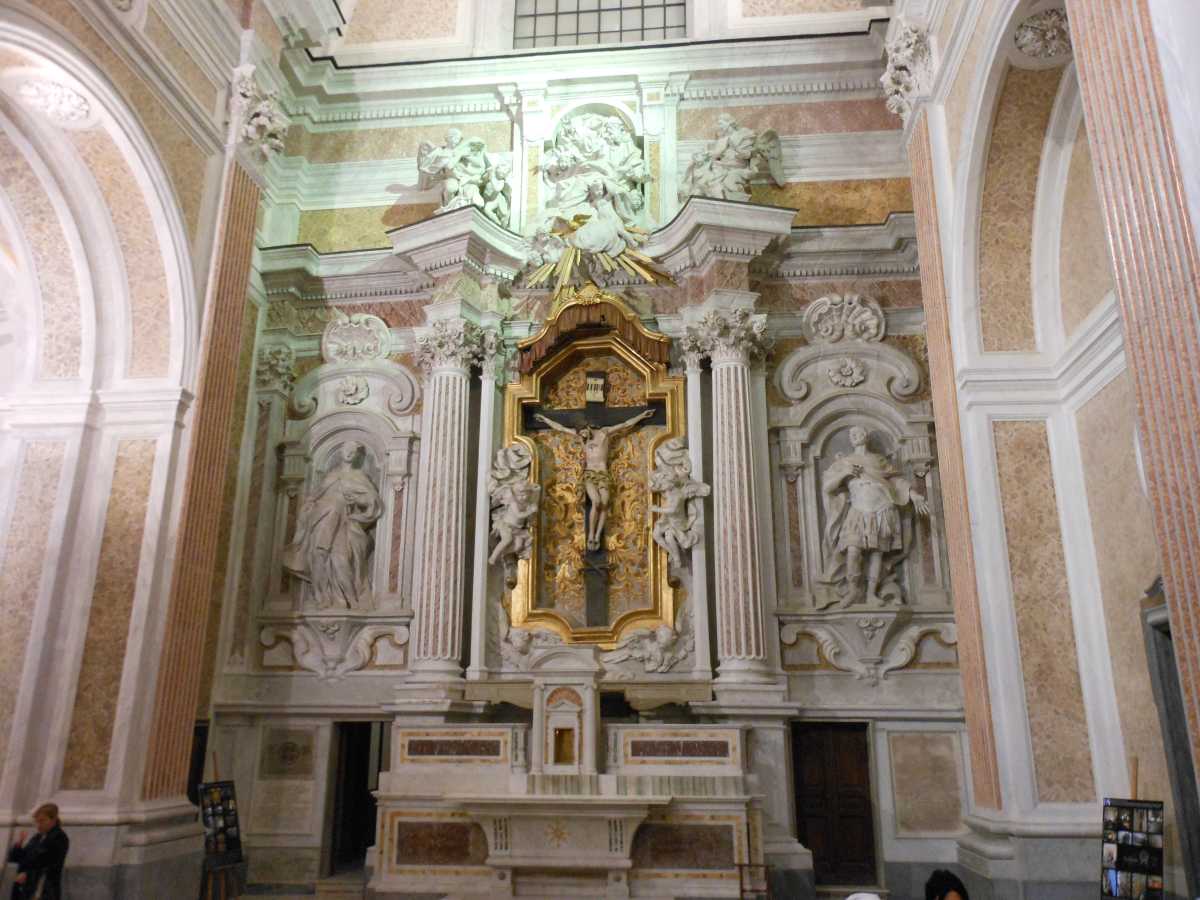
Magistral Chapel – The former Oratory of the Confraternity of the 66 Priests or Cappellone, a chapel dedicated to the Most Holy Cross, seat of the Constantinian Grand Magistracy’s Chapel at the Basilica of San Giovanni Maggiore in Naples
The Basilica of San Giovanni Maggiore is a place of great historical interest, tied to the memory of His Majesty Ferdinand II of Bourbon, King of the Two Sicilies, who chose it as the seat of his perpetual priory and a place of prayer and reflection, later abolished in 1888 after the unification of Italy. A commemorative plaque remembers what the King loved to do here: pray and reflect.
The Basilica has a difficult and troubled history: it remained closed for about 40 years and during that time was looted and damaged. Altars, balustrades, and other significant elements were stolen. When it reopened, about eight years ago, it was decided to valorize the remaining furnishings, also creating a space for the nativity scene with the Nativity.
Participants
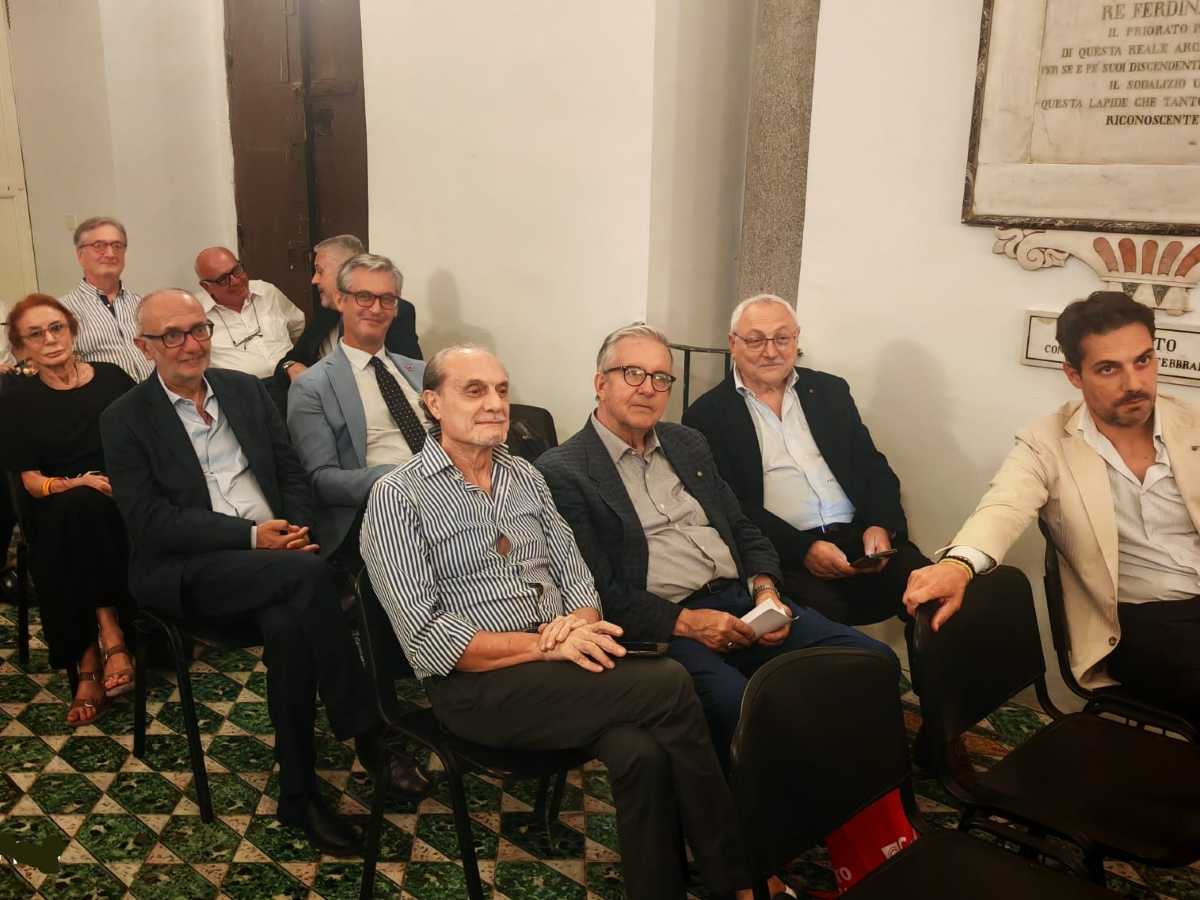
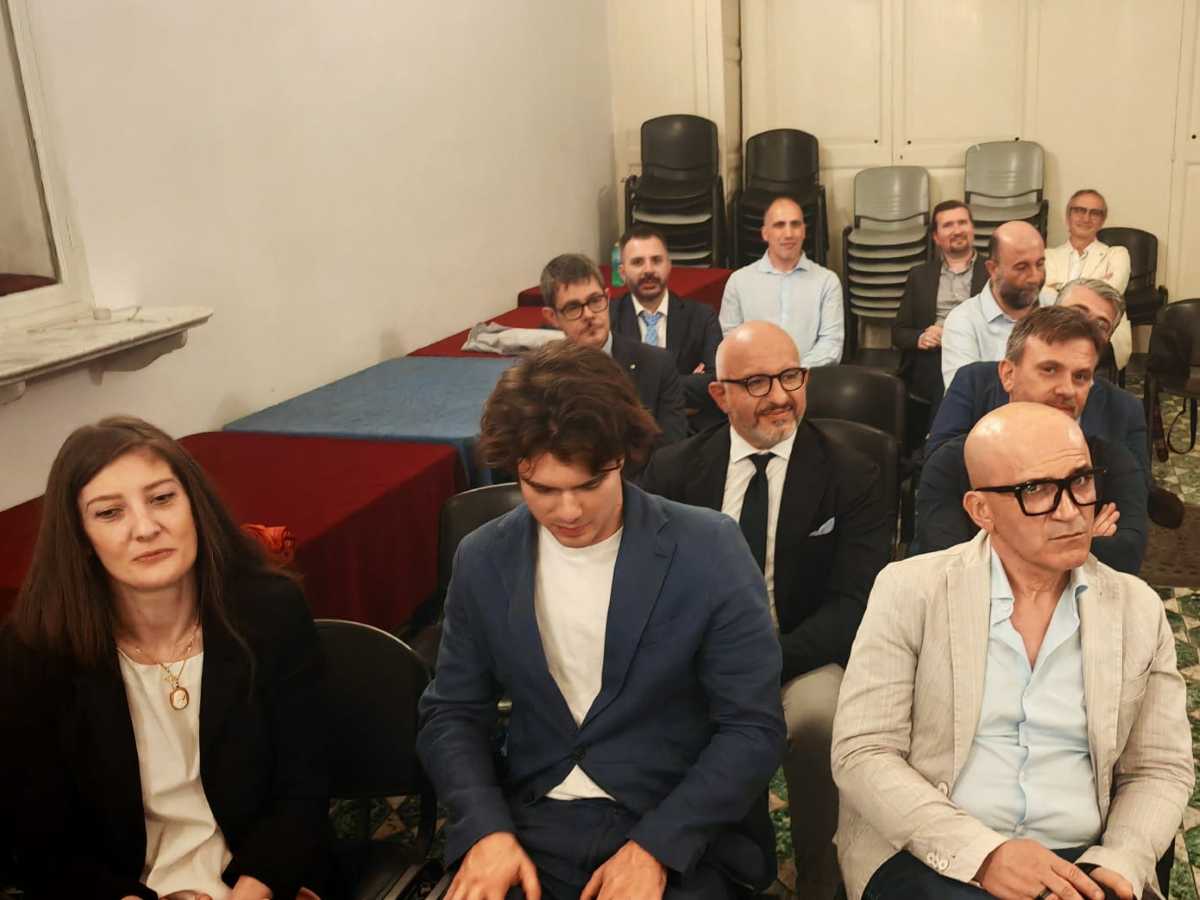
At the second formative meeting attended by the Delegate for Naples and Campania of the Constantinian Order’s Royal Commission for Italy, Count Don Gianluigi Gaetani dell’Aquila d’Aragona of the Dukes of Laurenzana, Neapolitan Patrician, Knight of Justice; the interim Secretary General, Nob. Antonio Masselli, Knight of Jure Sanguinis; the interim Communications Manager, Prof. Antonio De Stefano, Knight of Jure Sanguinis; and the interim Head of Operational Activities, Avv. Valeria Pessetti, Dame of Merit with Silver Star. Among the participants was also the Governor of the Real Monte Manso di Scala, Nob. Avv. Alberto De Vargas Machuca of the Dukes de Vargas Machuca, Knight of Justice.
Father Salvatore Giuliano – The Journey through the Seven Sacraments
The Parish Priest, Father Salvatore Giuliano, Chaplain of Merit, in his address for the second Lecture of the Constantinian Formation Course, began from the teaching of the Catechism of the Catholic Church to deepen the meaning of the seven Sacraments, presented as efficacious signs of grace, instituted by Christ and entrusted to the Church so that, through them, divine life may be communicated to the faithful.
The reflection highlighted how the sacraments constitute the heart of Christian life, an expression of God’s ongoing salvific action in history and a privileged place where the grace of God meets the free response of man. They make possible an ever fuller participation in the life of Christ and in ecclesial communion, calling every believer to witness their Faith through love, service, and charitable action, values that find full expression also in the mission of the Sacred Military Constantinian Order of Saint George.
Father Giuliano retraced the theological development up to the definitive formulation of the seven sacraments established by the Council of Florence, in the fifteenth century, though with roots already present in the early centuries of Christianity. They are seven visible signs through which Christ communicates his grace to the Church. Theology uses the Latin expression ex opere operato, which means that grace is transmitted through the sacrament itself, regardless of who administers it, provided it is validly performed.
Father Giuliano illustrated, with the Catechism of the Catholic Church, the division of the sacraments into three groups: the Sacraments of Christian Initiation (Baptism, Confirmation, Eucharist), the Sacraments of Healing (Penance or Confession and Anointing of the Sick), and the Sacraments at the service of Communion and Mission (Holy Orders and Matrimony).
Intervention by the Delegate for Naples and Campania: The Constantinian Order focuses on formation, service, and collaboration with the Catholic Church
A path founded on service, on formation, and on concrete collaboration with the Church. This is the message that emerged from the Delegate for Naples and Campania, Conte Don Gianluigi dell’Aquila d’Aragona, outlining his experience in the Sacred Military Constantinian Order of Saint George, during which he retraced his personal path and outlined the Order’s future prospects.
His entry into the Order matured after years of volunteering in other areas, including involvement with the Sovereign Military Order of Malta, thanks to meeting His Royal Highness Prince Don Pedro of Bourbon-Two Sicilies, Head of the Royal House of the Two Sicilies, described as a figure of great simplicity, availability, and vision. From that first contact sprang a collaboration that enabled funding of important cultural projects, including the restoration and enhancement of historical archives on the relations between Naples and Spain and the launch of scientific research on Constantinian historical heritage.
Among these, the agreement between the Fondazione San Giorgio ETS and the University of Campania “Luigi Vanvitelli” for the recovery of the Constantinian Fund, kept at the Naples State Archives, and the Contract between the Fondazione Real Monte Manso di Scala di Napoli and Fondazione San Giorgio Italia ETS for the cataloguing and enhancement of the historical archive of the Royal Arciconfraternity and Monte del Santissimo Sacramento dei Nobili Spagnoli di Napoli, relocated since 2023 to the facilities of the Fondazione Real Monte Manso di Scala for the custody of the substantial archival patrimony.
The Delegate devoted great attention to the Order’s role, called not only to safeguard the tradition but especially to place itself at the service of the dioceses and communities. In this light, closer ties have been established with the Archdiocese of Naples, culminating in the assignment of a stable Order seat in the historic Constantinian Basilica of San Giovanni Maggiore, at the former Oratory of the Confraternity of the 66 Priests or Cappellone, Chapel dedicated to the Most Holy Cross, chosen as the seat of the Constantinian Grand Chapel of Naples by His Majesty the Grand Master, and in the collaboration with the Metropolitan Archbishop of Naples, His Eminence Cardinal Domenico Battaglia, and the local clergy, to support pastoral and social works, including Casa della Pace “Don Tonino Bello” and other projects in collaboration with the diocesan Caritas.
Among the objectives outlined by the Delegate are the strengthening of members’ formation, necessary for Postulants and all Order members, the creation of territorial sections, the organization of volunteer activities, the involvement of young people, and the creation of operational groups capable of providing concrete support during religious events and solidarity initiatives.
The Delegate subsequently reiterated and highlighted that membership in the Order cannot be reduced to a formal recognition or to the use of knightly insignia, but represents a daily commitment inspired by the Evangelical values of service and charity. “To serve and not to be served” was identified as the guiding principle of Constantinian action.
The Delegate closed his speech with an invitation to all members to become protagonists of the Order’s initiatives, contributing ideas, availability, and a spirit of collaboration to the growth of a reality that aims to combine Faith, culture, solidarity, and active presence on the territory, also through increasingly close relations with ecclesiastical and international institutions.
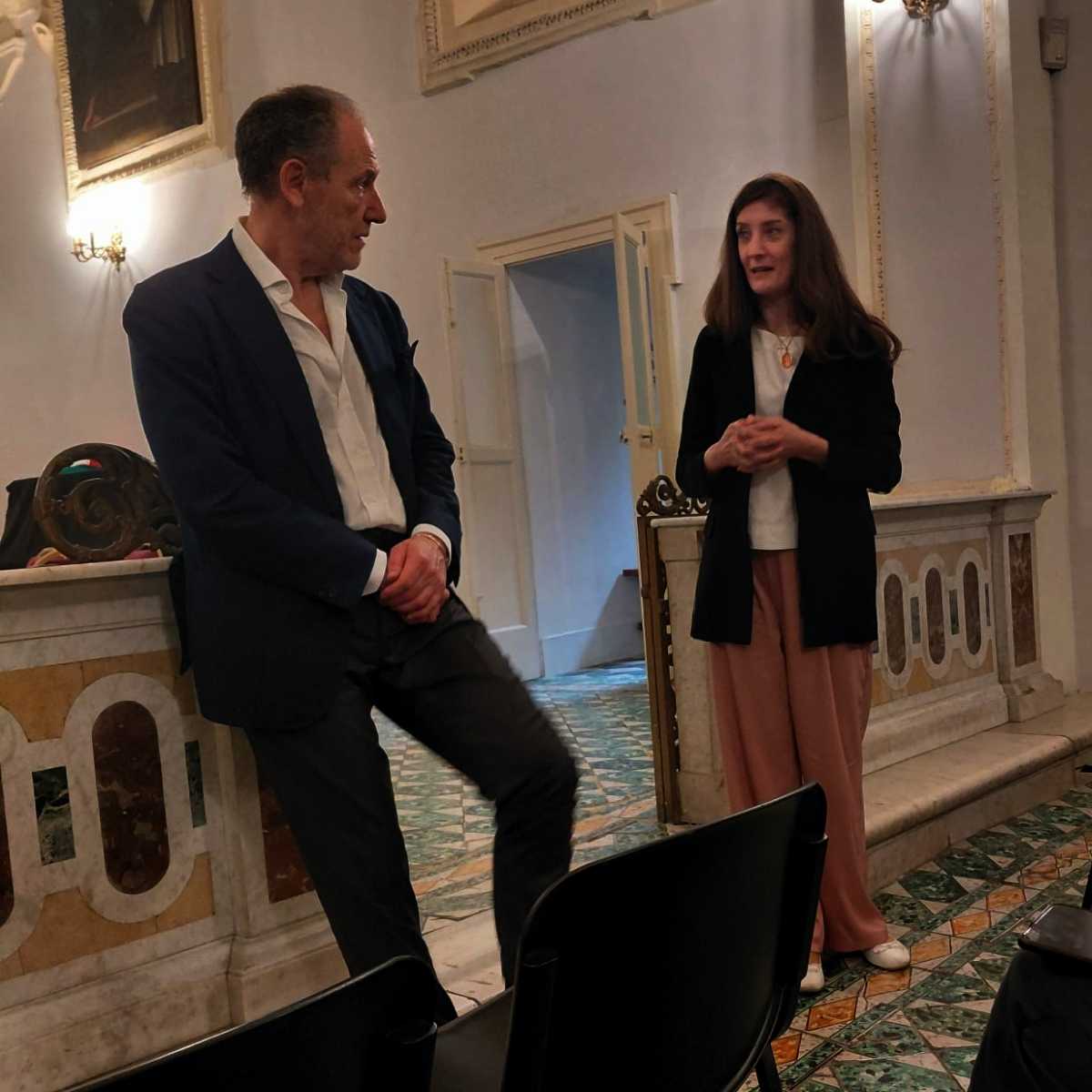
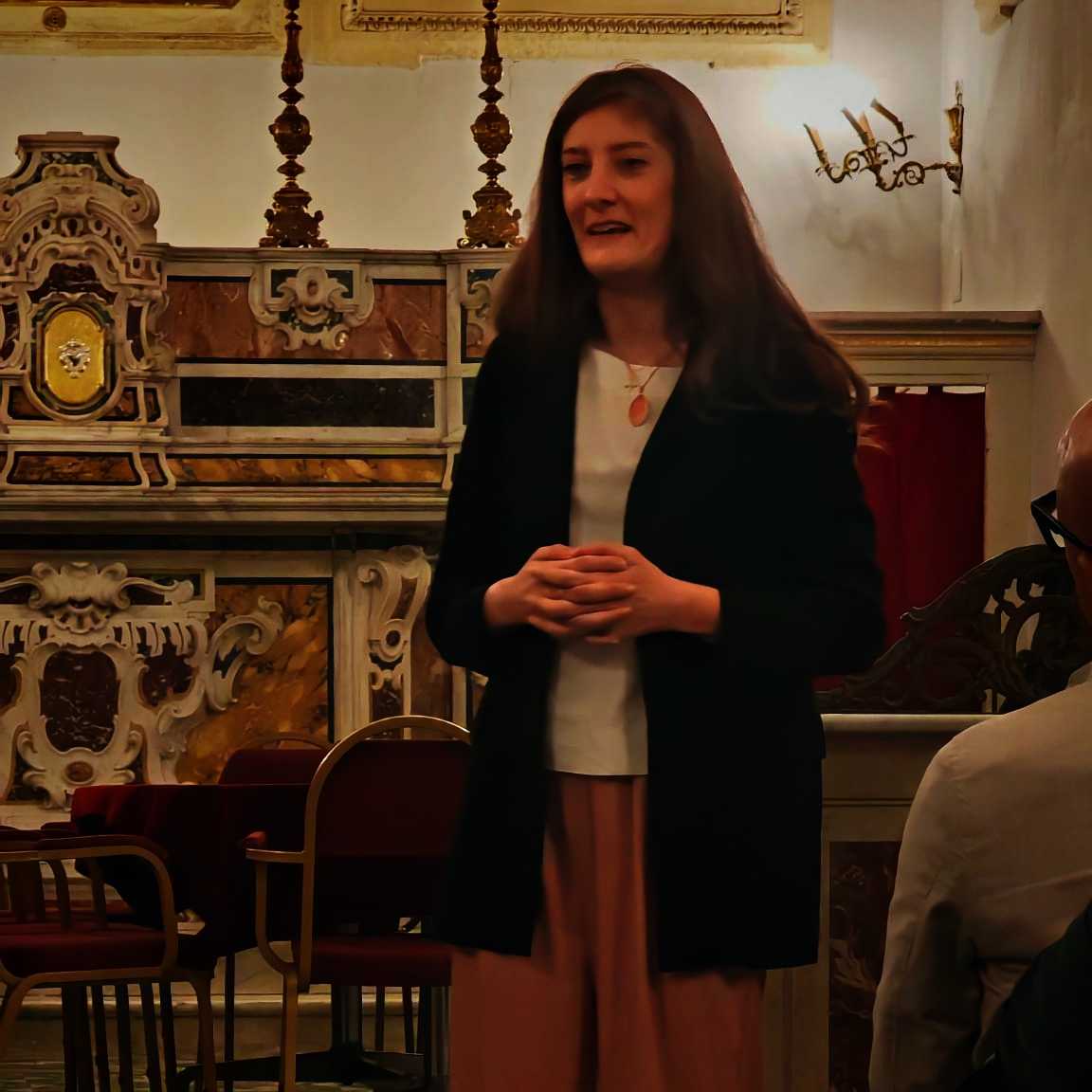
Intervention by Roberta Di Biase The experience of a mediator: A complex job, but deeply human
Subsequently, at the invitation of the Delegate, Roberta Di Biase, Dame of Merit, spoke to recount her experience as a cultural mediator, at the Casa della Pace “Don Tonino Bello,” supported by the Naples and Campania Delegation, in assisting a young woman victim of violence and applicant for international protection. Although she initially approached the work with fear, she found a reference point in the psychologist on the team, Stefania. The role of translator proved particularly delicate, requiring sensitivity and emotional balance to handle painful stories and overcome linguistic and cultural difficulties.
At the end of her intervention, Roberta Di Biase stressed the importance of the human relationship established with the woman and the teamwork based on hospitality, collaboration, and the valuing of each person’s competencies.