The Naples and Campania Delegation of the Sacred Military Constantinian Order of Saint George is organizing, in eleven Thursdays, from 28 May 2026 to 15 April 2027 , the Second Constantinian Formation Course, dedicated to the history, spirituality, and purposes of the Order.
The Course is specifically intended for new Knights , Postulants , and those who wish to draw closer to the Order, so that they are trained and “always ready to give an answer to anyone who asks you the reason for the hope that is in you. Do this, however, with gentleness and respect, with a clear conscience; so that when you are accused, those who slander your good conduct in Christ may be put to shame” (cf. 1 Pt 3:15–16 ).
In addition, participation in the Course is recommended for Knights and Dames who are already members of the Order , who may find ideas and information here that could be of interest and useful to them.
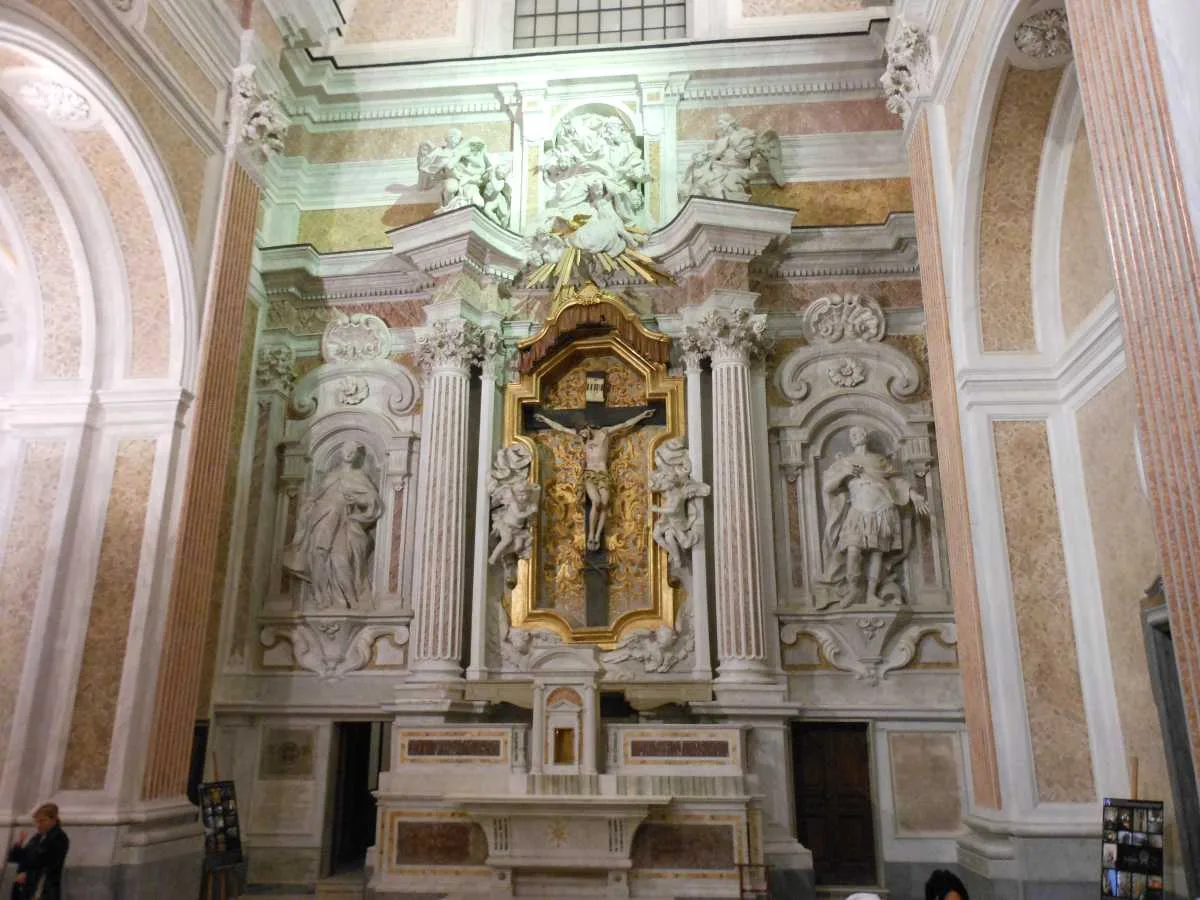
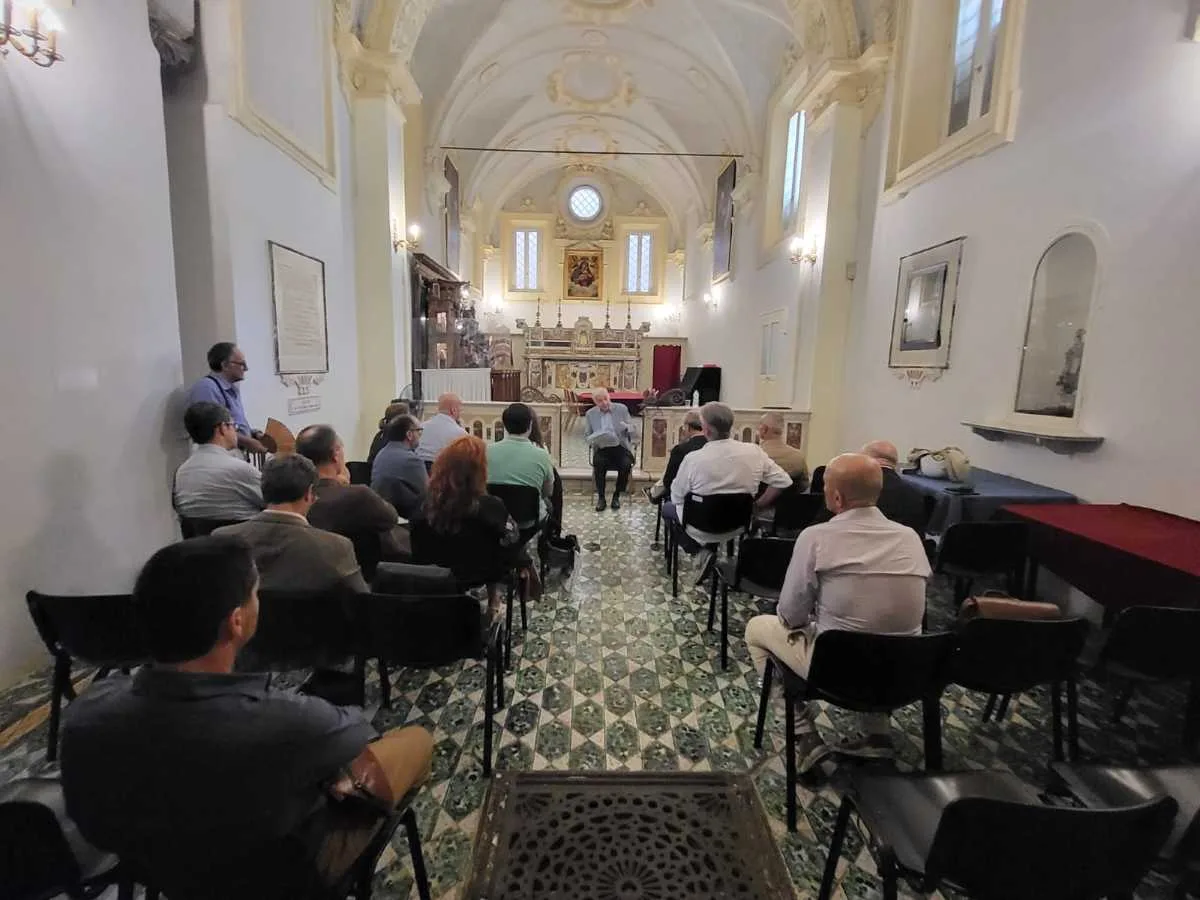
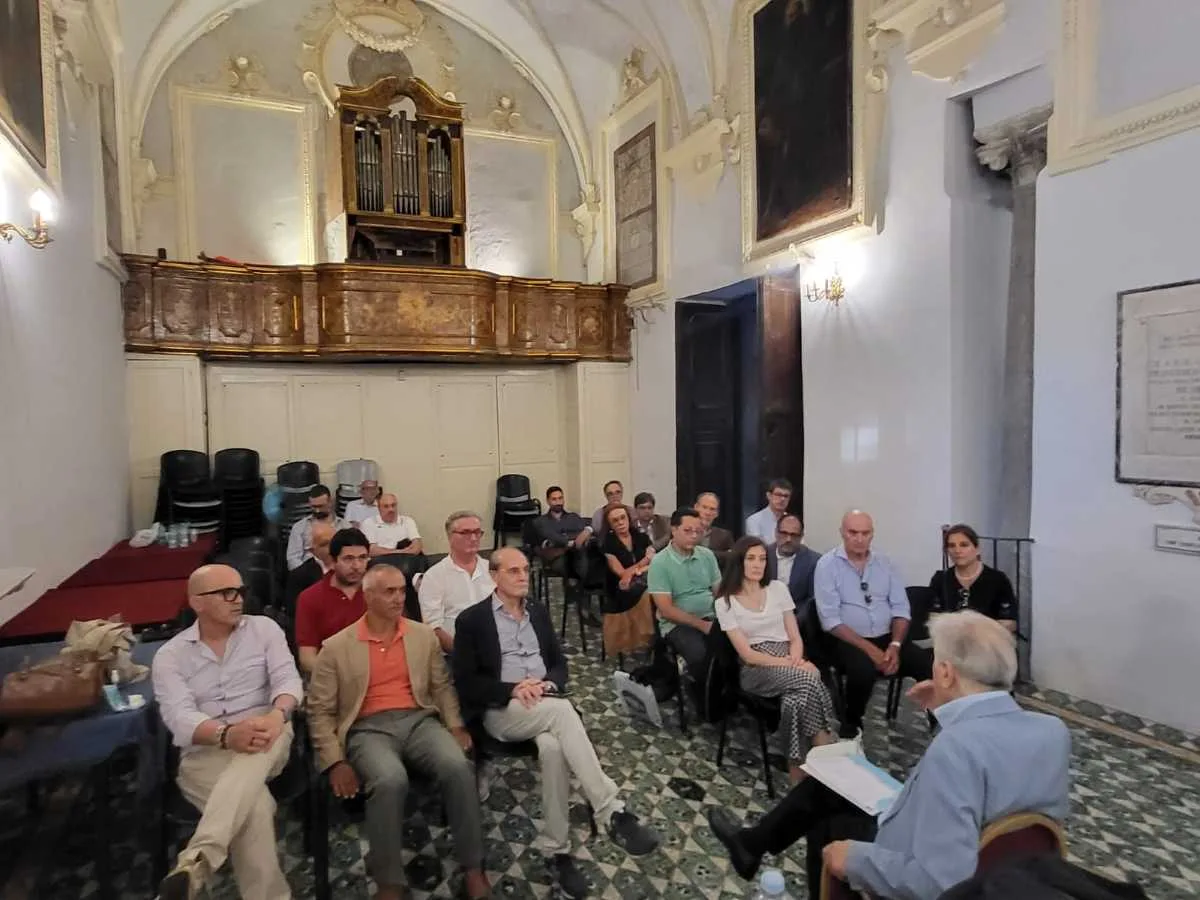
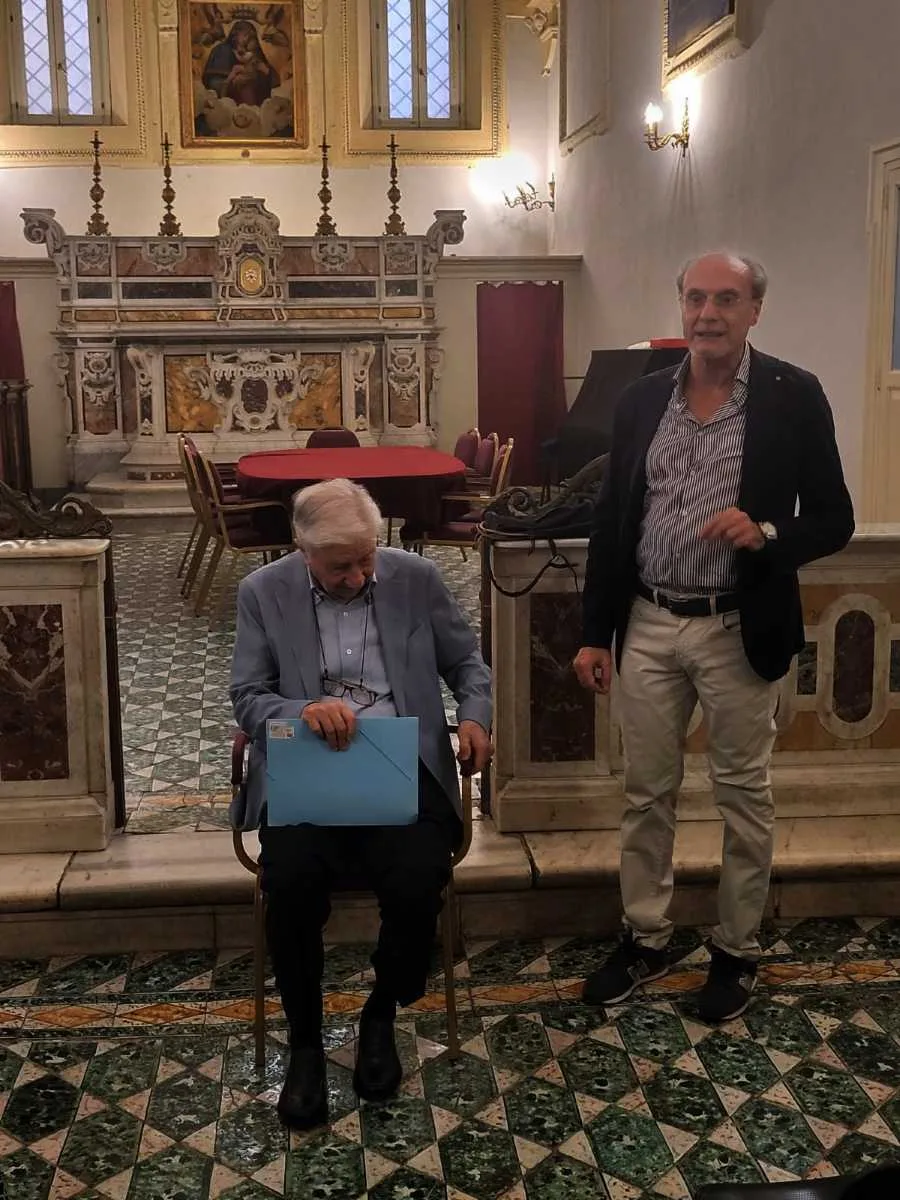
The third meeting —historical and educational—took place on Thursday 16 July 2026 at 6:00 p.m. in a chapel of the Basilica of San Giovanni Maggiore , the seat of the Constantinian Chapel in Naples for the former Oratory of the 66 Priests (also known as the “Cappellone”), dedicated to the Most Holy Crucifix . It was led by Prof. Giovanni Muto, Knight Grand Cross of Merit, a well-known historian of the early modern period, who focused his address on the role of chivalric orders in “ancien régime” societies. He retraced the evolution of European noble systems and the history of the Sacred Military Constantinian Order of Saint George, from its Farnese and Bourbon origins to its contemporary social engagement.
The Constantinian Formation Course was created with the aim of offering participants a solid and conscious preparation, so they can fully understand the value of their belonging to the Order and translate its ideals into concrete service to the Church and society.
Formation is a fundamental aspect for carrying out good work in the best way possible in an ancient Order, with a spirit and tools that are always new—ready to respond to the needs of the times. Therefore, formation is one of the fundamental pillars of the Order’s life. Only through a continuous growth in human, cultural, and spiritual terms is it possible faithfully to preserve a centuries-old tradition and, at the same time, respond effectively to the challenges of our time, keeping the spirit of the Order alive.
Being part of the Constantinian Order does not mean receiving a simple honorific distinction, but embracing a true vocation to service. It is a commitment that invites each Knight and each Dame to safeguard the Order’s precious historical, religious, and moral heritage and make it fruitful through works of charity, solidarity, and the promotion of the dignity of the human person.
Belonging to the Order is not mere decoration: it is a calling—an invitation to preserve the history and tradition of the Constantinian family, and to work for spiritual and social good, whose limits are set only by the Knights and Dames themselves, who are also the true driving forces behind its realization.
It should be remembered that the activity of the Constantinian Order is not partisan or political, but is aimed at the greater glory of God. It is expressed through concrete testimony of the Catholic Faith , through the practice of Christian charity and attention toward the weakest, the marginalized, and those who live in situations of suffering and need. It is the Knights and Dames —through their example, their dedication, and their service—who keep the Order’s charism alive, perpetuating its mission and passing on its values to the new generations, so that, today as in the past, the Constantinian tradition continues to be a bright testimony of faith, charity, and genuine Christian service.
Dates and Topics of the Lectures
- 28 May 2026 – Introduction and aims of the Course
- 25 June 2026 – Religious and Spiritual
- 16 July 2026 – Historical and educational
- 24 September 2026 – Technical and practical – First aid
- 22 October 2026 – Religious and Spiritual
- 19 November 2026 – Historical and educational
- 17 December 2026 – Technical and practical – First aid
- 21 January 2027 – Religious and Spiritual
- 25 February 2027 – Historical and educational
- 25 March 2027 – Technical and practical – First aid
- 15 April 2027 – Conclusion of the Course
Constantinian Chapel
The former Oratory of the Confraternity of the 66 Priests (the “Cappellone”), a chapel dedicated to the Most Holy Crucifix is the seat of the Constantinian Magistral Chapel of the Basilica of San Giovanni Maggiore in Naples.
The Basilica of San Giovanni Maggiore is a place rich in historical value, connected to the memory of His Majesty Ferdinand II of Bourbon, King of the Two Sicilies , who chose it as the seat of his perpetual priory, and as a place of prayer and reflection—later abolished in 1888 after Italian unification. A commemorative plaque recalls what the King most loved to do here: pray and reflect. The Basilica has had a difficult and troubled history: it remained closed for about 40 years , during which time it was looted and damaged. Altars, balustrades, and other important elements were stolen. When it reopened around eight years ago , it was decided to enhance some of the furniture that had survived, and a space was also set up for the Nativity scene.
The Third Lecture
At the third formation meeting, the following took part: the Delegate for Naples and Campania, Count Don Gianluigi Gaetani dell’Aquila d’Aragona , of the Dukes of Laurenzana, Neapolitan Patrician, Knight of Justice; the Interim General Secretary, Nob. Antonio Masselli, Knight of Jure Sanguinis ; and the Interim Director of Culture, Don Antonino Sersale of the Marquises Sersale, Knight of Justice .
Introduction by the Interim General Secretary
The Interim General Secretary introduced the meeting: after greeting those present, he explained the evolution of the Constantinian formation course of the Naples and Campania Delegation.
Presentation of the Speaker
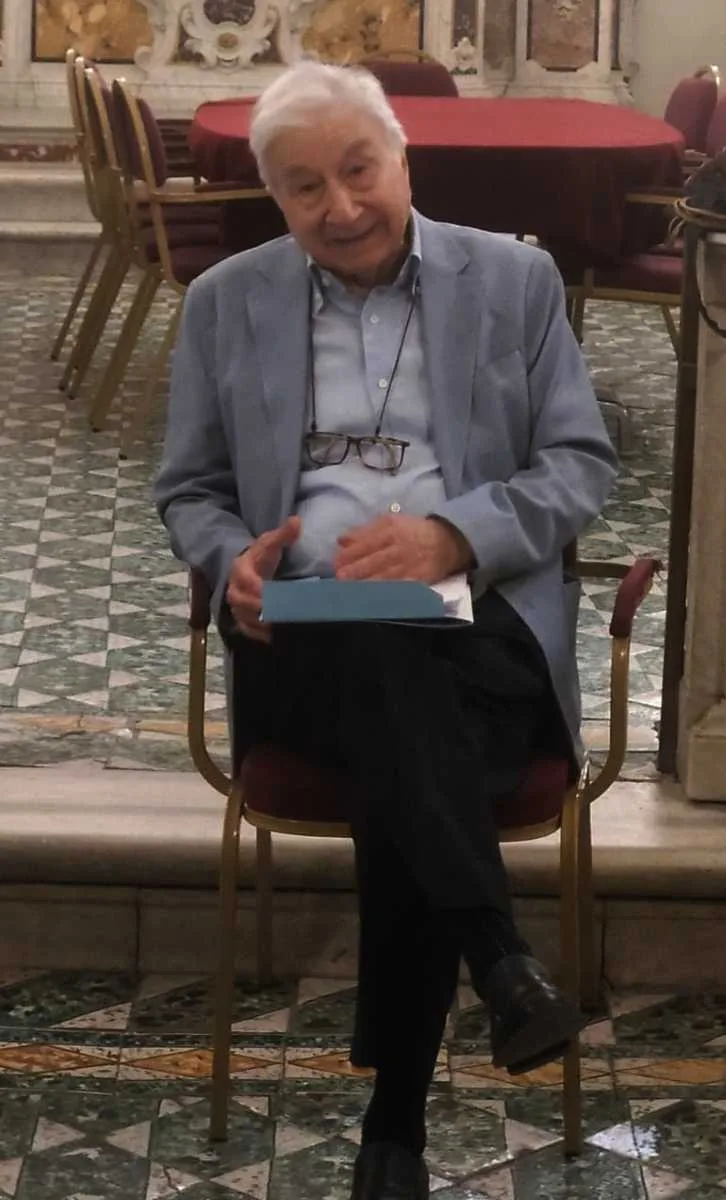
He then presented the speaker, Prof. Giovanni Muto. Prof. Muto taught at the University of Milan and is a full professor at the University of Naples Federico II . He specializes in economic history, public finance, and the relations between Naples, Spanish Italy, and Spain during the 16th and 17th centuries . He is an member of the Accademia Pontaniana, and a member of the Real Academia de la Historia, as well as vice-chair of the Società Napoletana di Storia Patri. He was awarded the prestigious Premio Internacional de Historia Órdenes Españolas by King Felipe VI of Spain on 29 May 2023 —the only Italian to receive this distinguished award.
The Lecture of Prof. Giovanni Muto
The Speaker
In beginning his address, Prof. Giovanni Muto introduced the theme of chivalric orders, outlining their nature through three fundamental dimensions:
- chivalric, closely connected to the medieval and modern ethos;
- dynastic, linked to the principal European Crowns from the fifteenth century onward;
- military, particularly relevant until the sixteenth century in the management of international politics.
In this context, the Sovereign Military Order of Malta was cited as the last significant example of an order with an almost state-like character, undisputedly so before the French occupation and the subsequent English presence on the Maltese island.
The speaker devoted considerable space to the need to place the birth and development of chivalric institutions within the framework of ancien régime societies , extending from the Middle Ages to the early or mid-nineteenth century—depending on the various European realities—where, for the Kingdom of Naples, the end of the period coincides with the arrival of the French in 1806 and the simultaneous abolition of feudalism.
These societies were characterized by a clear privilege reserved for aristocratic elites, along with complex mechanisms of inclusion and exclusion: while in contexts such as England, historians in the 1960s and 1970s identified an open élite capable of renewing itself by integrating individuals of non-aristocratic origin, the most historically significant fact remains the extraordinary ability of the nobility to preserve its hegemonic role for four to six centuries .
Analyzing the systems of pre-unification Italy, the speaker illustrated the different criteria for access to urban élites, citing—by way of example:
- Venice, where the exercise of power was reserved exclusively for those listed in the Libro d’Oro (Golden Book);
- Mila , which referred to the Matricola del Duomo of the 1400s;
- Naples, arranged through the five noble Seggi (Capuana, Nido, Montagna, Porto and Portanova), to which between 105 and 127 families were assigned (for a total never exceeding 500–600 people ). These were the only ones with exclusive access to the Tribunal of San Lorenzo, and they can be traced in the seventeenth-century sources of Beltrano .
Turning the focus to the European chivalric panorama, after recalling the story of the Knights Templar and their dissolution in 1307 , the speaker stopped his exposition on the turning point of the 15th century, when orders came to sit alongside monarchies directly in the process of building the modern state. Particular emphasis was placed on the Iberian Peninsula, with the three great national orders of Santiago, Alcántara and Calatrava .
Within this framework, the speaker provided precise quantitative data:
- in 1622 , the Order of Santiago managed 94 encomiendas (commands that generated feudal-type revenues), Calatrava 51 , and Alcántara 38 , making the chivalric office a true long-term economic resource and investment for family strategies;
- during the 17th century, the three Spanish orders created a total of 9,486 new knights (6,167 for Santiago, 2,072 for Calatrava, and 1,247 for Alcántara), of whom 468 were Italians, demonstrating the international openness of these chivalric associations.
- Analogous integration dynamics between the Crown and élites occurred in France with the Order of Saint Michel, and in England with the Order of the Garter (from 1348 ), while the Order of Malta continued to represent an autonomous model not incorporated into national monarchies.
Regarding dynasties and the Neapolitan territory, the speaker recalled the Order of the Knot, established by Luigi d’Angiò in 1352 , and the Order of the Ermine, founded by Ferrante of Aragon, whose iconographic evidence can be seen in the bust of the sovereign preserved in the Museo Nazionale di Capodimonte. The “golden age” of Neapolitan faleristics (the study and production of orders/medallions and insignia) is considered to be the period from the second half of the 14th century up to the Spanish conquest of 1503, which led to the loss of the Kingdom of Naples’ sovereignty and the diminished importance of state orders, as well as the progressive incorporation of the aristocracy into the three orders of the Spanish Crown —an arrangement that remained unchanged until the early 18th century, with the onset of the Spanish succession crisis.
The decisive turning point in the history of the Sacred Military Constantinian Order of Saint George takes place in the 18th century with the advent of Charles of Bourbon. The speaker clarified that the Constantinian Order did not then arise anew as a Neapolitan identity, but rather carried with it the prestigious legacy connected with the Duchy of Parma and the House of Farnese . As the son and heir of Elisabetta Farnese , Charles assumed the Grand Mastership and, in 1738 , transferred the seat of the Constantinian Order to Naples, initiating a period of flourishing that continued under his successors (Their Majesties Kings Ferdinand I, Francis I, Ferdinand II, and Francis II ).
Finally, the speaker concluded his address with an analysis of the recent and contemporary history of the institution. With the unification of Italy in 1861, the Order saw its connection to the territory change; it was then incorporated into the legal framework of the unified State (the House of Savoy initially recognized certain public aspects, though in an ambiguous way). Despite the tendency of the constitutions of the 20th century not to recognize legal/statutory privileges or dynastic titles, Law No. 178 of 3 March 1951 of the Italian Republic expressly regulated and permitted the use of Constantinian honors (without, however, giving them public/legal status in terms of State precedence).
Today, the Constantinian Order—firmly rooted in the national territory through its sixteen Delegations, and linked to the Royal House of the Two Sicilies, led by HRH Prince Pedro of Bourbon-Two Sicilies, Duke of Calabria, Count of Caserta, Grand Master of the Constantinian by right of the Farnese primogeniture —no longer manages material benefits or privileges of the ancien régime. Instead, it directs its mission toward assistance to the most needy social groups, in line with the enduring values of Christianity.
(This report was prepared with the collaboration of Andrea D’Aloia, a friend and supporter of the Constantinian Order. The photographs were by Ciro Sommella, Knight of Office.)