On Saturday, June 13, 2026, the Abruzzi Delegation of the Sacred Military Constantinian Order of Saint George held a “Constantinian Day” in Atri, a city in the maritime Abruzzo region within the Province of Teramo. The day was experienced in a spirit of fraternity, spirituality, and cultural and historical depth, offering participants the opportunity to discover one of the most important historical and religious centers of Abruzzo.
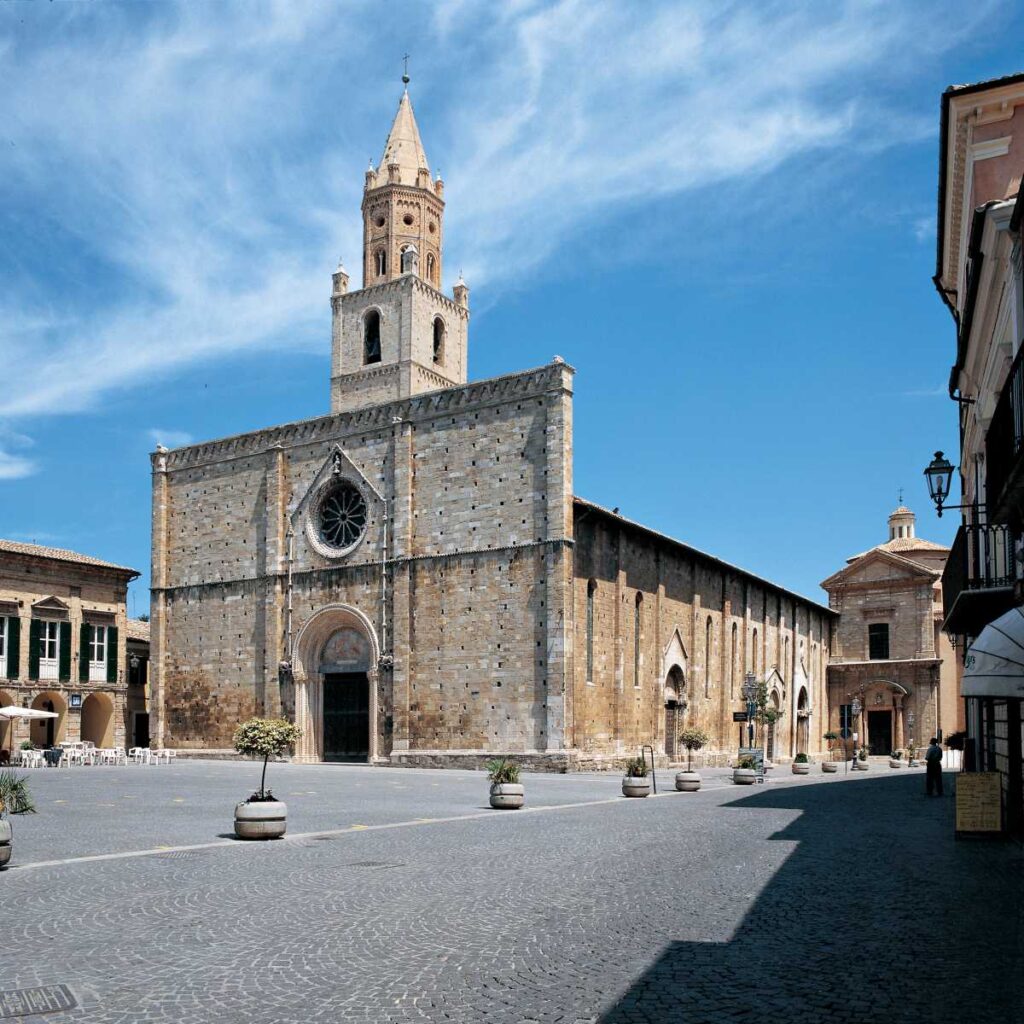
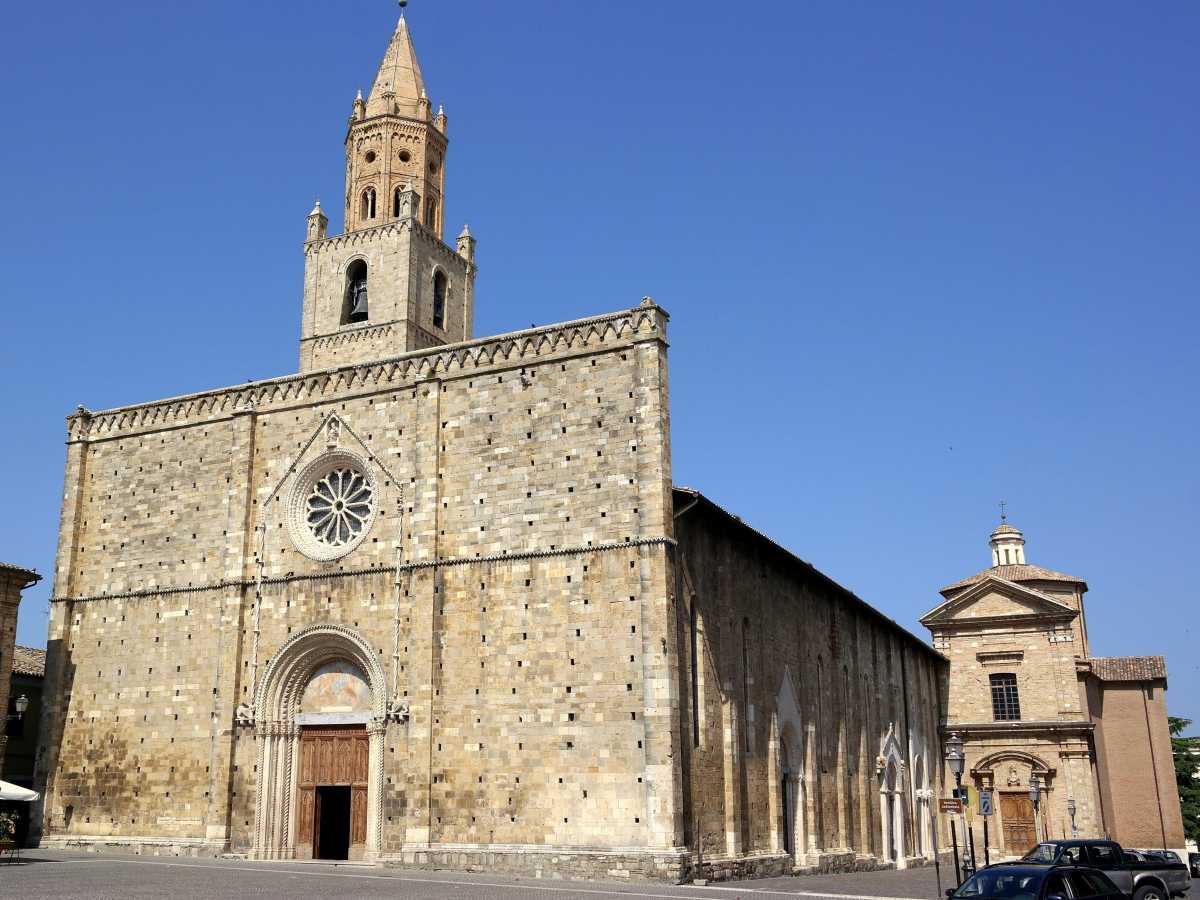
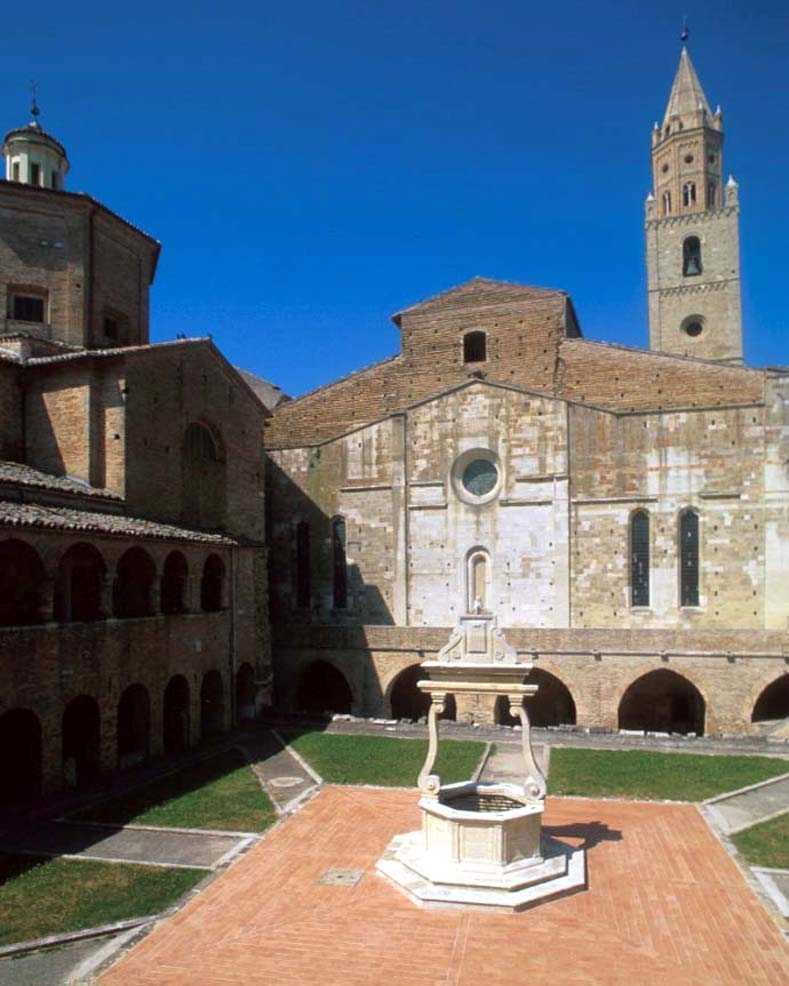
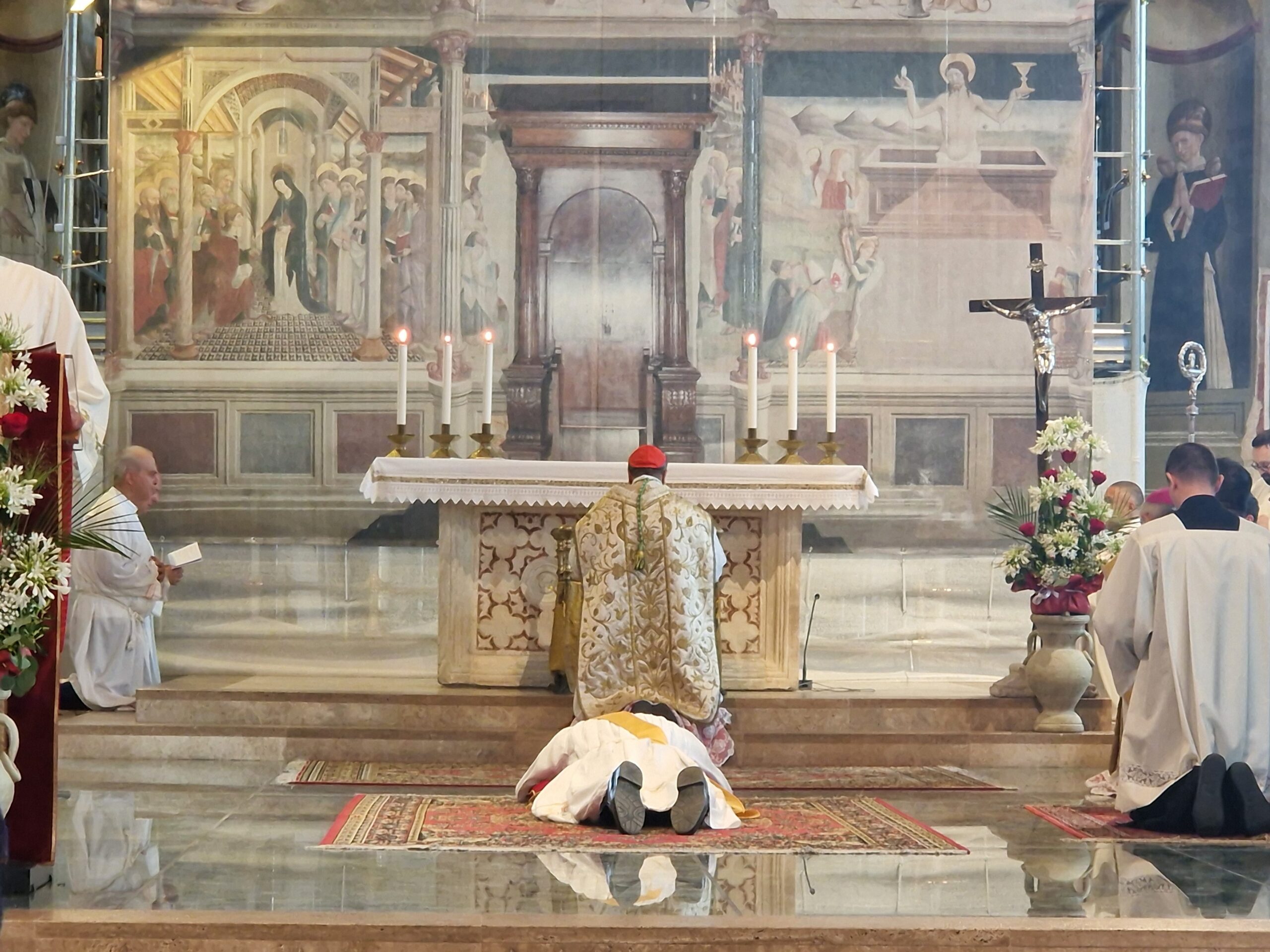
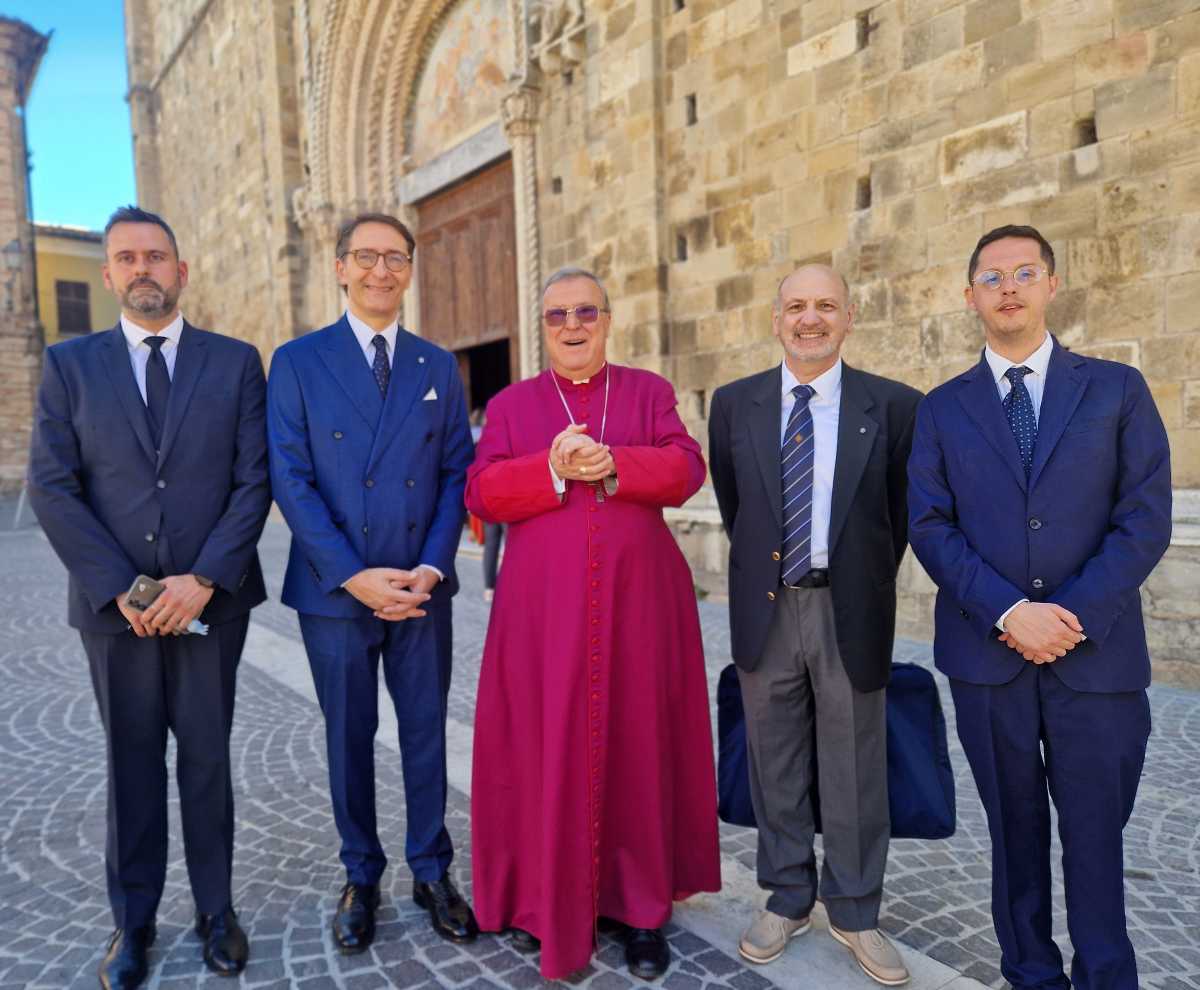
Participants were welcomed at 10:00 AM in Piazza Duomo, before the majestic Co-Cathedral Basilica of Santa Maria Assunta, the symbol of the city and an authentic treasure trove of art, history, and faith. Built between the 13th and the beginning of the 14th century using Istrian stone, the church houses a precious cycle of frescoes dating from the 13th to the 15th century, most notably those in the choir by Andrea Delitio, a master of the 15th-century Abruzzese Renaissance, depicting the Stories of the Virgin.
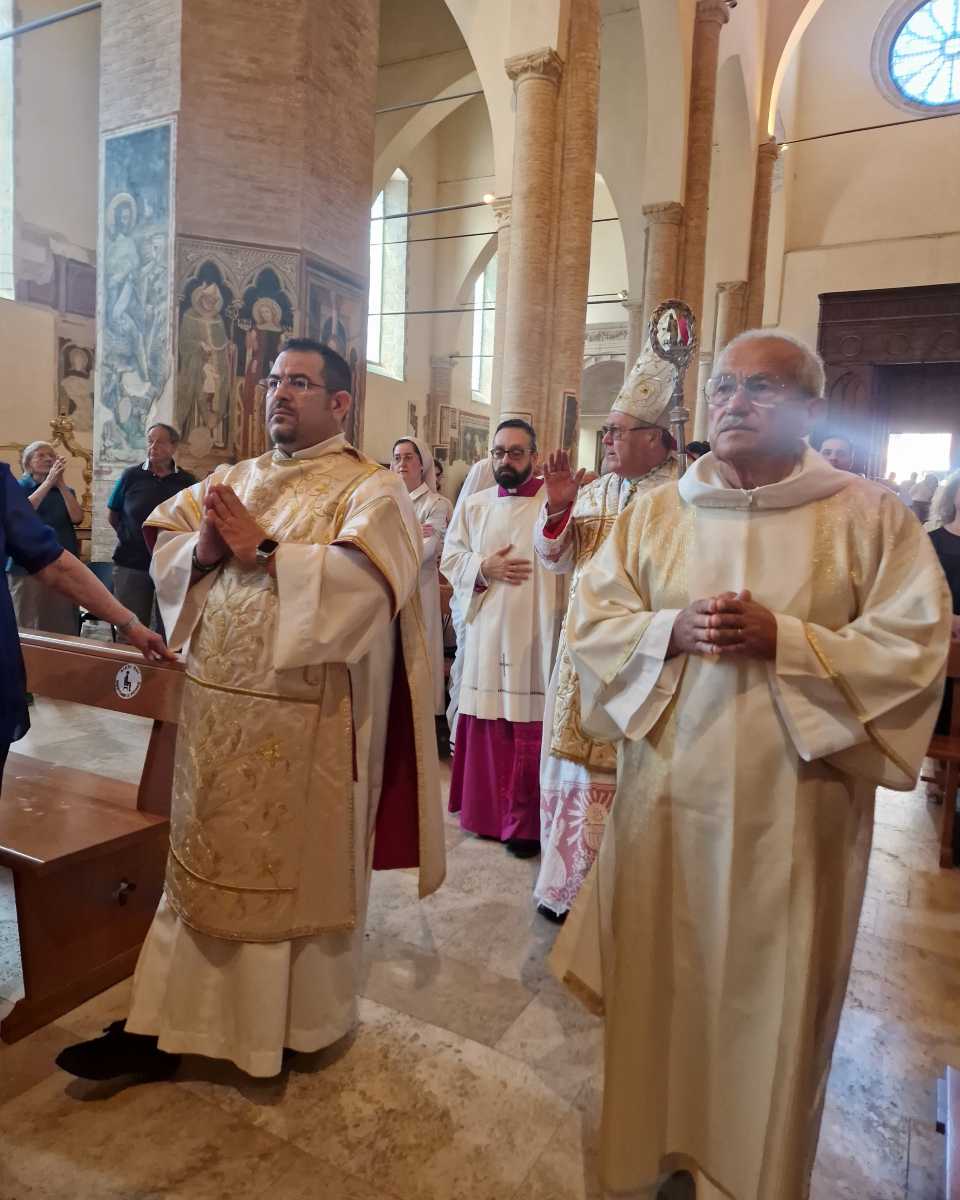
Following institutional greetings and a welcome to the participants—led by the Delegate, Nob. Baron Emanuele Muzj di Fontecchio, Knight of Jure Sanguinis, along with the Representative for the Province of Chieti, Dr. Annunziato di Campli San Vito, Knight of Merit—the Regent Prior of the Delegation, His Excellency the Most Reverend Lorenzo Leuzzi, Bishop of Teramo-Atri and Constantinian Chaplain Grand Cross of Merit, presided over the celebration of Holy Mass. This central moment of the meeting was an intense time of spiritual reflection, during which Father Diego Di Donato, currently serving in Chieti, was ordained a priest through the imposition of hands and the consecratory prayer of Bishop Leuzzi.
This was followed by a guided tour of the city’s historic center, during which Postulant Dr. Andrea Spada illustrated the primary sites of historical and cultural interest, highlighting Atri’s role over the centuries as a major religious, political, and cultural center of central-southern Italy.
Historical Context and the Bourbon Era
During the guided tour, particular attention was paid to the period following the end of the historic Duchy of Atri and the extinction of the House of Acquaviva d’Aragona in 1757, when Atri became a state-owned city (città demaniale) of the Kingdom of Naples, coming directly under the domains of the Crown.
From that moment, Atri followed the historical events of the Kingdom—later the Kingdom of the Two Sicilies—preserving its civil, religious, and cultural prestige until the Unification of Italy. It was noted during the visit that, under the rule of the Acquaviva d’Aragona dynasty, Atri was one of the most important centers of Abruzzo Ulteriore I, possessing a strategic role and significant administrative autonomy. With the extinction of the dynastic line, the City shed its feudal nature to become a center directly administered by the Bourbon Crown, assuming a new function within the institutional framework of the Kingdom.
It was further highlighted that during the 19th century, Atri experienced significant administrative and cultural growth. Its regional importance was confirmed in the prestigious editorial and encyclopedic project The Kingdom of the Two Sicilies Described and Illustrated, promoted by King Ferdinand II of Bourbon, in which the City occupied a prominent place. Towards the end of the century, its urban and institutional development manifested in the construction of important public buildings, including the Municipal Theater, inaugurated in 1881, and the City Palace, designated as the seat of the Court in 1882.
Further study was dedicated to the economic and social aspects of the Atri territory in the pre-unification period, characterized by a solid agricultural economy and lively commercial exchanges that favored connections between the hinterland and the Adriatic coast. It was also recalled that the transition from the Kingdom of the Two Sicilies to the new Kingdom of Italy represented a complex phase for Atri, marked by economic difficulties and widespread discontent linked to the administrative, fiscal, and commercial changes introduced after Unification.
The Legacy of the Acquaviva d’Aragona
The visit also commemorated the long rule of the House of Acquaviva d’Aragona, one of the most influential noble families of southern Italy, who contributed decisively to the economic, artistic, and institutional development of the City, leaving a legacy still visible today in its monumental heritage and local traditions.
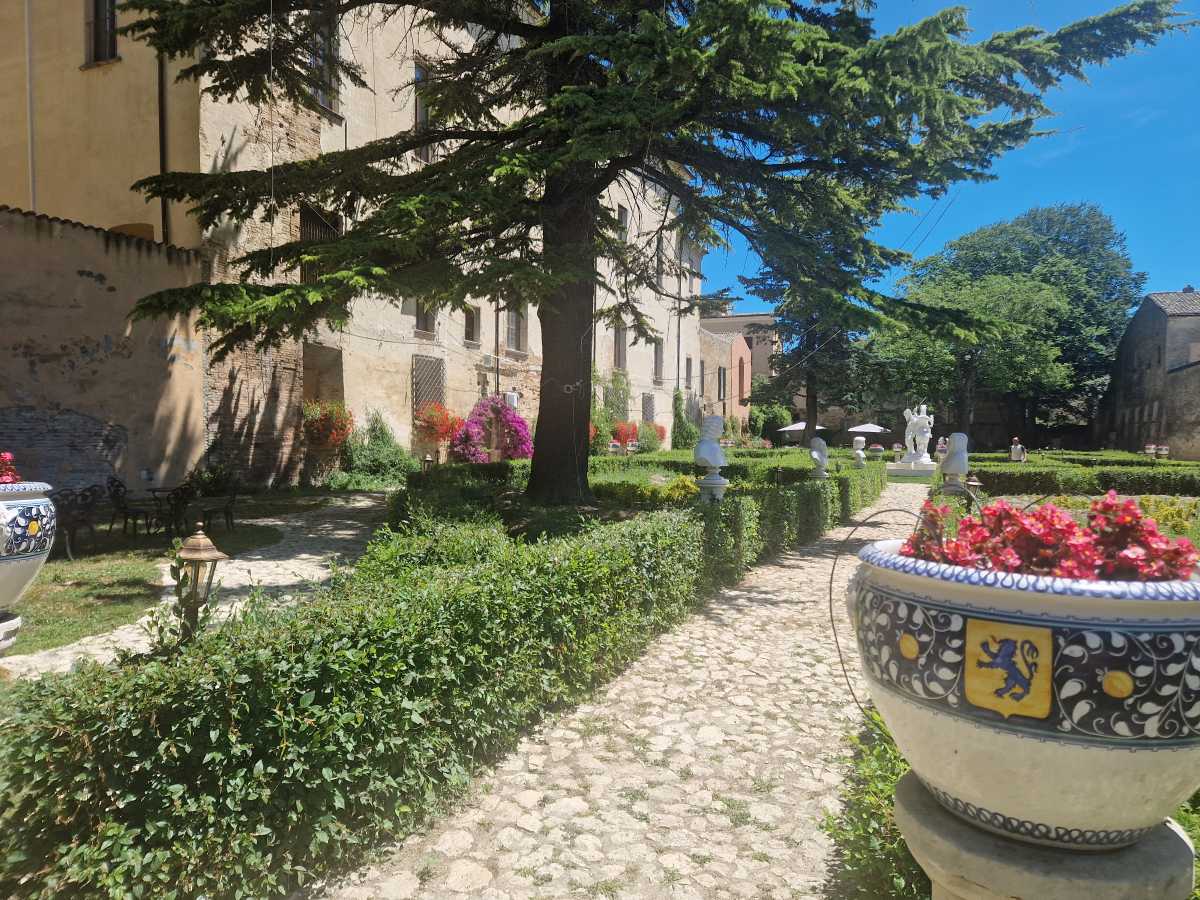
The tour then continued at the Ducal Palace of the Acquaviva d’Aragona, the ancient residence of the family that ruled the Duchy of Atri for centuries. During the meeting, the historical events of the house—one of the most prestigious noble families of central-southern Italy—were retraced. Particular attention was given to the dynasty’s most representative figures:
-
Antonio Acquaviva, the first Duke of Atri;
-
Giulio Antonio Acquaviva d’Aragona, the celebrated commander who fell at the Battle of Otranto against the Ottomans in 1481;
-
Andrea Matteo III Acquaviva d’Aragona, a man of culture and a patron on the Renaissance;
-
and Cardinal Troiano Acquaviva d’Aragona, an eminent ecclesiastical member of the family.
The discussion took place in the Ducal Garden, also known as the Garden of the Rebirth. A specific reference was also made to the cultural and historiographical work of Nicola Sorricchio, whose studies contributed significantly to the recovery and valorization of Atri’s historical memory.
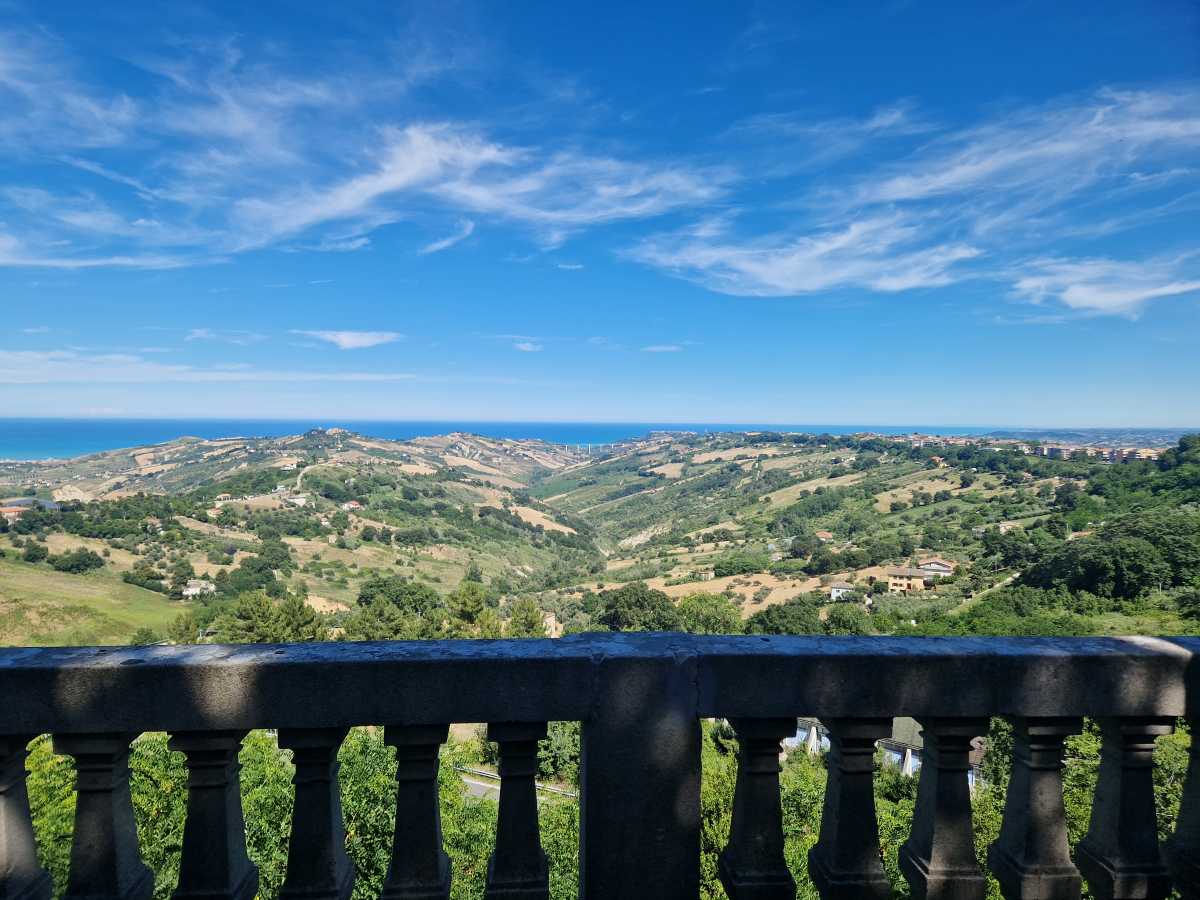
After a convivial lunch featuring traditional Abruzzese specialties, participants continued the program with a walk through the Villa Comunale, enjoying the wide panorama extending from the hills of Atri to the Adriatic Sea.
The day concluded with final farewells, leaving the attendees with the memory of an initiative that successfully combined faith, culture, friendship, and knowledge of the land, in the full Constantinian spirit of service, fraternity, and witness to Christian values.