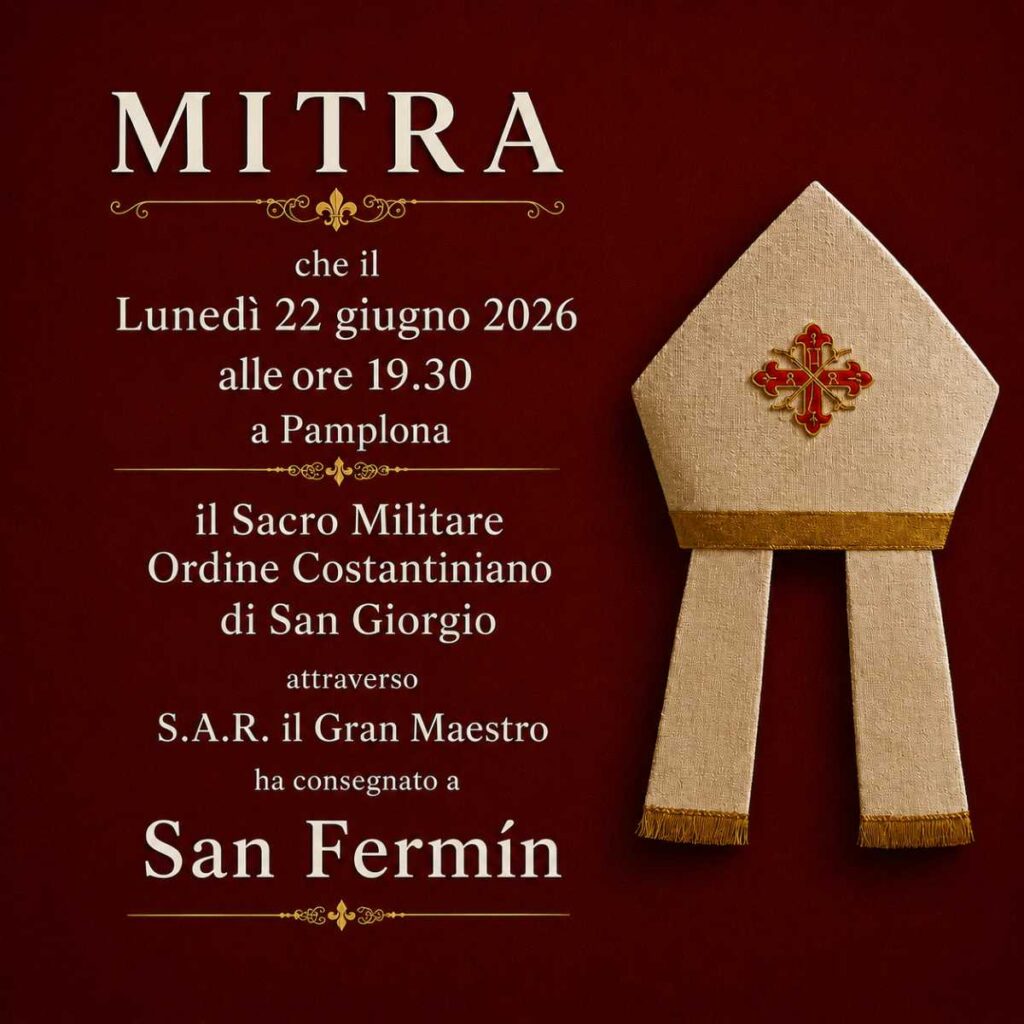
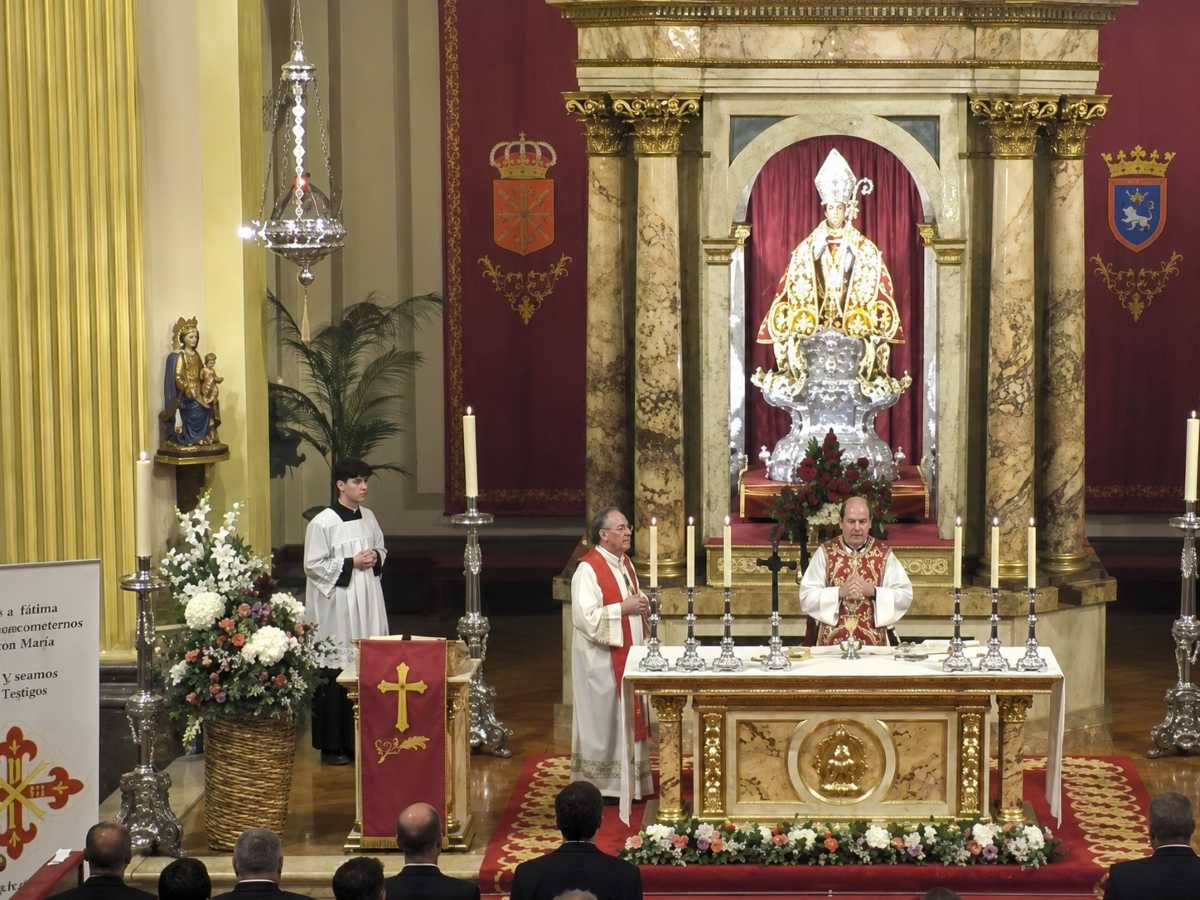
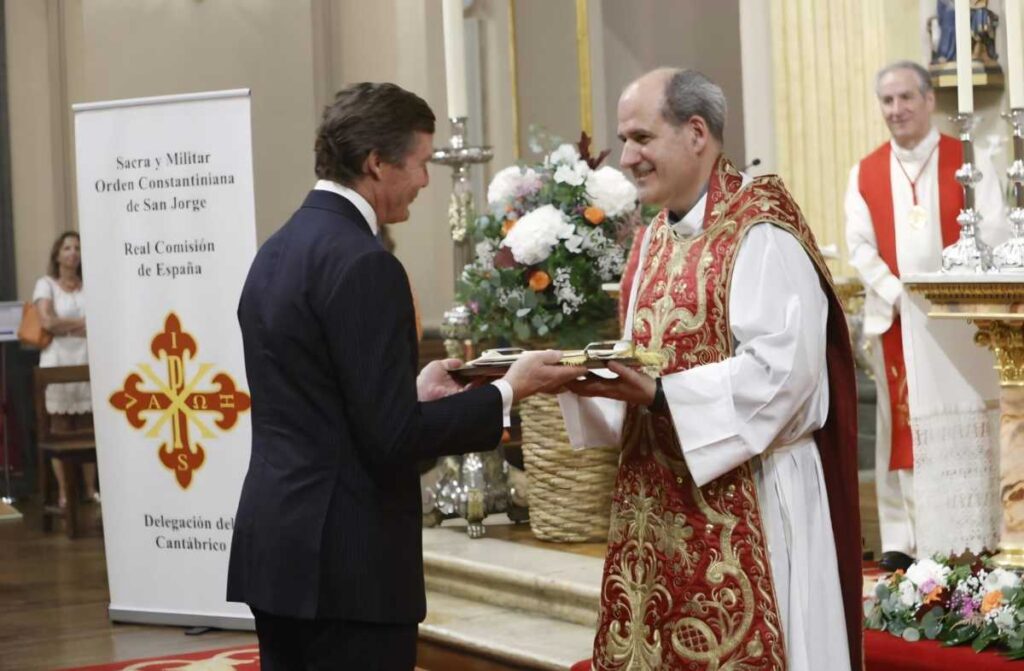
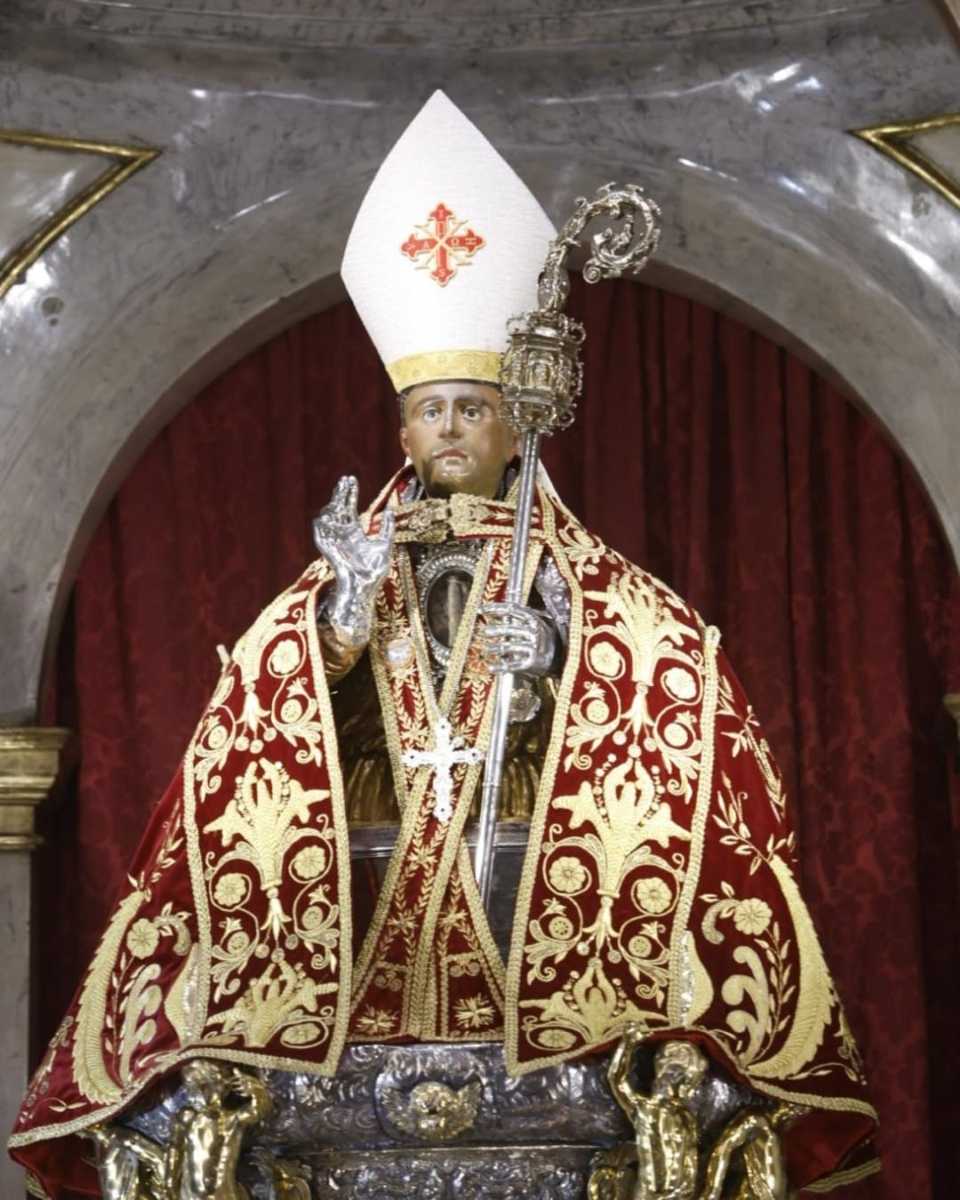
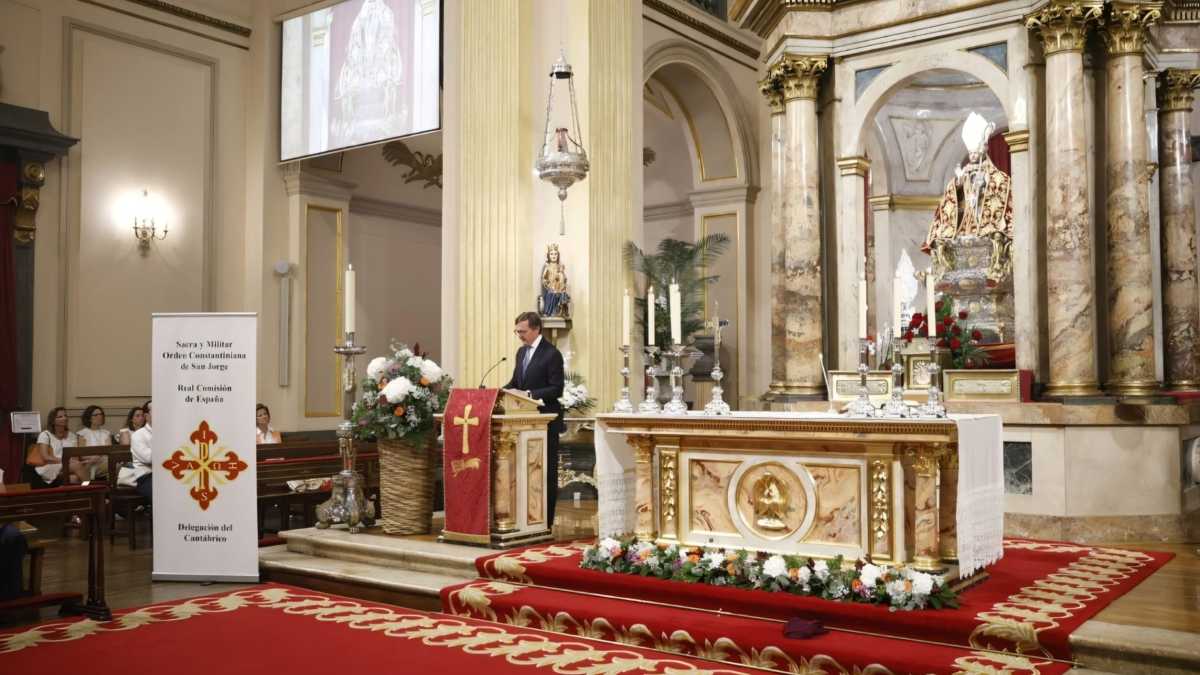
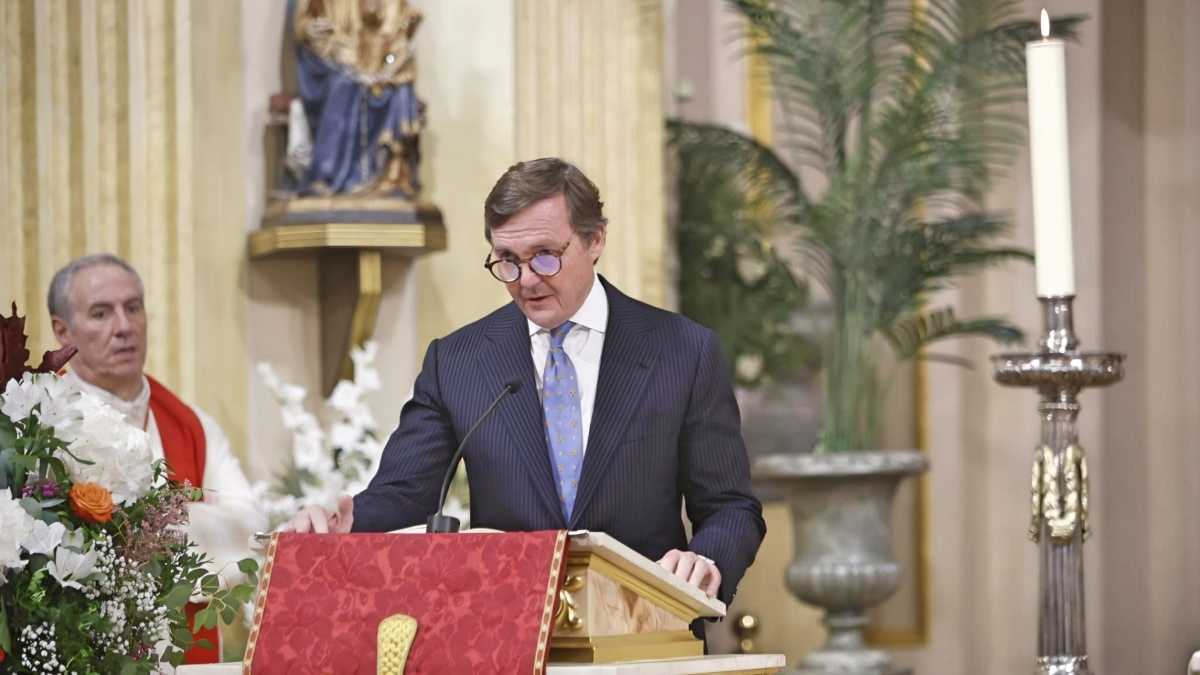
In a ceremony marked by deep solemnity, devotion, and a sense of history, the Sacred Military Constantinian Order of Saint George undertook, on Monday, 22 June 2026, a significant act of tribute at the Parish of Saint Lawrence in Pamplona, capital of Navarre, by donating a new mitre intended to adorn the famous bust-reliquary of Saint Fermín.
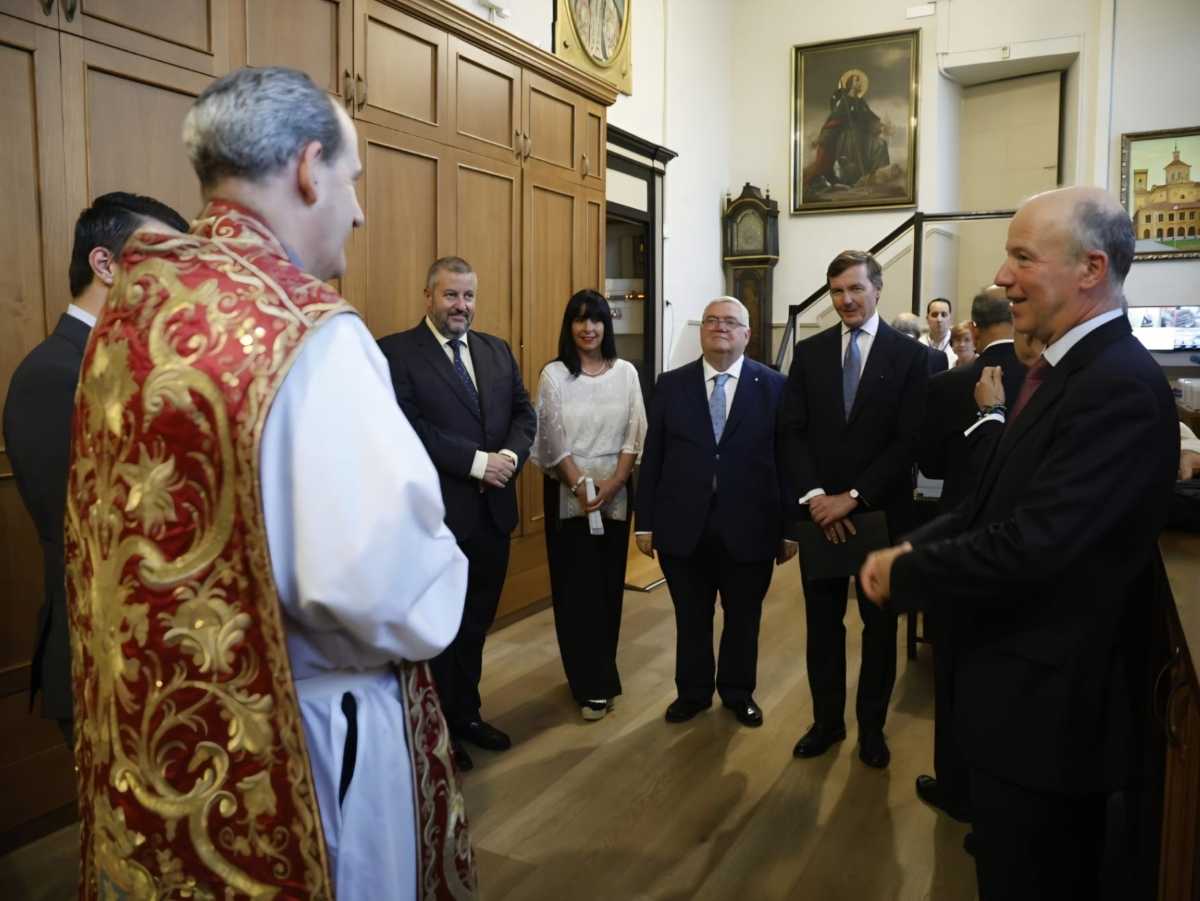
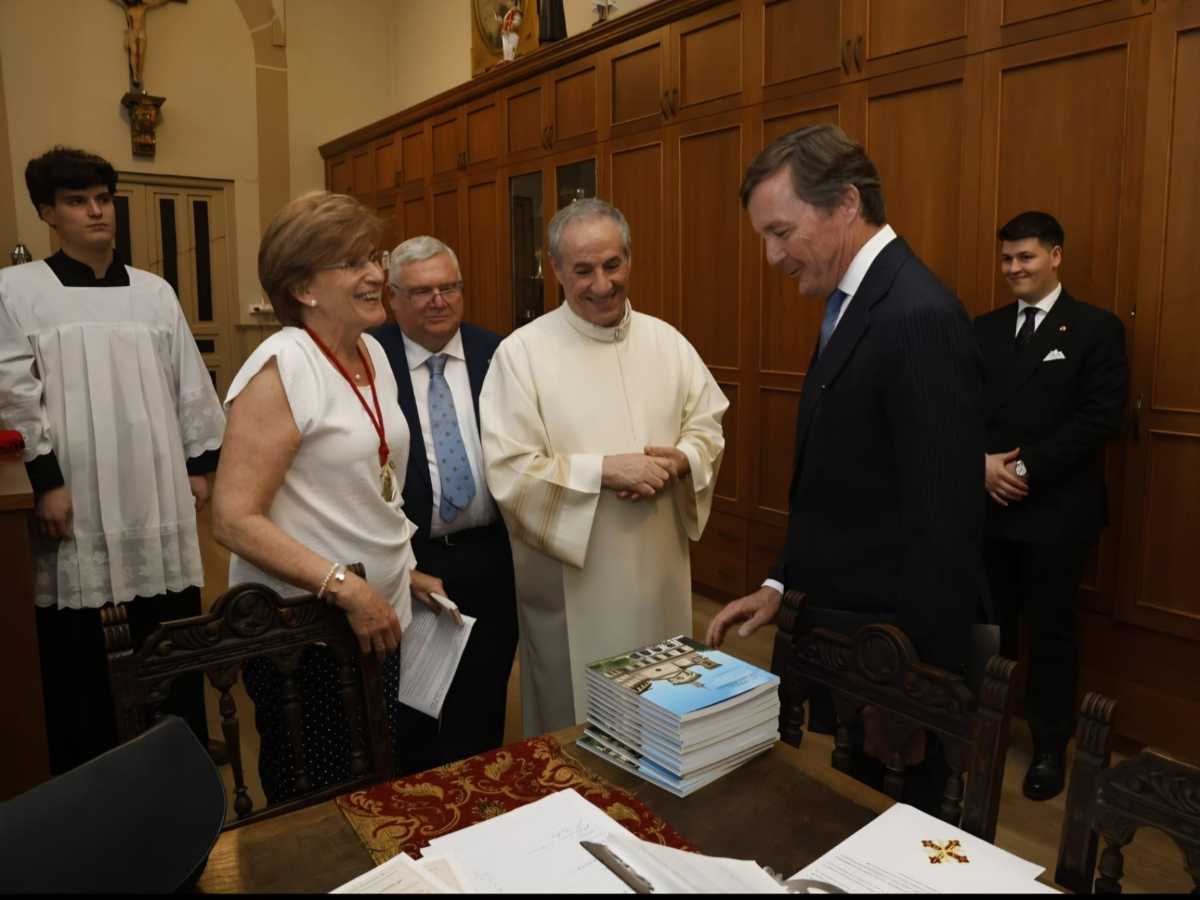
A delegation of the Constantinian Order, led by the Grand Master, HRH Prince Pedro of Bourbon of the Two Sicilies, Duke of Calabria, Count of Caserta, Head of the Royal House of the Two Sicilies, accompanied by the President of the Commission for the Kingdom of Spain, H.E. Don Álvaro Zuleta de Reales y Ansaldo, Duke of Linares; by the Delegate for the Cantabrian region, Don Antonio Calvo y Rubio, Knight of Merit with Silver Star; by the Delegate for Aragon, Navarre and La Rioja, Don Juan Luis Doncel y Paredes, Knight Grand Cross of Jure Sanguinis; as well as Knights belonging to the two Delegations.
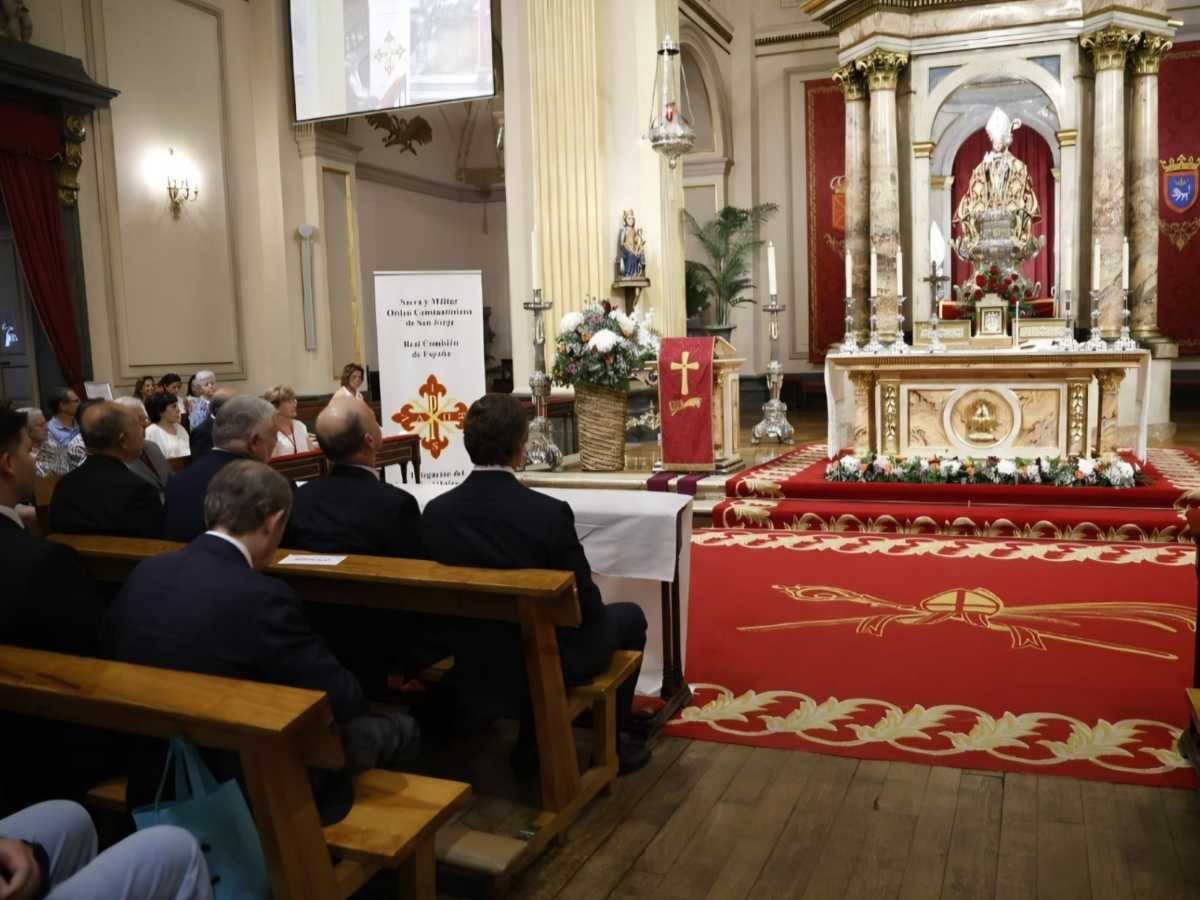
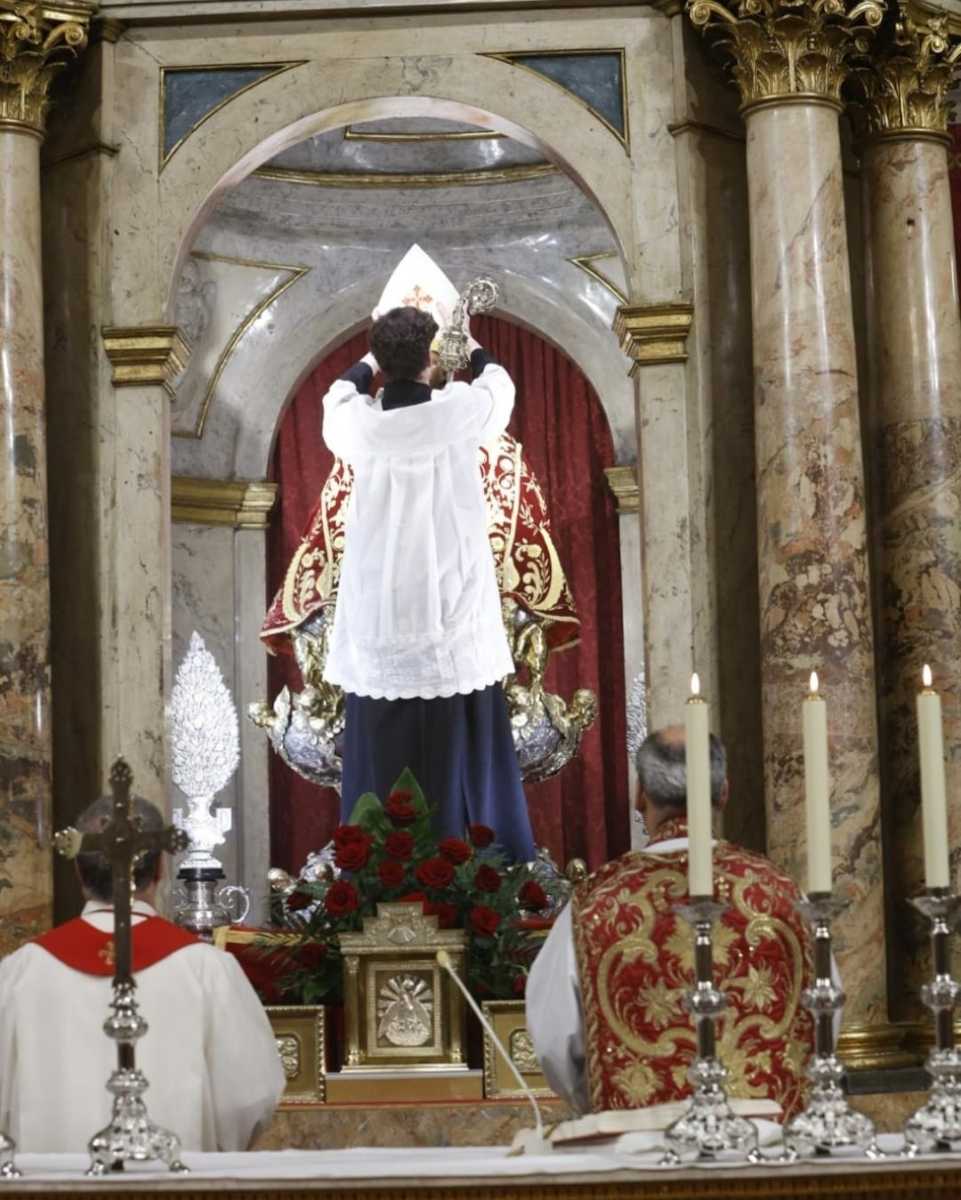
The Constantinian delegation was received in the sacristy of the Church of Saint Lawrence by the Pastor, Father Francisco Javier Leoz Ventura, and by the Vicar General of the Diocese of Pamplona-Tudela, Father Miguel Larrambebere Zabala. After institutional greetings, the representatives proceeded to the Chapel of Saint Fermín, raised according to tradition on the site of his native home, where the venerated bust-reliquary of Navarre’s co-patron is enshrined. Here the Holy Mass was celebrated, presided by the Vicar General and concelebrated by the Parish Priest; at the conclusion of the liturgy, HRH the Grand Master presented the new mitre, which was blessed and then placed upon the Saint’s bust, enriching the valuable patrimony of liturgical furnishings and sacred goldsmith work that adorn the relic during the celebrations of July and during the traditional religious manifestations dedicated to Saint Fermín.
During the homily, Father Miguel Larrambebere Zabala underscored the deep roots of Christian tradition and the meaning of Chivalry, charity, and Faith, values that the Sacred Military Constantinian Order of Saint George guards and promotes, linking them to the figure and testimony of Saint Fermín.
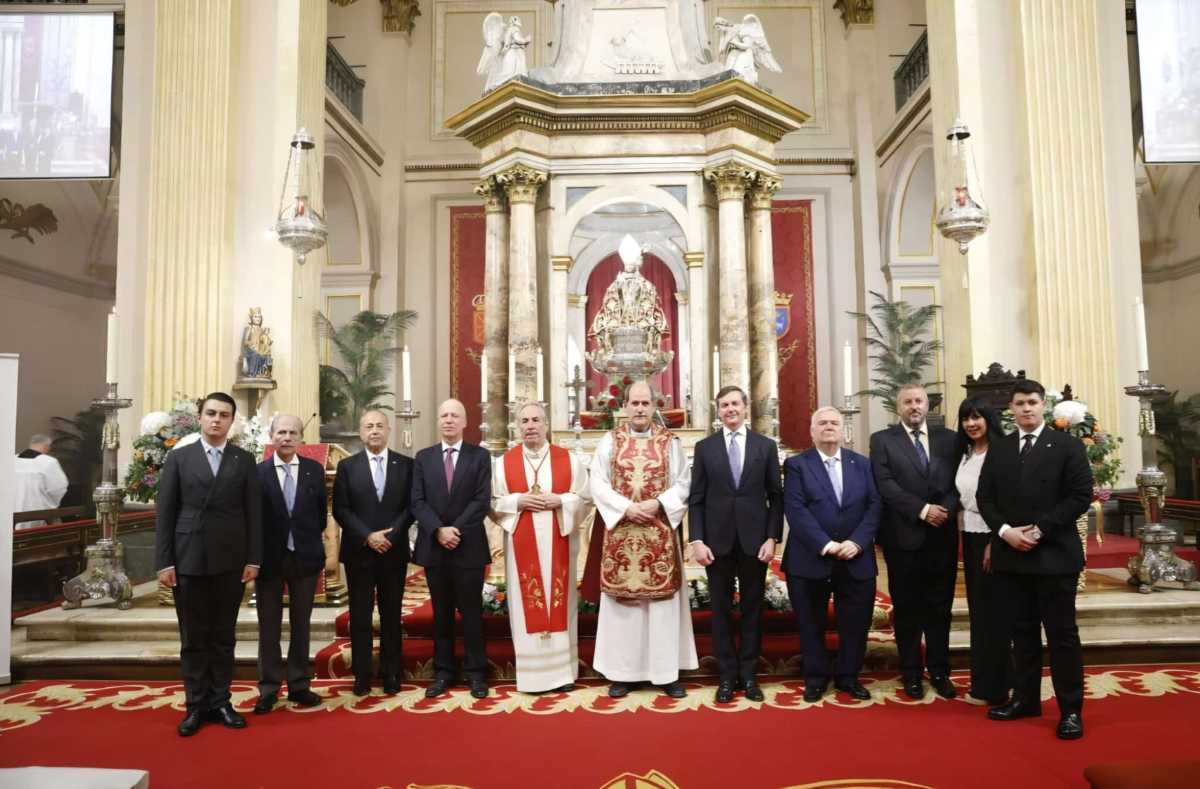
After the Eucharistic Celebration, a commemorative photograph was taken of the Constantinian delegation with the Pastor and the Vicar General at the foot of the Saint’s bust, symbolically sealing a new chapter in the bond between the ancient chivalric order and the people of Navarre.
Saint Fermín of Amiens, Bishop and martyr
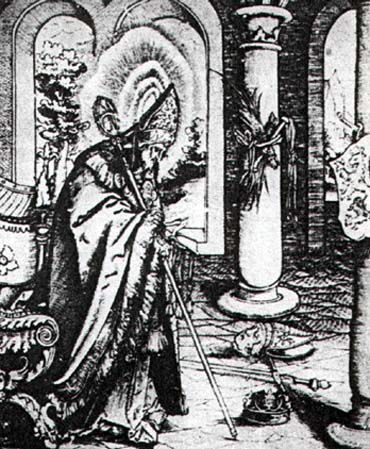
In visual art, works dedicated to Saint Fermín the bishop and martyr are easily identifiable due to his martyrdom, which made him more famous; indeed, having been beheaded, in some artworks he is depicted with his head in his hand, or looking at his severed head on the ground. According to tradition, Saint Fermín was born in Pamplona at the end of the 3rd century A.D. and was beheaded in Amiens (the ancient Samobriva Ambianorum) in Gallia Belgica, now France, on 25 September in a year between 290 and 303, venerated as bishop and martyr.
The earliest documentary testimonies about his life and cult date to the 8th century, a circumstance that has led some scholars to question the historicity of his figure, as noted by the Royal Spanish Academy of History.
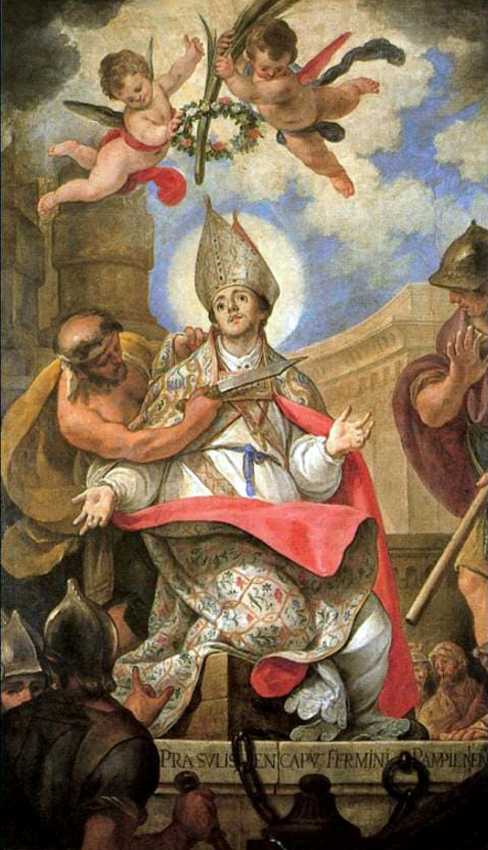
The painting that depicts the Martyrdom of Saint Fermín, by the Spanish painter José Ximénez Donoso. The scene shows the saint, a native of Pamplona and the first Bishop of Amiens, at the moment of martyrdom. The work is associated with the Real Congregación de San Fermín de los Navarros in Madrid. Agenatic legends tell that Fermín was the son of the Roman Senator Firmo, Governor of Pamplona, who converted to Christianity along with his family. At twenty-four, Fermín was consecrated bishop and left his homeland to evangelize Gaul.