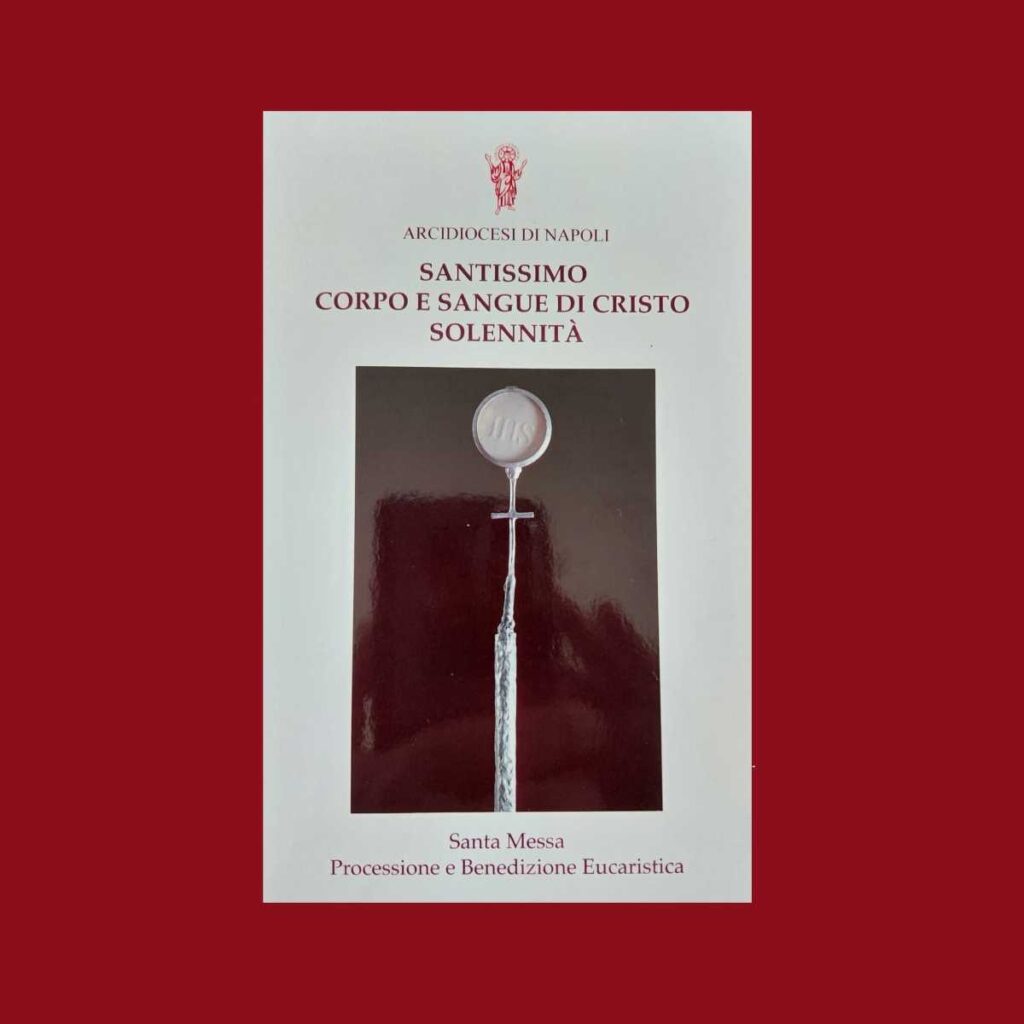
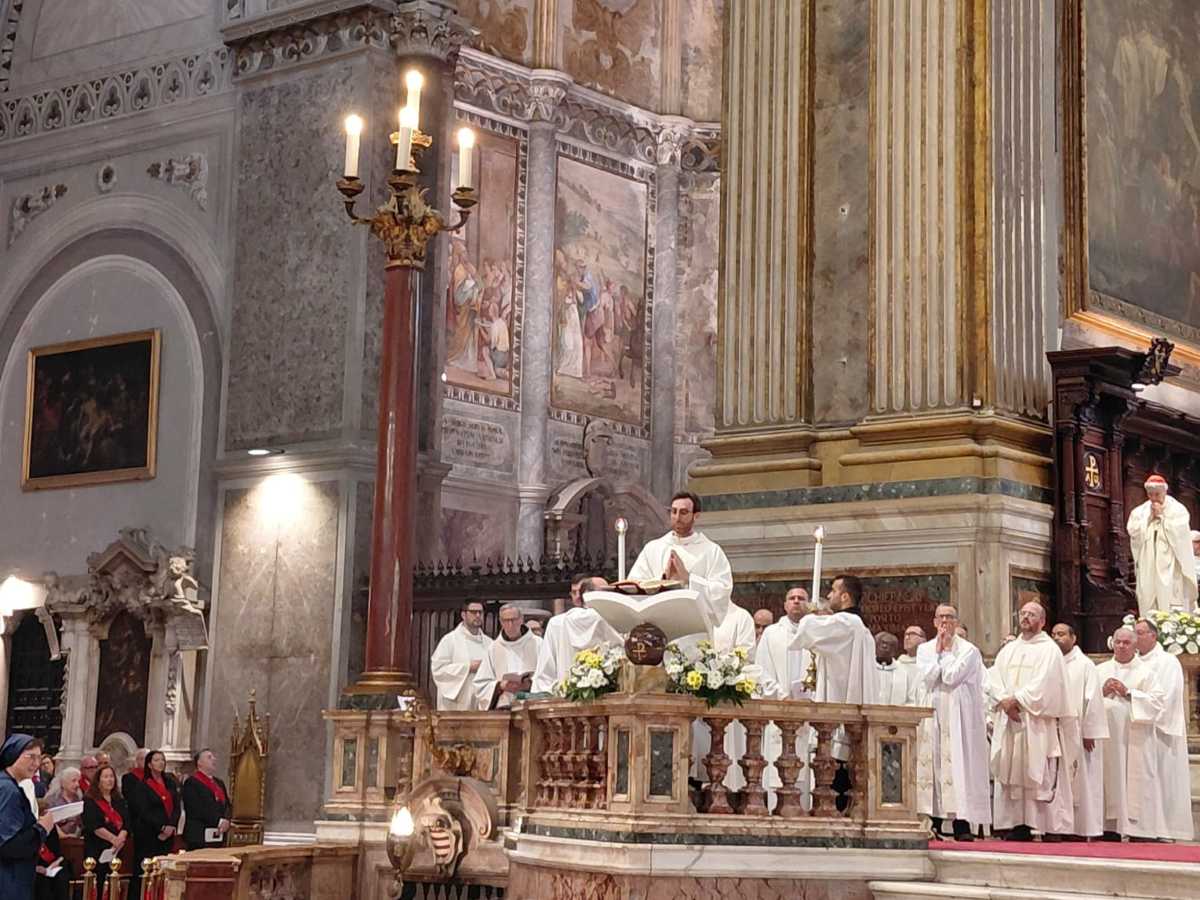
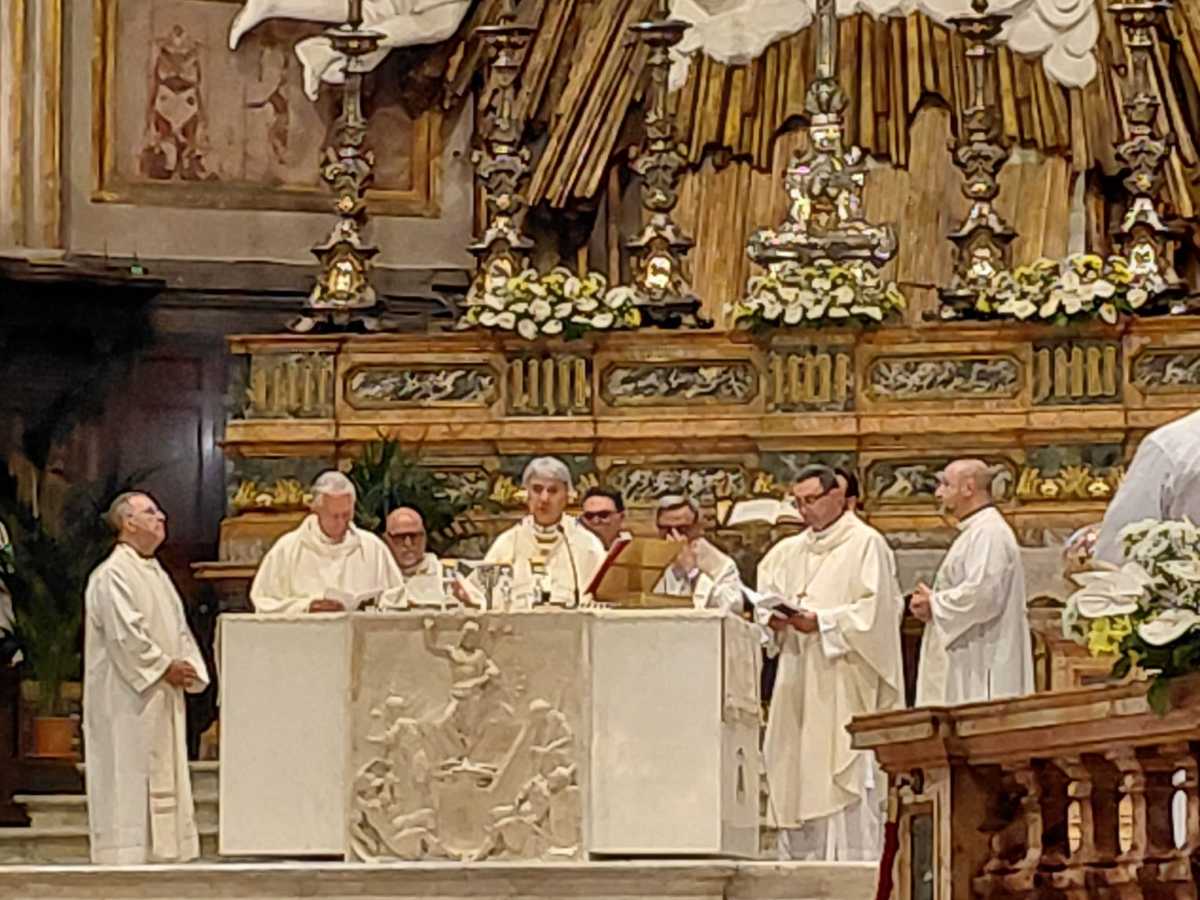
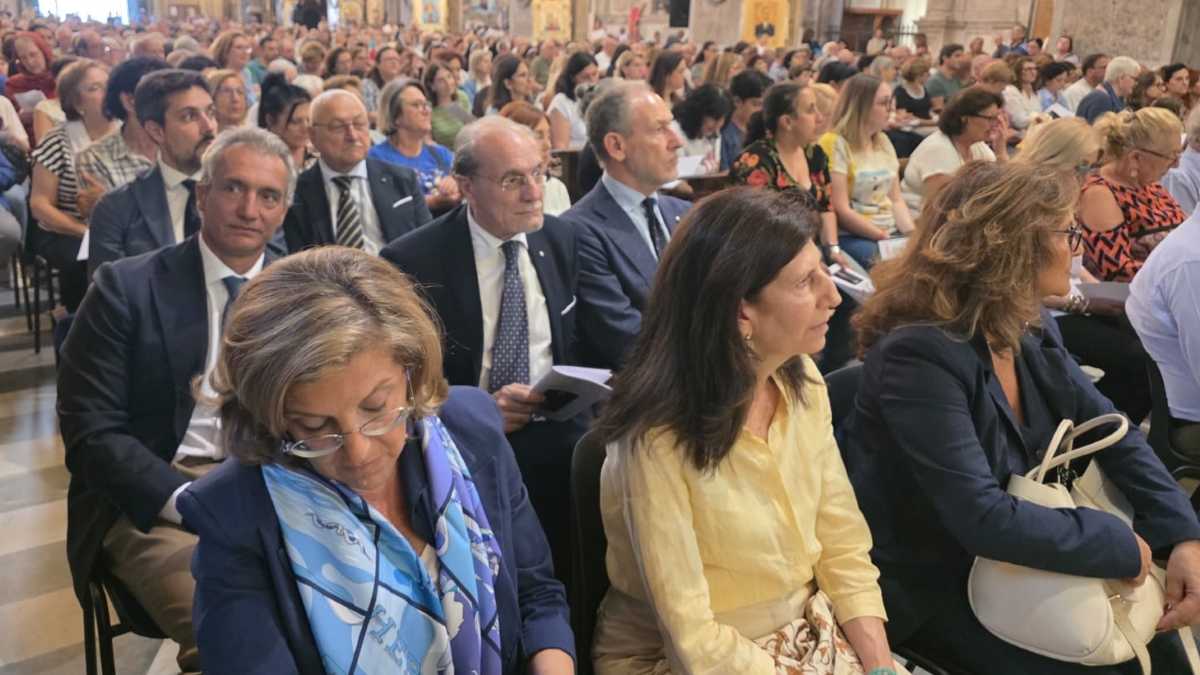
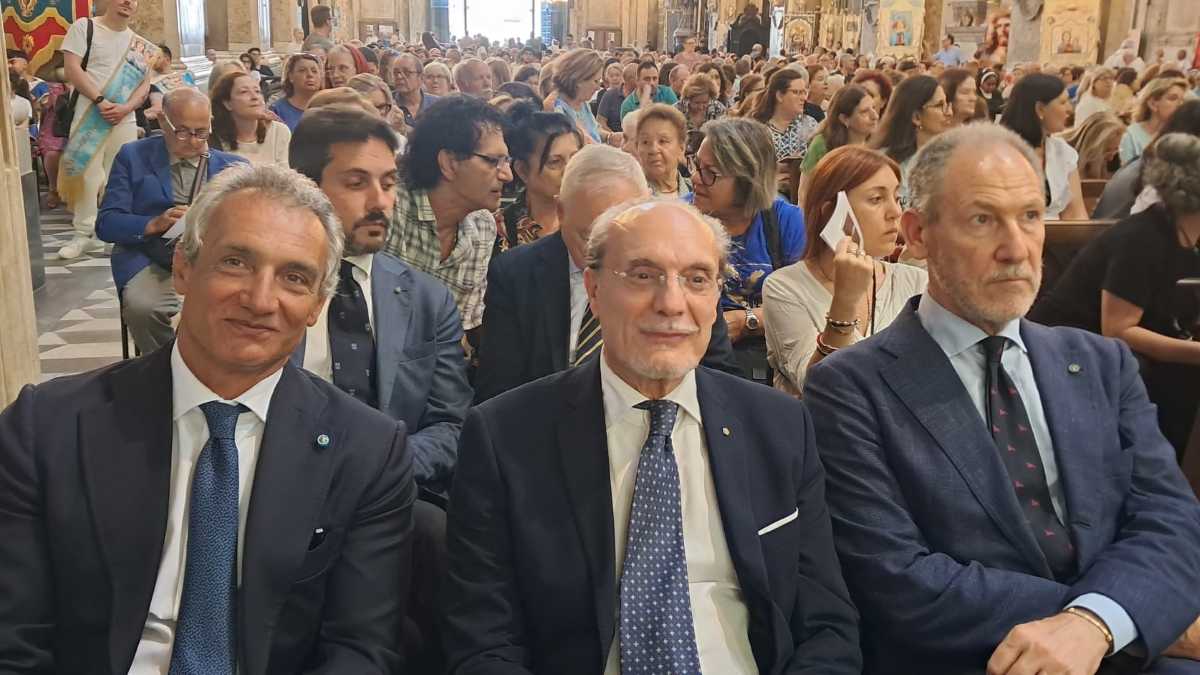
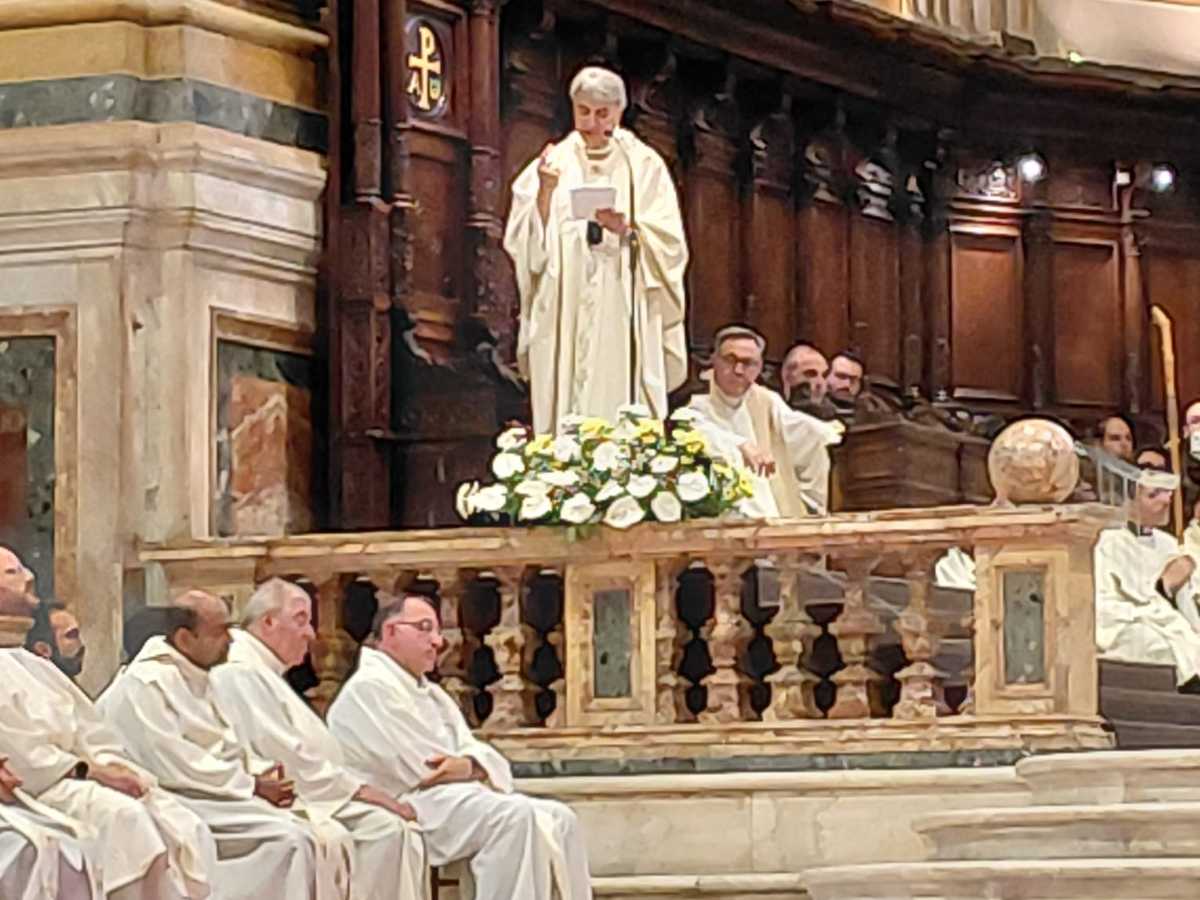
On Thursday, June 4, 2026, the Archdiocese of Naples celebrated the Solemnity of the Most Holy Body and Blood of Christ in the presence of ecclesiastical, civil, and military authorities. Following the Holy Mass celebrated in the Cathedral of Santa Maria Assunta, the traditional Eucharistic Procession took place through the streets of the city center, concluding with the solemn Eucharistic Blessing at the Parish of Santa Caterina a Formiello.
In light of the diocesan celebration of the solemnity, evening services on June 4 were suspended in all Parishes and Rectories across the Municipalities of the City of Naples. This allowed the entire ecclesial community to gather around their Pastor in a single act of Faith and adoration of the Most Holy Sacrament. As is the tradition, on the following Sunday, June 7, the solemnity was celebrated in all municipalities of the Archdiocese with Eucharistic Processions and local community initiatives.
Members of the Naples and Campania Delegation of the Sacred Military Constantinian Order of Saint George took part in the celebration. The delegation was led by the Delegate, Count Gianluigi Gaetani dell’Aquila d’Aragona of the Dukes of Laurenzana, Knight of Justice, accompanied by his spouse, Dr. Annalisa Dotoli.
They were joined by:
-
The interim Secretary General, Nob. Antonio Masselli, Knight of Jure Sanguinis, accompanied by his spouse, Dr. Ornella de Paulis;
-
The interim Head of Communications, Prof. Antonio De Stefano, Knight of Jure Sanguinis;
-
The interim Head of Culture, Don Antonino Sersale of the Marquises Sersale, Knight of Justice;
-
The interim Head of Operational Activities, Atty. Valeria Pessetti, Dame of Merit with Silver Star;
-
The interim Head of Ceremonies, Dr. Domenico Giuseppe Costabile, Knight of Merit.
The Holy Mass
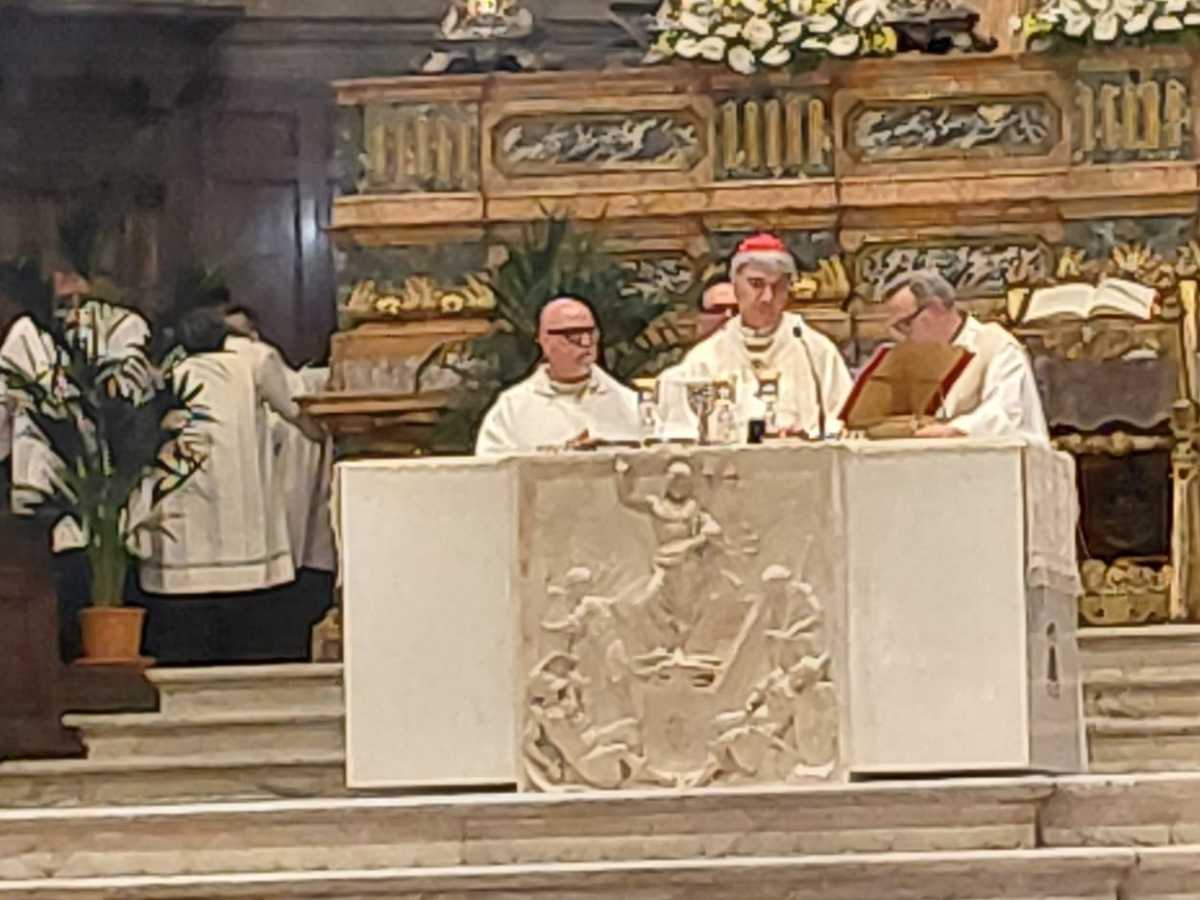
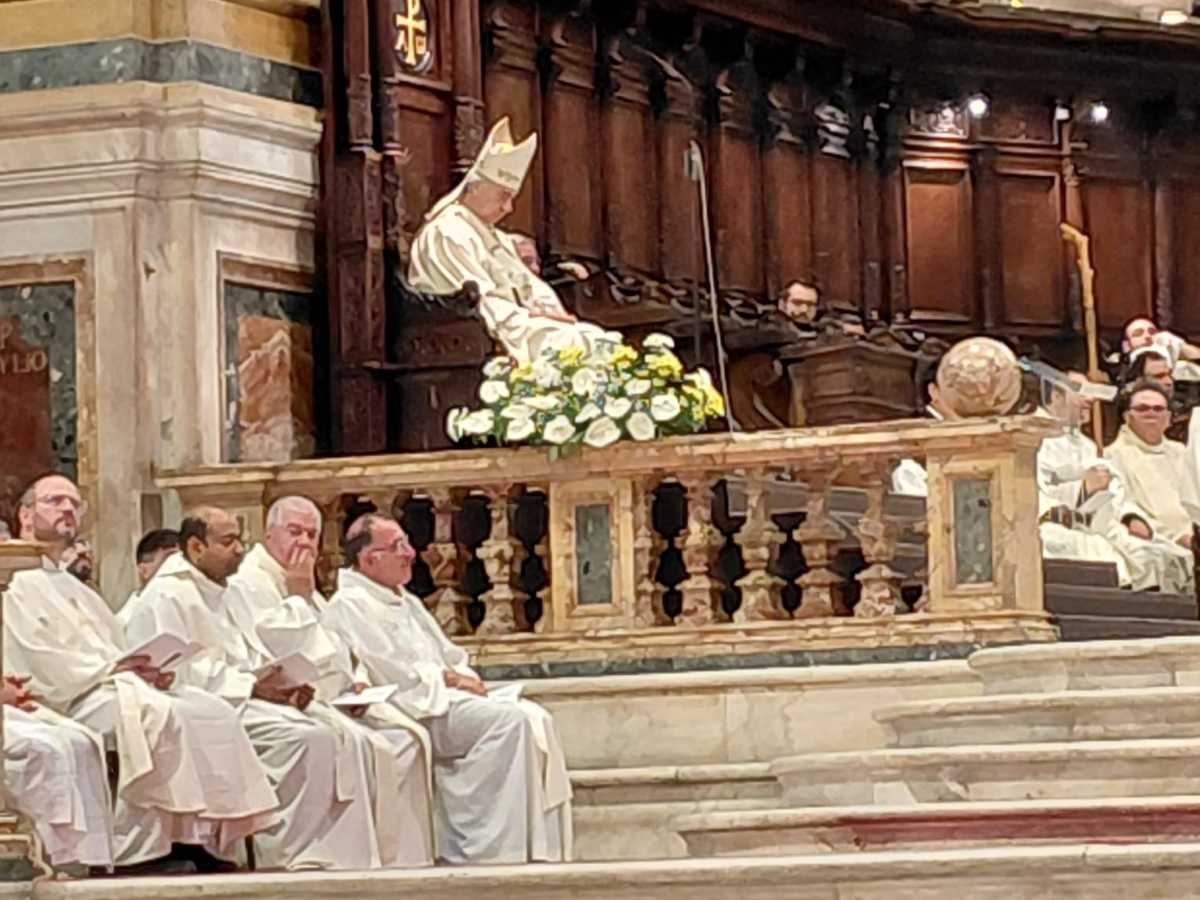
At 7:00 PM, in the Cathedral of Santa Maria Assunta, the Metropolitan Archbishop of Naples, His Eminence Cardinal Domenico Battaglia, presided over the solemn Eucharistic Celebration of Corpus Domini. Among the concelebrants were the Auxiliary Bishops of Naples: His Excellency Most Reverend Monsignor Francesco Beneduce, His Excellency Most Reverend Monsignor Gaetano Castello, and His Excellency Most Reverend Monsignor Michele Autuoro—the Bishop-elect and Metropolitan Archbishop of Benevento, where he will make his solemn entry on the afternoon of Sunday, June 28, 2026, during the First Vespers of Saints Peter and Paul. Also concelebrating was the diocesan clergy, including Father Salvatore Giuliano, Chaplain of Merit and Parish Priest of the Constantinian Basilica of San Giovanni Maggiore, which houses the Magisterial Chapel of the Naples and Campania Delegation.
The liturgical music was performed by the “S. Stefano” Polyphonic Choir of the City of Melito, directed by Maestro Antonio Autorino. The choir operates out of the Parish of Santa Maria delle Grazie, an important religious and social cornerstone for the local community. Established in November 2023, the choir is composed of approximately forty-five singers, including sopranos, altos, tenors, and basses.
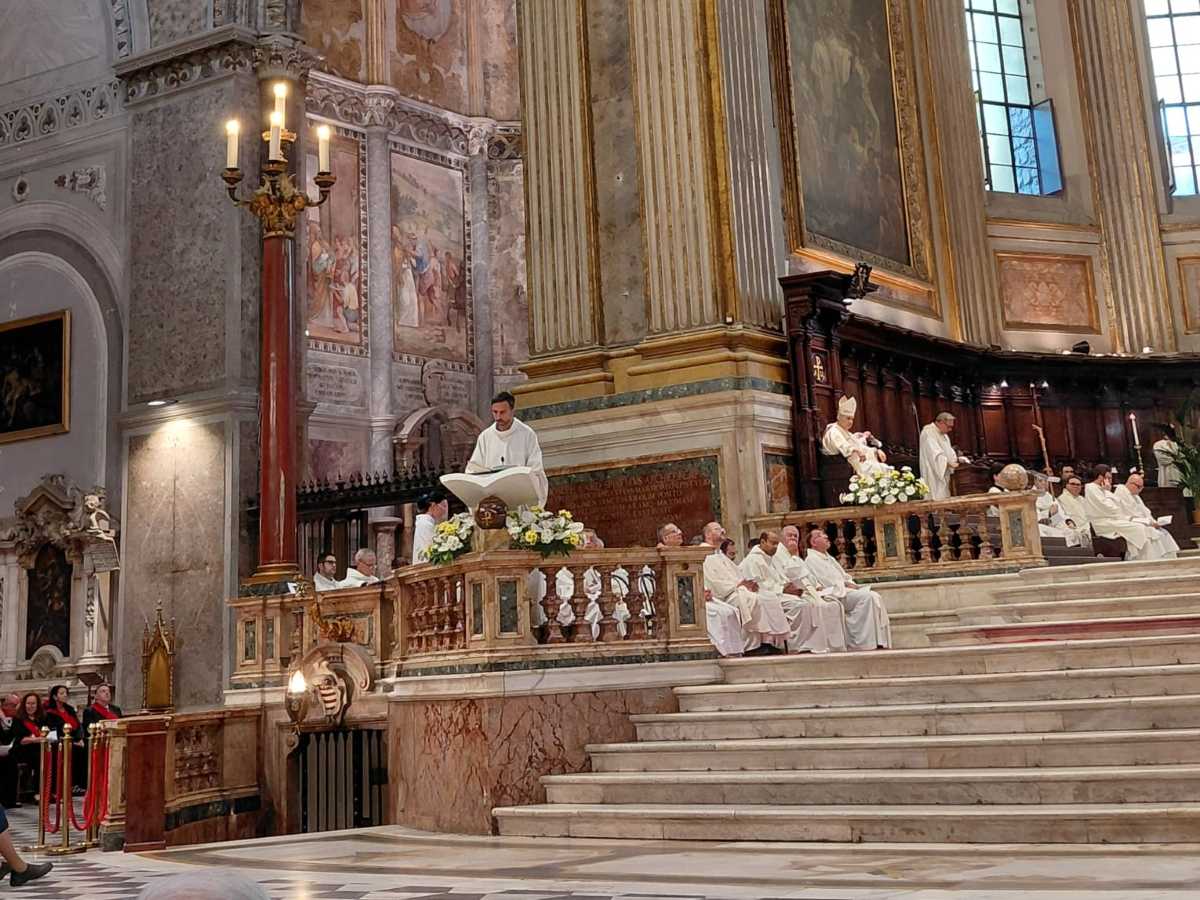
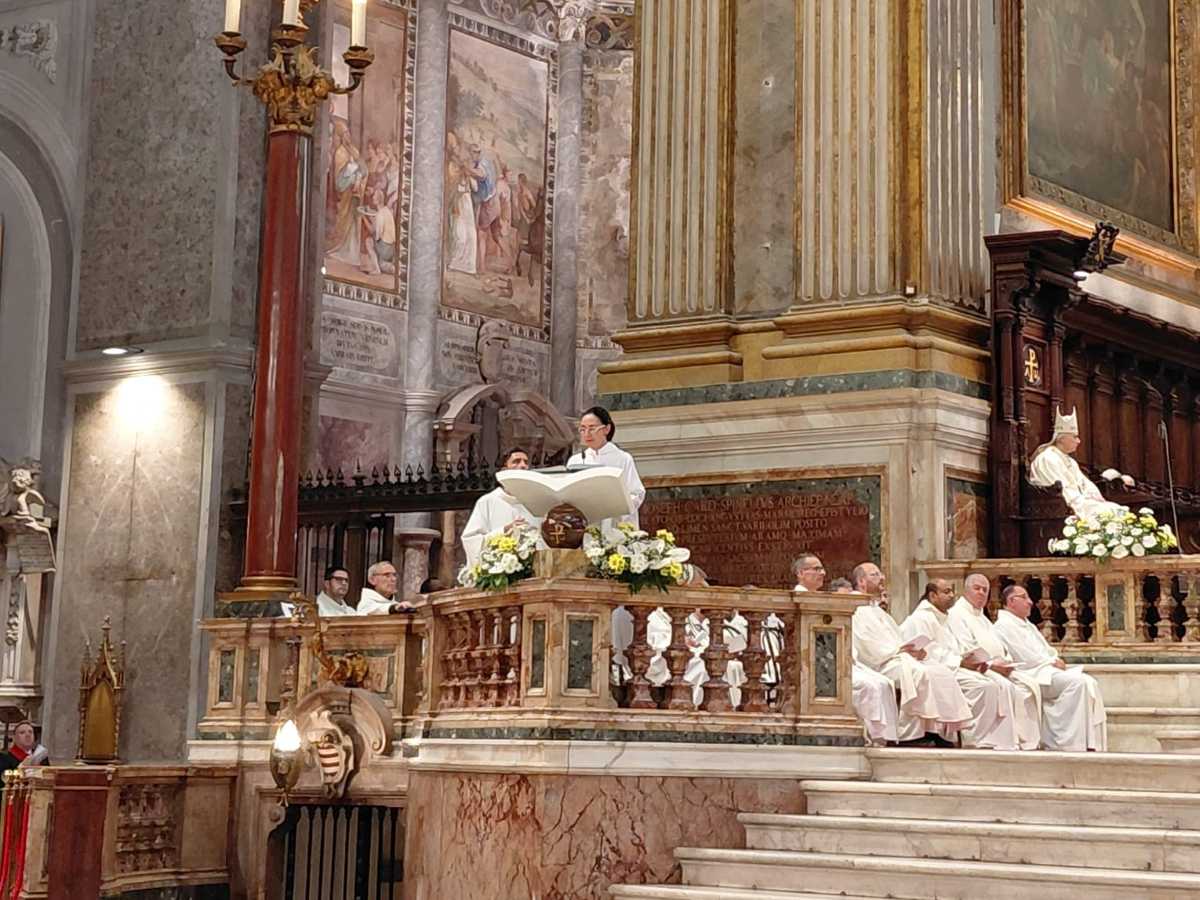
The First Reading (Deuteronomy 8:2-3, 14b-16a – He fed you with manna, which you did not know, nor did your fathers know), the Responsorial Psalm (Psalm 147 – Praise the Lord, O Jerusalem), and the Second Reading (1 Corinthians 10:16-17 – Because there is one bread, we who are many are one body) were proclaimed by altar servers from the cathedral.
The Sequence (Lauda Sion), the Gospel (John 6:51-58 – My flesh is true food, and my blood is true drink), and the Prayers of the Faithful were respectively proclaimed and led by the Deacon assigned to the Ministry of the Word.
The Eucharist: Bread of Unity and a School of Inclusion
Echoing the Pastoral Guidelines—“Church of Naples, for you Emmaus is not just a beautiful story from the Gospel: it is your mirror, your style, your Gospel lived out. Walking together. Listening to the Word until it warms the heart. Breaking the bread and recognizing it. Returning, even when tired, but with steps of joy, to the city where everything seemed lost… to announce that Life has won”—Cardinal Domenico Battaglia centered his homily on the foundational themes of the solemnity. He emphasized that the Word of God does not describe a ritual to be observed from afar, but a journey to be walked together. Corpus Domini, he stated, is not a celebration of certainties kept within the walls of churches, but the celebration of a God who draws near, gives Himself, and becomes bread for humanity.
The Eucharist is the “bread that allows itself to be eaten,” capable of breaking individualism and teaching brotherly love and communion. Cardinal Battaglia invited the faithful to cast aside noise, demands, and superficiality to pause before the mystery of a God who makes Himself small to be welcomed, living the Eucharist not as a mere ritual, but as a concrete path of communion and sharing. He also recalled the experience of manna in the desert as a sign of trust in divine Providence that must be renewed daily.
At the heart of his reflection was the meaning of the broken bread, a symbol of a communion born from sharing and mutual welcome. “The Eucharist is not a sacrament for the individual, but the sacrament of unity,” Cardinal Battaglia stated, highlighting how Christians are called to overcome divisions, rivalries, and individualism to build open and supportive communities. He pointed to the Church as a place of inclusion, capable of valuing differences and walking alongside the most vulnerable. Recalling the example of Jesus at the Last Supper, who did not exclude even Judas, he reminded everyone that God’s love precedes all human merit.
In conclusion, Cardinal Battaglia highlighted the inseparable bond between adoration and commitment to those who suffer. To receive the Body of Christ means to recognize Him also in the poor, immigrants, the sick, the unemployed, and victims of violence. For this reason, he invited the faithful to become, within their families and daily lives, “a piece of good bread,” capable of bringing listening, peace, and dignity to those who need it most.