The Feast of Corpus Christi in Valencia
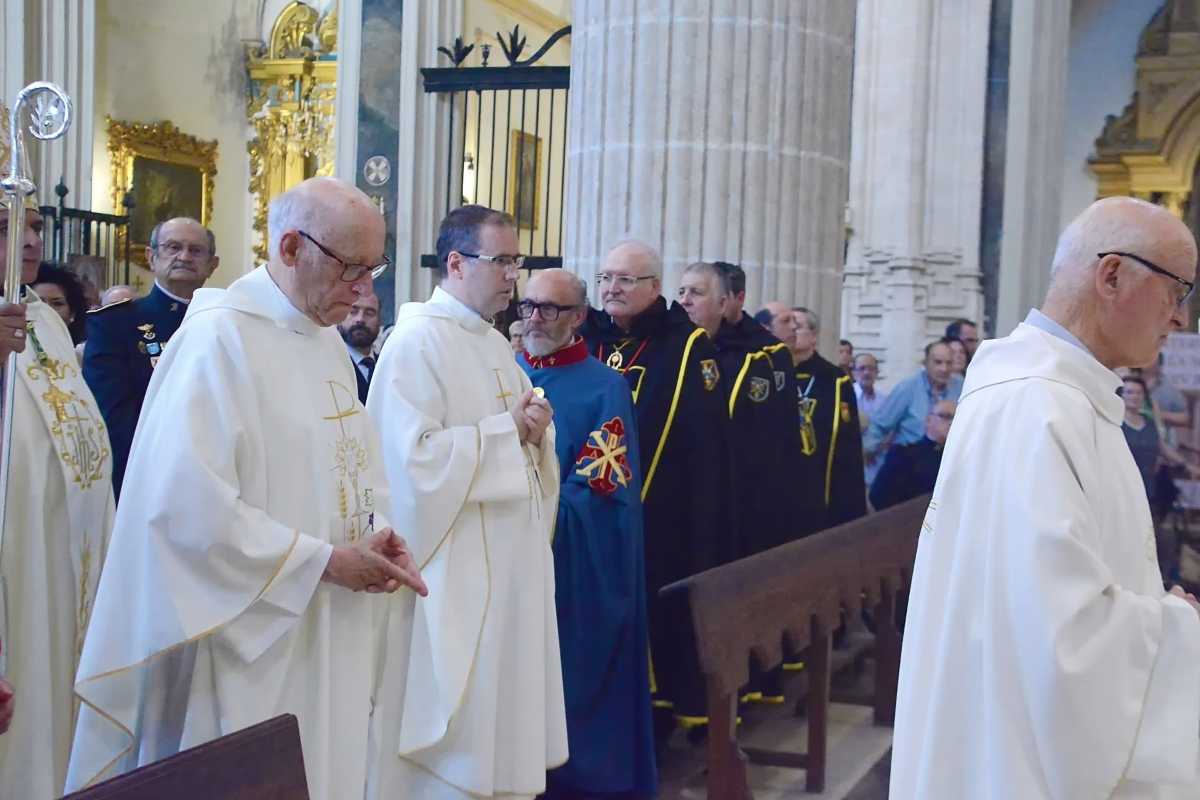
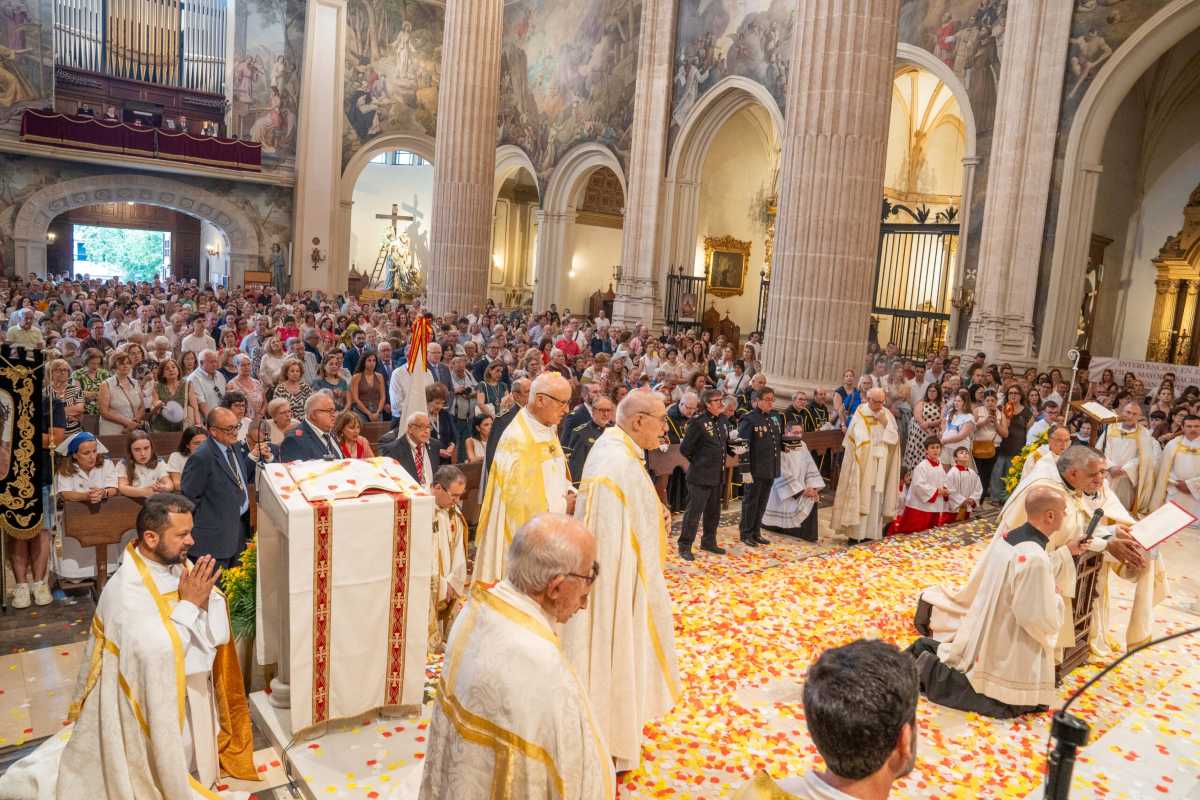
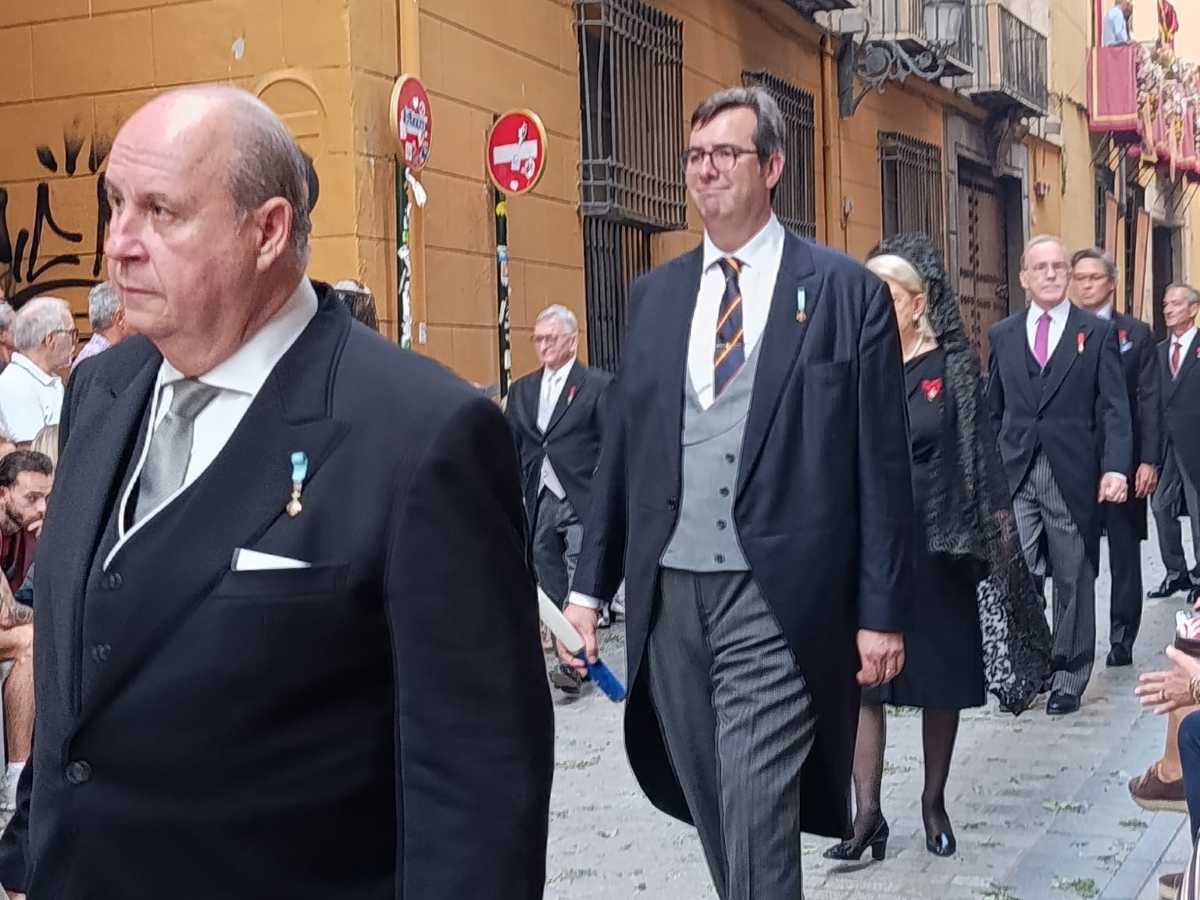
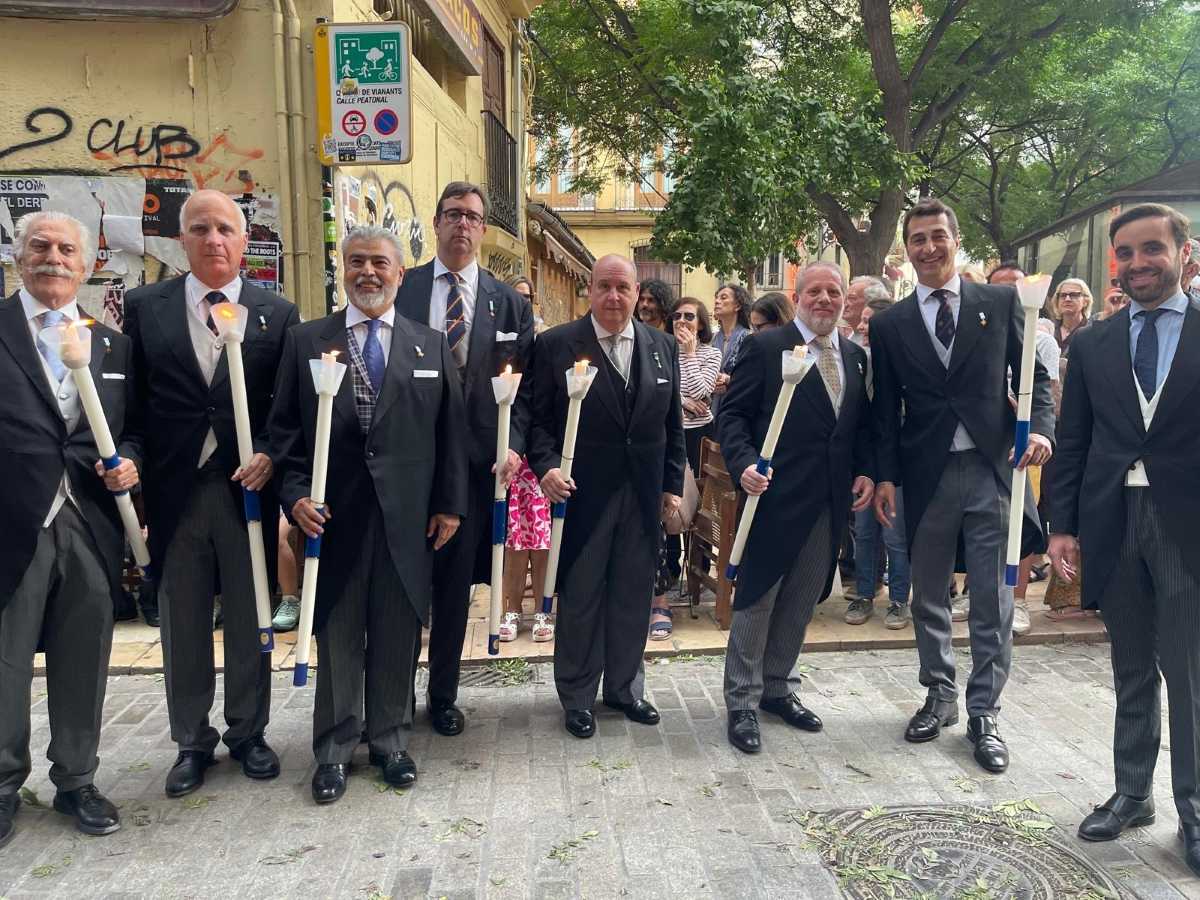
The Valencian Community Delegation of the Sacred Military Constantinian Order of Saint George participated in the solemn events commemorating the 700th anniversary of Corpus Christi in Valencia, Spain —a milestone of extraordinary significance for the religious, cultural, and historical life of the city.
Its presence in this celebration serves as a testimony to its commitment to the defense and promotion of Christian tradition, as well as the preservation of the spiritual heritage that has shaped Valencia’s identity over the centuries. The Valencian Corpus Christi, popularly known as “La Festa Grossa”, is one of the oldest religious and folk manifestations in Europe and one of the city’s most emblematic celebrations. Its seventh centenary underscores the continuity of a tradition that, generation after generation, has seamlessly blended Eucharistic devotion with an extraordinary artistic, musical, and cultural heritage, becoming one of the primary symbols of Valencian identity.
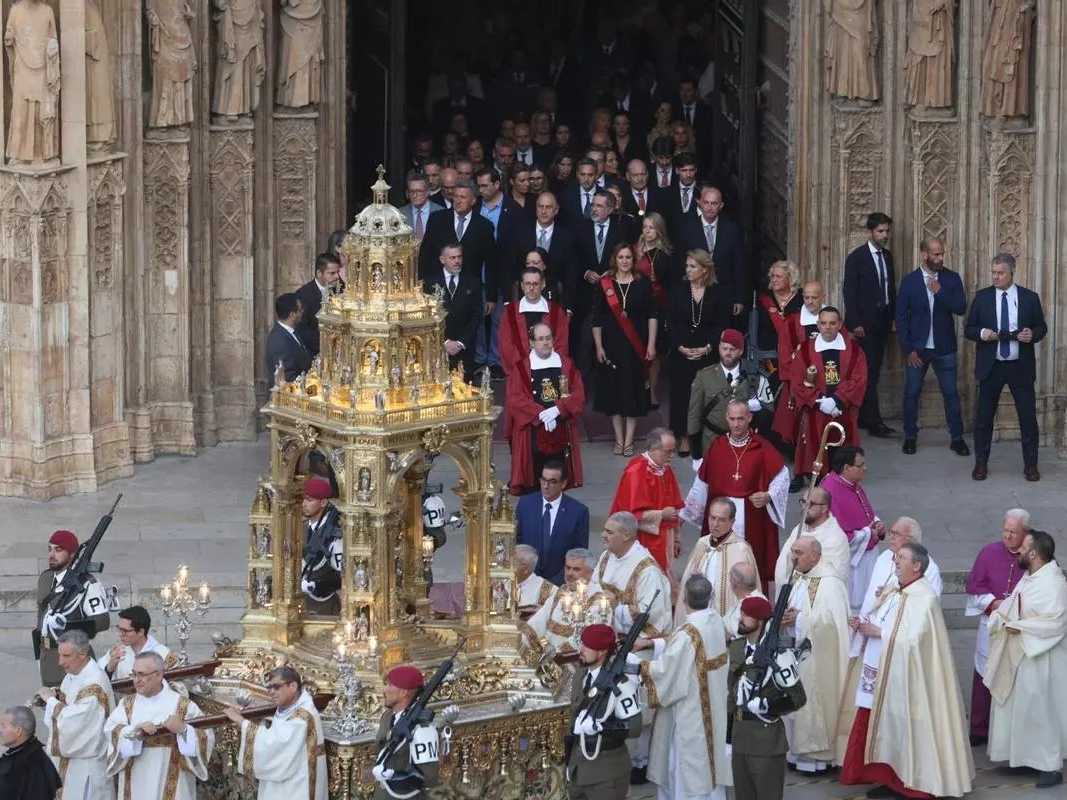
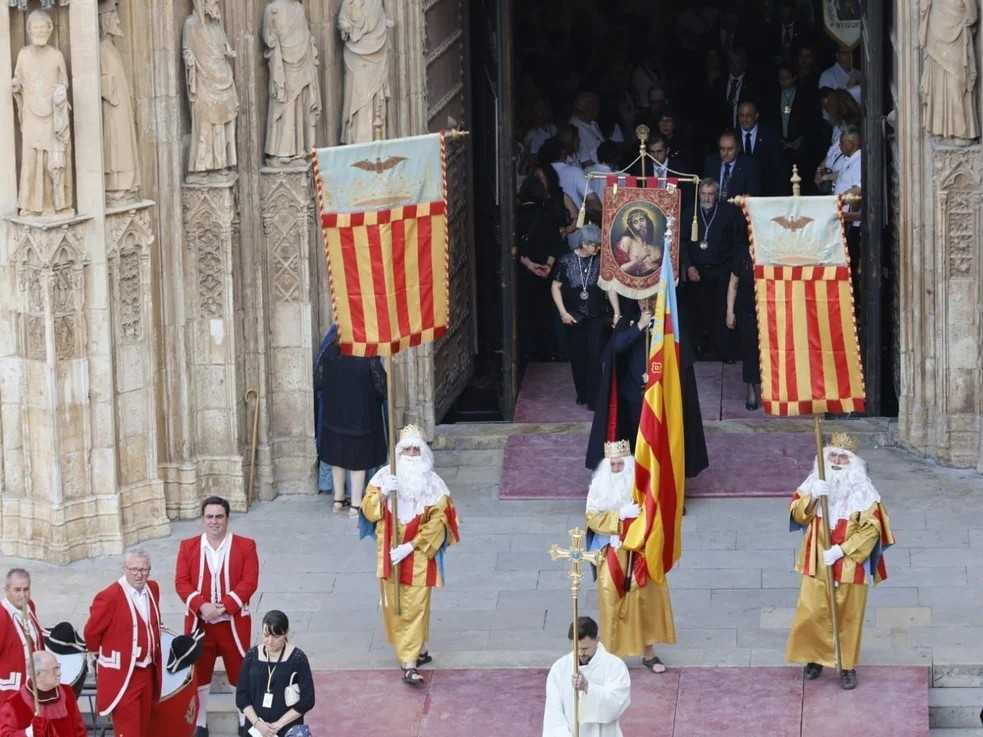
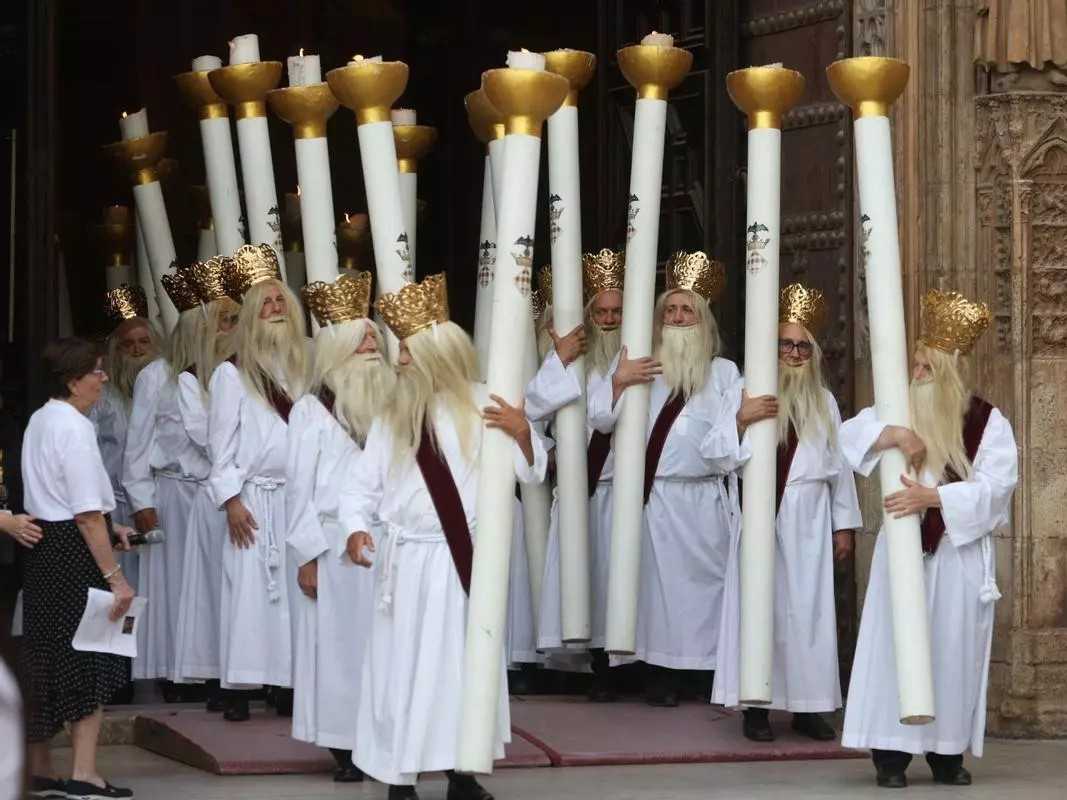
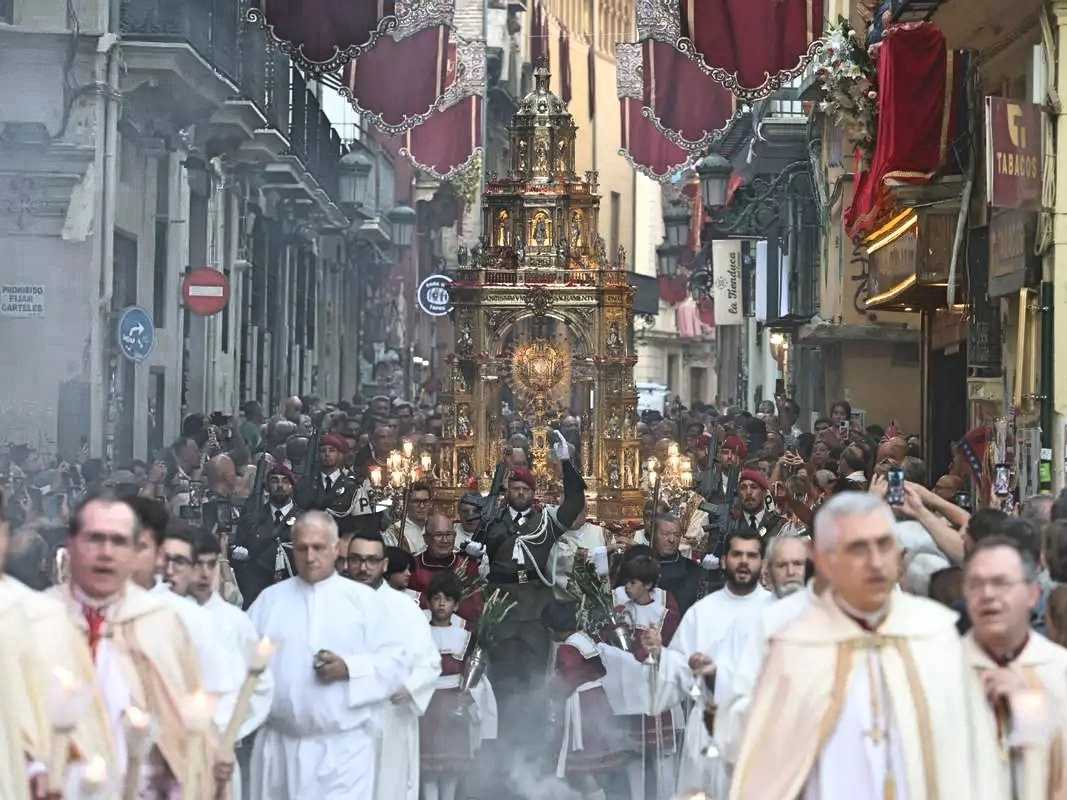
During the General Procession, the streets of the historic center once again became the stage for a manifestation of faith and tradition. The event featured the historic Rocas (triumphal floats), biblical and allegorical characters, traditional dances, and the majestic processional Monstrance of the Cathedral of Valencia, which is considered one of the most important in the world. All of this makes the Valencian Corpus Christi a unique celebration that transcends the religious sphere to form part of the cultural heritage shared by all Valencians.
The participation of the Constantinian Delegation in this commemoration reflects the historic bond of the Order with the promotion of Eucharistic worship and its support for the great celebrations of the Church, reaffirming its vocation of service to the faith, tradition, and Christian culture.
In this highly significant year, as Valencia celebrates seven centuries of one of its most representative festivals, the Sacred Military Constantinian Order of Saint George wishes to express its gratitude to all the institutions, associations, and volunteers who make the preservation of this historical and spiritual legacy possible, passing it on alive to future generations.
Furthermore, the celebration of the 700th anniversary of Corpus Christi offers an opportunity to highlight a tradition that has marked the history of Valencia and continues to serve as a benchmark for coexistence, identity, and cultural heritage, projecting an image of the city’s historical and spiritual wealth to the world.
The Feast of Corpus Christi in Barcelona
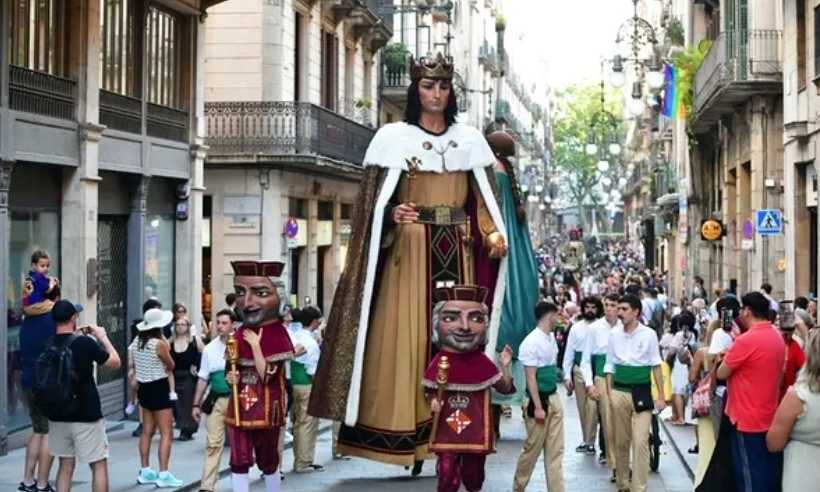
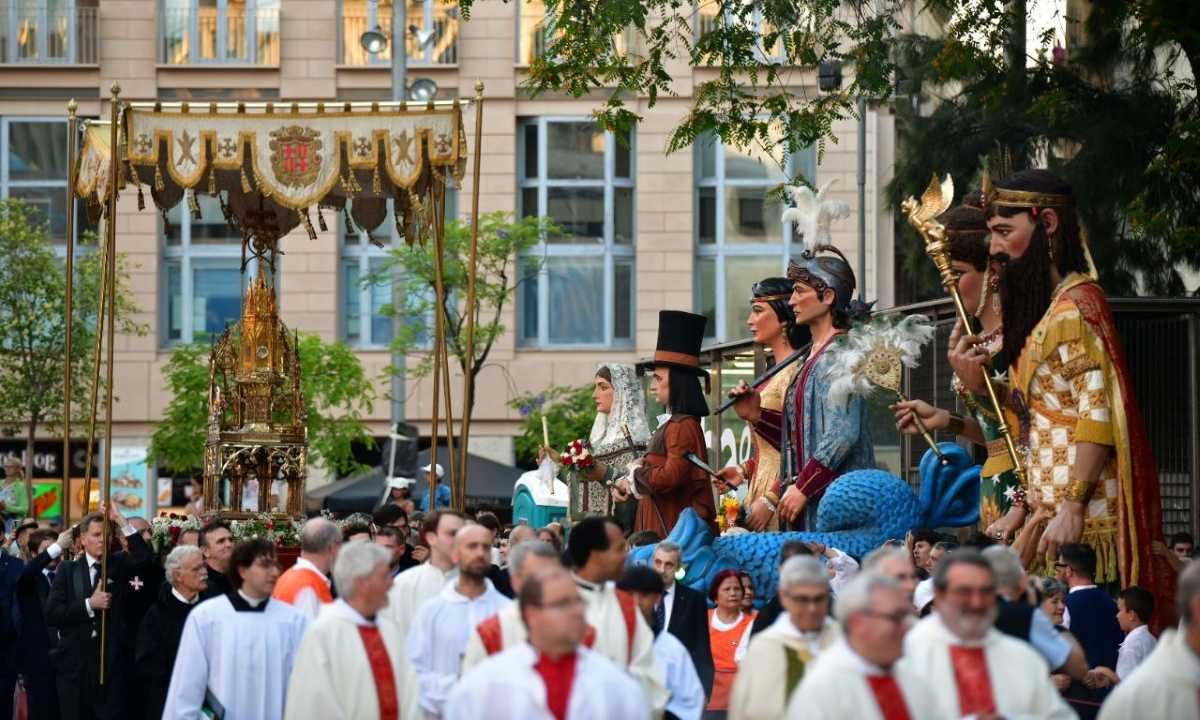
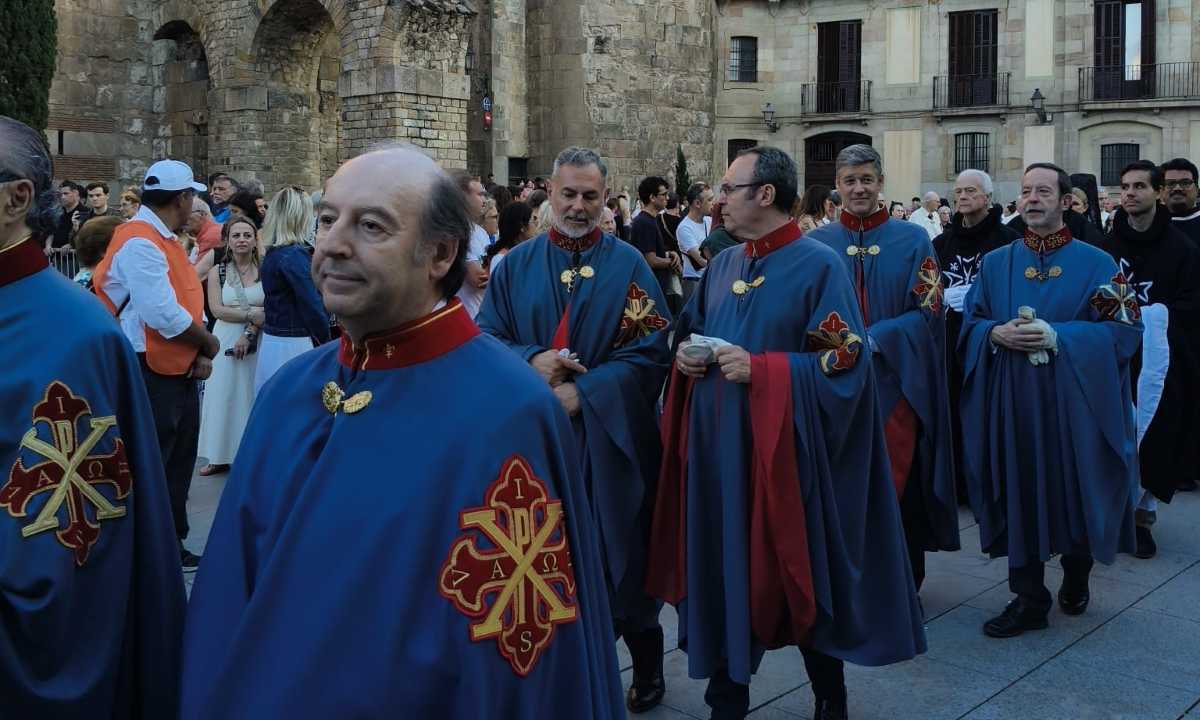
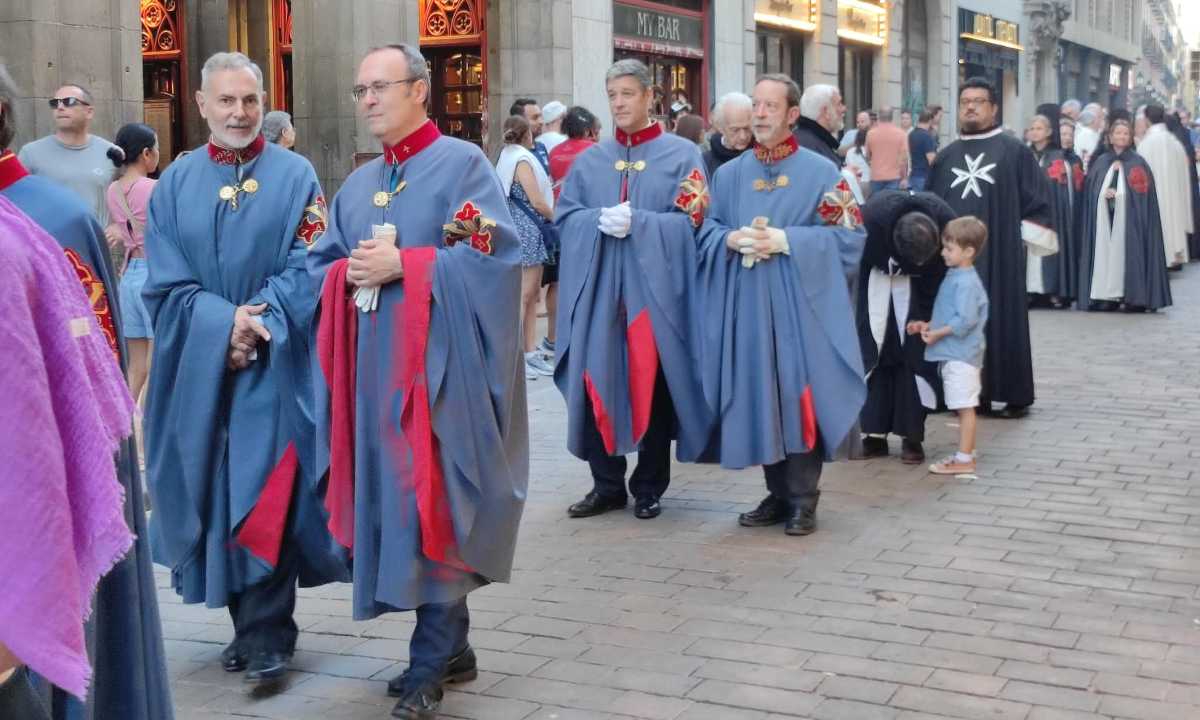
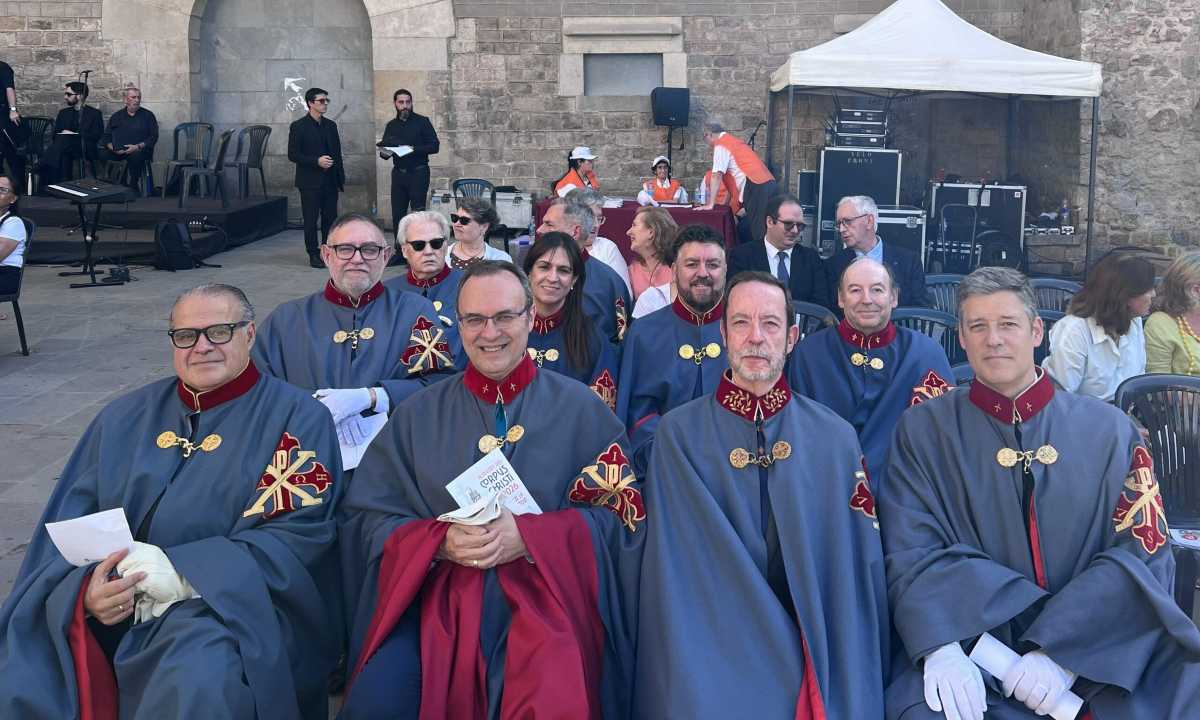
The Catalonia Delegation attended, once again, the Holy Mass celebrated on the esplanade of the Holy Metropolitan Cathedral Basilica of the Holy Cross of Barcelona, as well as the subsequent procession through the city streets to celebrate the solemnity of Corpus Christi.
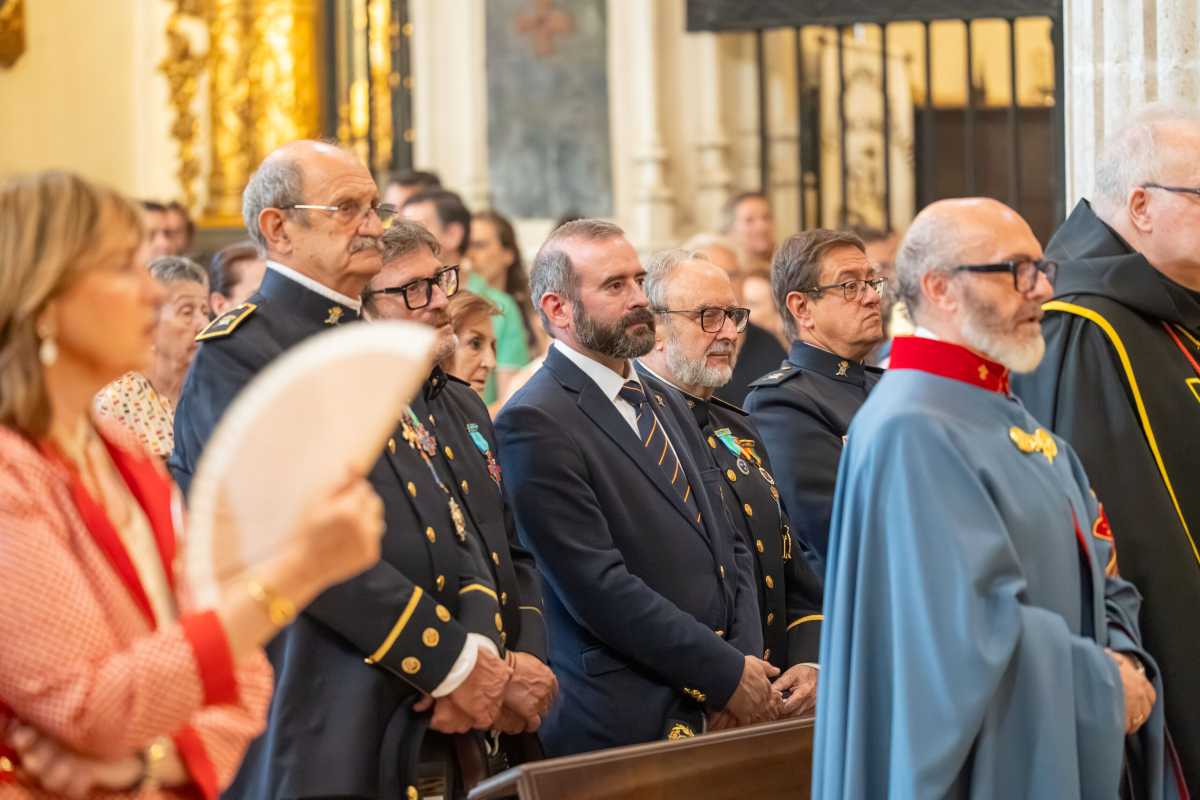
The knights, dames, novices, and families of the Delegation who participated in the Sacred Rites previously gathered in the Chapel of the Visitation of the Cathedral, the canonical seat of the Order in Catalonia. Honoring the gracious annual invitation of the Right Reverend Cathedral Chapter, they took their places in the section reserved for invited Orders and Corporations.
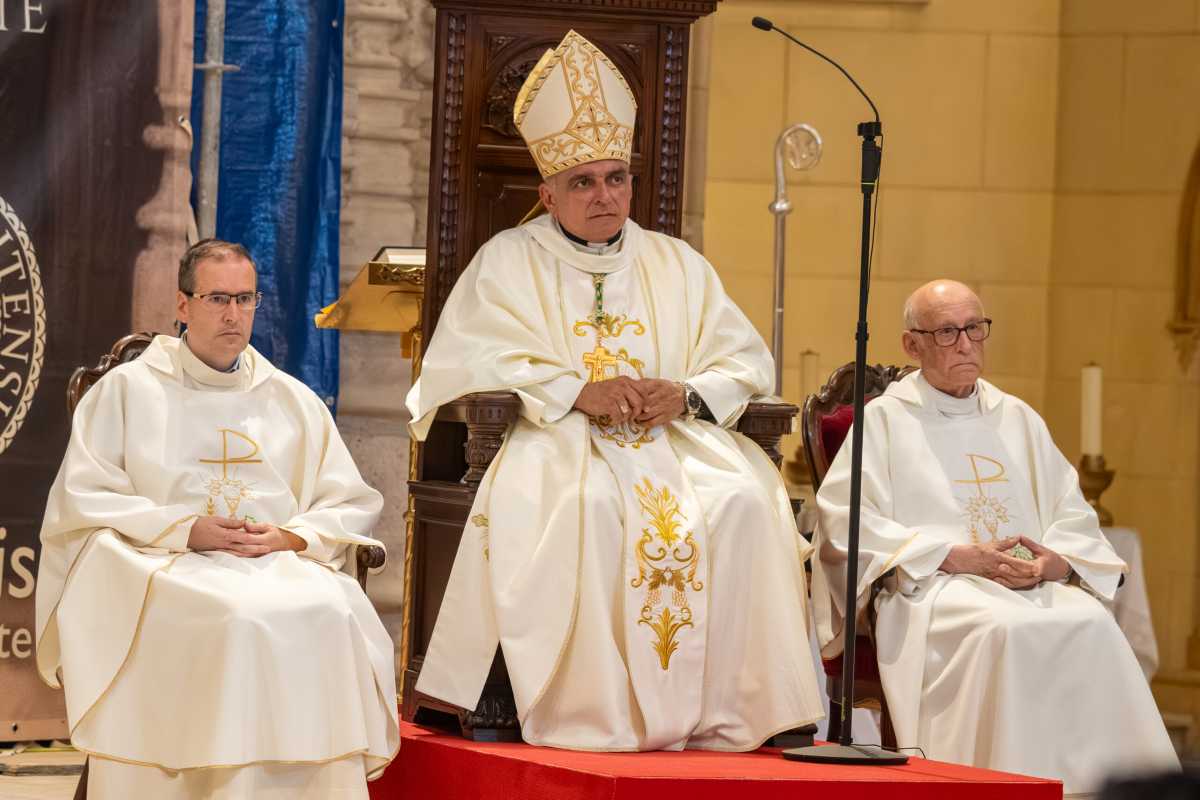
The liturgical celebration was presided over by the Father Santiago Bueno Salinas, Dean of the Chapter of the Holy Metropolitan Cathedral Basilica of Barcelona, whose closeness and friendship toward this Delegation were cordially acknowledged.
The Corpus Christi procession in Barcelona, documented since 1320, is the oldest in Spain and one of the oldest in Europe. In it, the Sacramental Body of Our Lord is venerated in a Gothic monstrance that rests upon the historic silver throne of King Martin the Humane, a tradition observed since at least the 15th century. The monstrance is crowned by the double crown of Queen Violant and encircled by a ceremonial belt of Gothic metalwork of royal provenance, enriched with precious stones donated over the centuries by various devotees—most notably a diamond offered by Philip IV in 1626.
The Barcelona celebration of Corpus Christi is also distinguished by the presence of the tradition of l’ou com balla (the dancing egg), a Eucharistic allegory documented since the 15th century. In various ornamental fountains across the city, which are profusely decorated with flowers, a bowl of cherries is placed to symbolize the Eucharistic chalice. Atop this, an empty egg dances without falling, sustained by the water jet, in allusion to the consecrated Host and the Body of Christ present in the Eucharist.
In this way, the Catalonia Delegation renewed its participation in one of the oldest, most solemn, and most emblematic celebrations of the city, uniting its testimony of faith with a tradition deeply rooted in the liturgical and devotional history of Barcelona.
The Celebration and Procession of Corpus Christi in Albacete
Corpus Christi in Albacete is a living festival that has changed and evolved over time. In antiquity, the Corpus procession was organized by the now-extinct “Confraternity of the Most Holy Sacrament,” founded in the 17th century and based in the Parish of San Juan. From the Corpus processions of the 17th and 18th centuries, the use of rushes, esparto grass, marjoram, and cloves stands out, used to adorn both the church and the streets. This entire floral display was complemented by fireworks, illuminations, the ringing of bells in all the belfries of what was then a town, and the sounding of the handbells by the altar boys positioned next to the triumphal carriage upon which the monstrance paraded.
Today, the Cathedral Chapter organizes the Holy Mass and the Corpus Christi procession in the city. A highlight along the processional route is the presence of altars built in honor of Jesus in the Blessed Sacrament by several of the city’s confraternities.
The Processional Monstrance of Corpus Christi was crafted by the Murcian master Don Bernardo Muñoz in the 16th century (1581–1583). The templete (shrine) is a piece of classicist silversmithing created around 1960. The current shrine, which houses the Monstrance during the processional parades, is a silver piece consisting of two structures: the first has a square base, and the second, which is smaller with a circular base, is crowned by an image of the Risen Christ.
The presence of the Constantinian Delegation at this commemoration constitutes a meaningful expression of the Order’s historic commitment to the promotion of Eucharistic worship and support for the major celebrations of the Church. Through this, it renews its vocation of service to the faith, tradition, and Christian culture—fundamental pillars of its identity and its actions at the service of the ecclesial community.