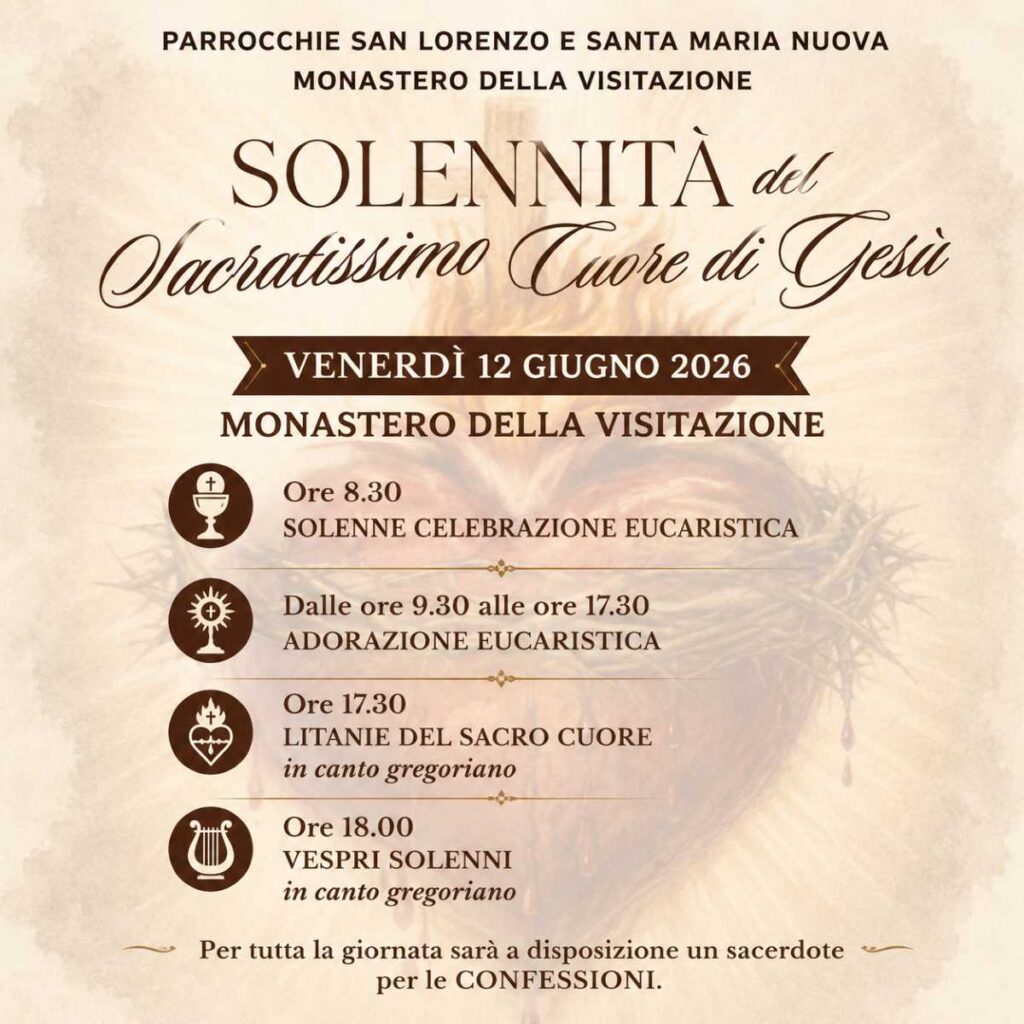
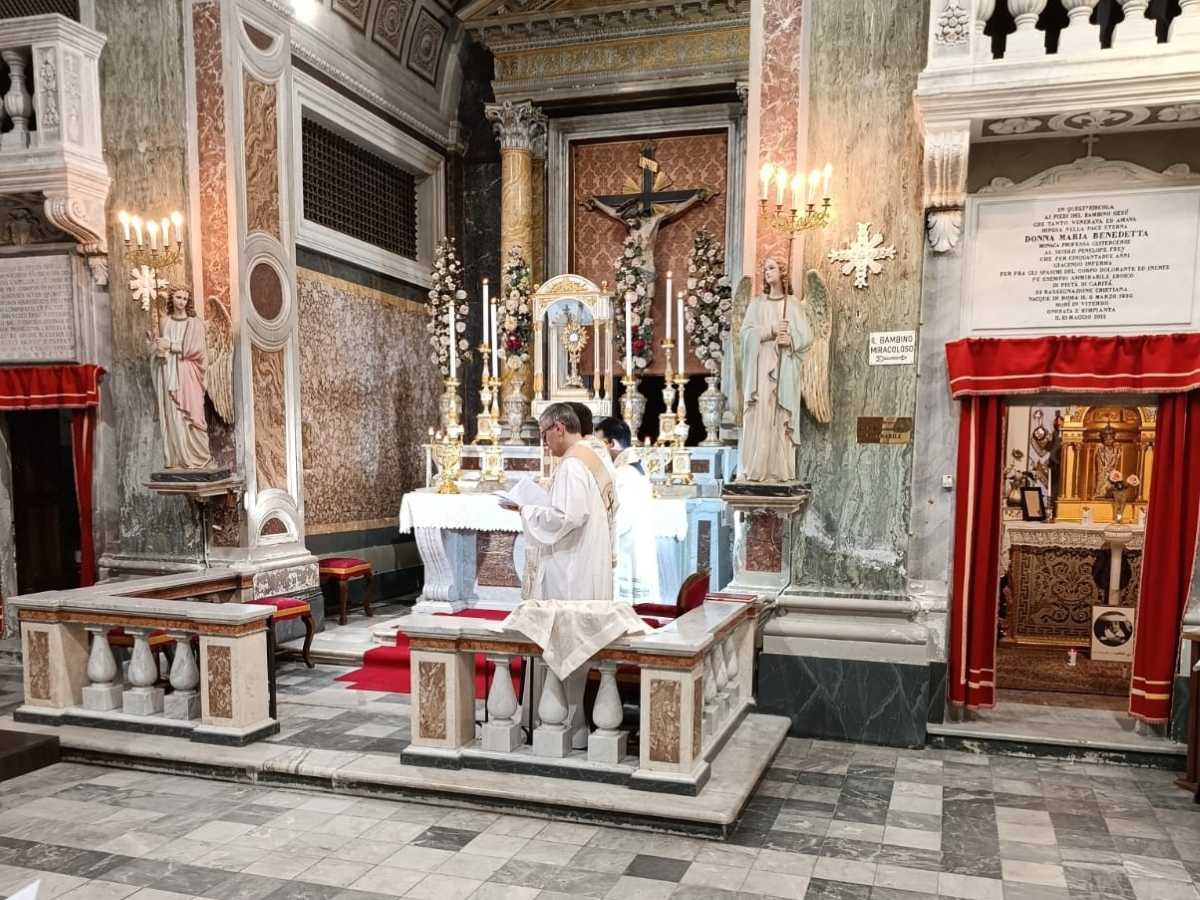
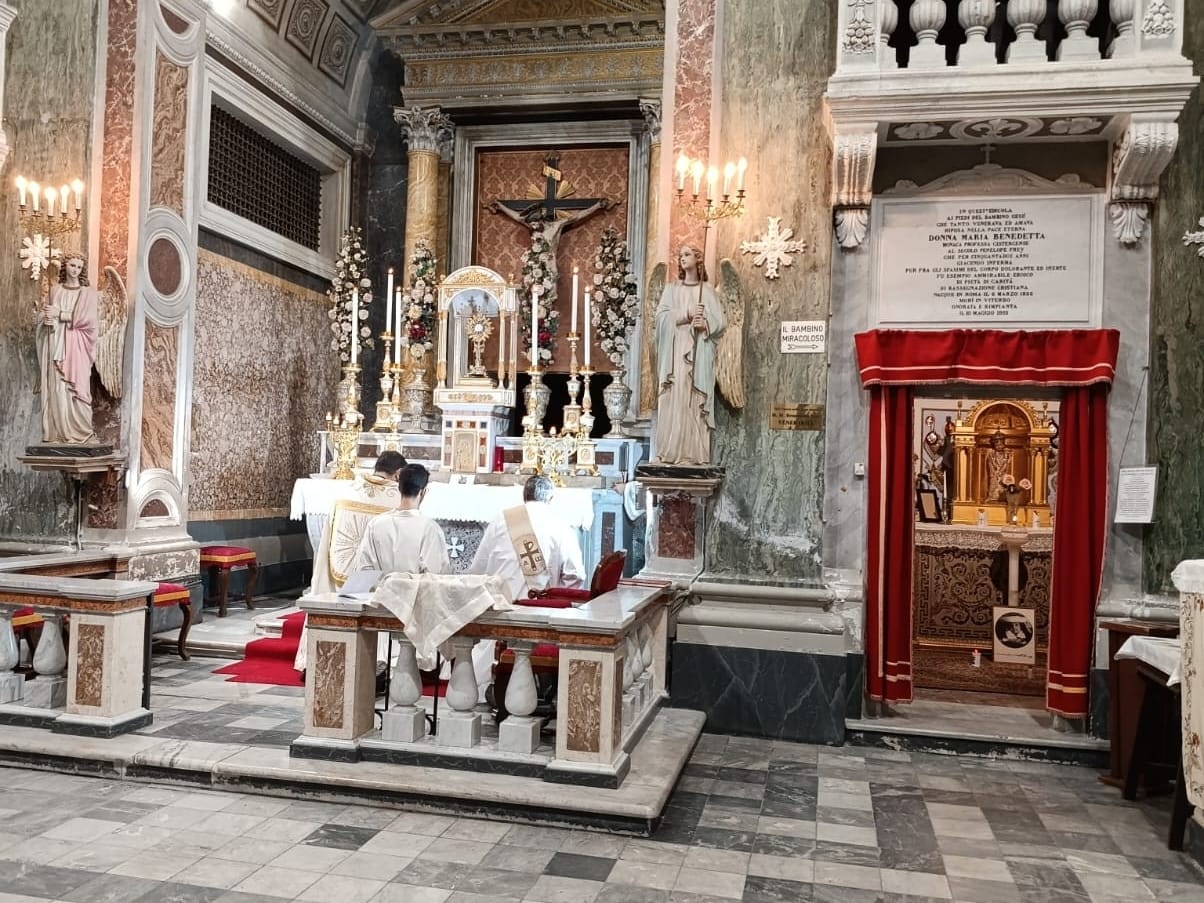
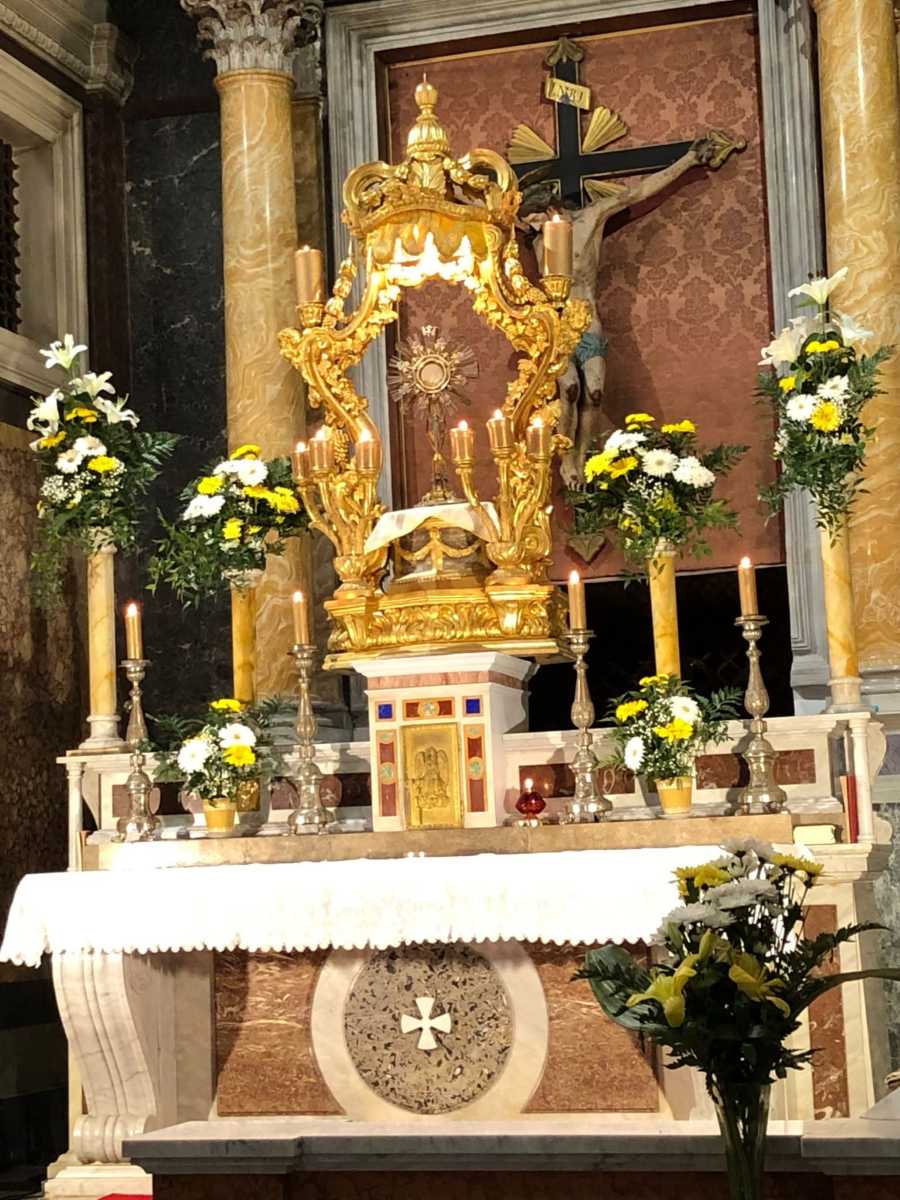
A representation from the Tuscia and Sabina Delegation of the Sacred Military Constantinian Order of Saint George, led by the Delegate—Nob. Atty. Roberto Saccarello, Knight Grand Cross of Jure Sanguinis with Gold Star—participated on Friday, June 12, 2026, at 6:00 PM, on the Solemnity of the Most Sacred Heart of Jesus, in the Second Vespers celebrated in the church of the Cistercian Monastery of the Visitation of Mary Most Holy, known to the residents of Viterbo as the “Monastery of the Duchess,” in the heart of Viterbo’s historic center.
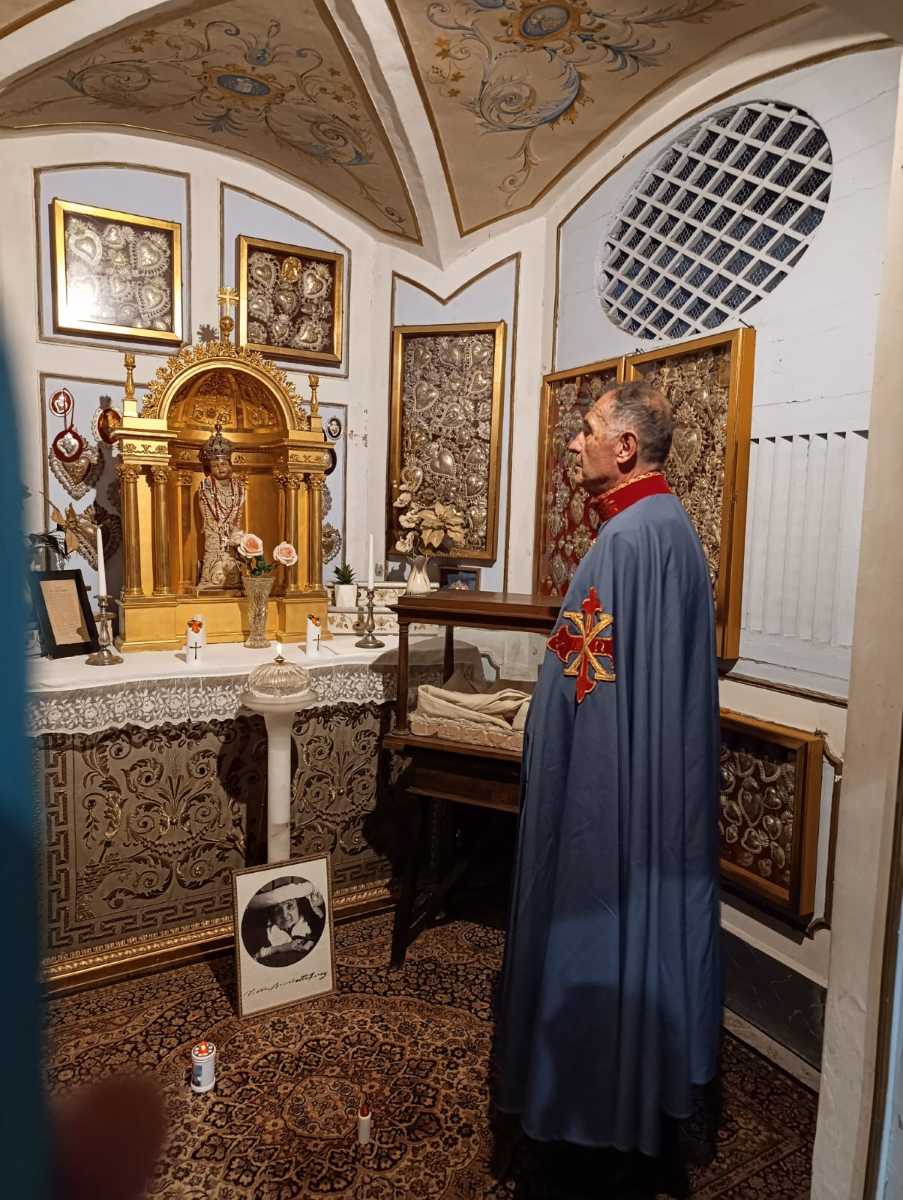
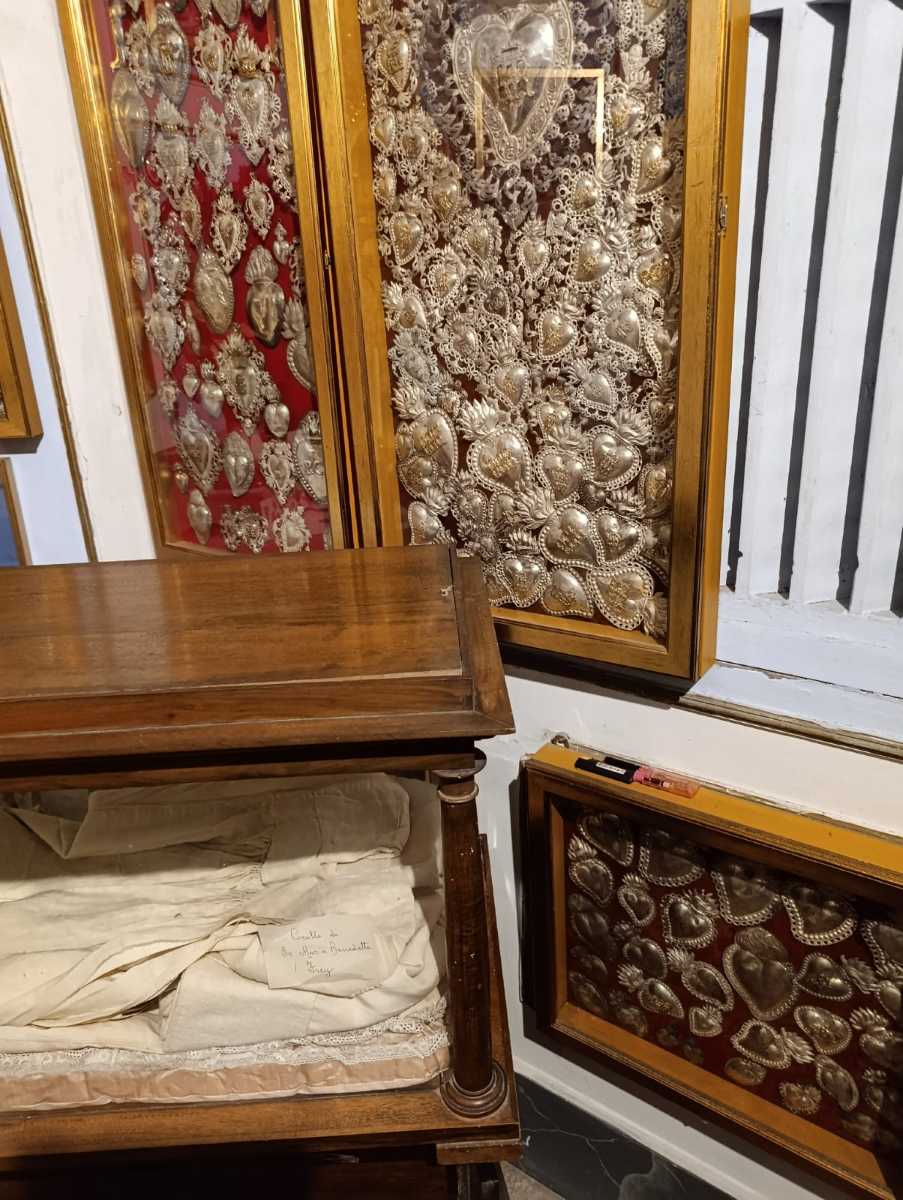
The solemn celebration of Vespers was presided over by Father Nicola Migliaccio, Parish Priest of Santa Maria Nuova and San Pellegrino, assisted by Deacons Father Vincenzo Mirto and Father Federico Fiorenza. The choir was directed by Father Luigi Fabbri, Vicar General of the Diocese. The Sacred Rite was preceded by the recitation of the Litany of the Sacred Heart and concluded with the Eucharistic Blessing. Subsequently, the Constantinian Knights gathered in prayer in the Chapel of the Infant Jesus, which houses the remains of the Venerable Servant of God, Sister Maria Benedetta Frey, a Cistercian nun who fulfilled her vocation through a life of physical suffering. Her heroic acceptance of her debilitating illness came after a journey of prayer and abandonment to divine Providence, which led her not only to welcome the disease but also to live her suffering by offering it to the Lord with joy and in a spirit of evangelization.
This year’s gathering took on a particular significance due to the recent cessation of the Cistercian monastic presence. Due to a severe vocational crisis, there are no longer any resident nuns, bringing an end to a nearly five-century-long monastic presence that has profoundly shaped the religious, cultural, and spiritual history of the City of Viterbo.
This change does not mean the closure of the Church of the Visitation as a place of worship, which will continue to house the tomb of the Venerable Servant of God Maria Benedetta Frey—a site of devotion for numerous faithful—but rather denotes the end of the resident contemplative community. For Viterbo, this represents a significant loss, as the Monastery of the Duchess constituted an uninterrupted testimony to women’s contemplative life and monastic prayer that has accompanied the life of the local Church for nearly five centuries.
The conclusion of the Cistercian nuns’ presence represents not only the end of a long religious experience but also the loss of a precious historical and cultural heritage. For generations of the faithful, the Monastery of the Visitation has been a place of prayer, silence, and Adoration, contributing significantly to the spiritual life of the Church in Viterbo.
Therefore, the participation of the Tuscia and Sabina Delegation in the Vespers of the Most Sacred Heart of Jesus is framed by a feeling of profound gratitude toward a community that for centuries testified to the centrality of contemplative life and Eucharistic devotion—values deeply rooted in the spiritual tradition of the Church.
An Ancient Cistercian Presence in the Heart of Viterbo
The presence of the female branch of the Cistercian Order in Viterbo dated back to 1276, when the nuns occupied the Convent of Santa Maria del Paradiso. After approximately three centuries, they were transferred to the new foundation commissioned by Girolama Orsini Farnese, Duchess of Parma, Piacenza, and Castro, from whom the complex derives the name by which it is still known today: the Monastery of Mary Most Holy of the Visitation, commonly called “of the Duchess.”
Girolama Orsini Farnese, wife of Pier Luigi Farnese (son of Pope Paul III), retired to the territories of the Duchy of Castro following the tragic assassination of her husband in Piacenza in 1547, where she developed the project to found a major monastic center. In 1553, she began construction of the monastery, acquiring the area of the ancient Palace of Cardinal Raniero Capocci along with numerous houses and orchards located near the ancient Church of San Bartolomeo, which was also incorporated into the new convent complex.
The Foundation of the Monastery of the Duchess
On January 1, 1557, the Duchess, through her son Cardinal Ranuccio Farnese, obtained a Papal Brief from Pope Paul IV authorizing the establishment of the monastery and granting perpetual patronage (juspatronato) to the Dukes of Castro. Twenty-five lay sisters from the Castro territory immediately entered the new monastery, and Cistercian nuns were called from Florence to guide the community, establishing the spiritual tradition that continues to this day.
Subsequently, it was decided to demolish the pre-existing Church of San Bartolomeo to build a new sacred structure. The laying of the first stone took place on July 28, 1607, while the consecration of the church was celebrated on May 25, 1614, by Cardinal Tiberio Muti, Bishop of Viterbo.
During the course of 2006, the church underwent major restoration interventions sponsored by the Bishop’s Curia of Viterbo, aimed at preserving and enhancing one of the city’s most significant religious complexes.
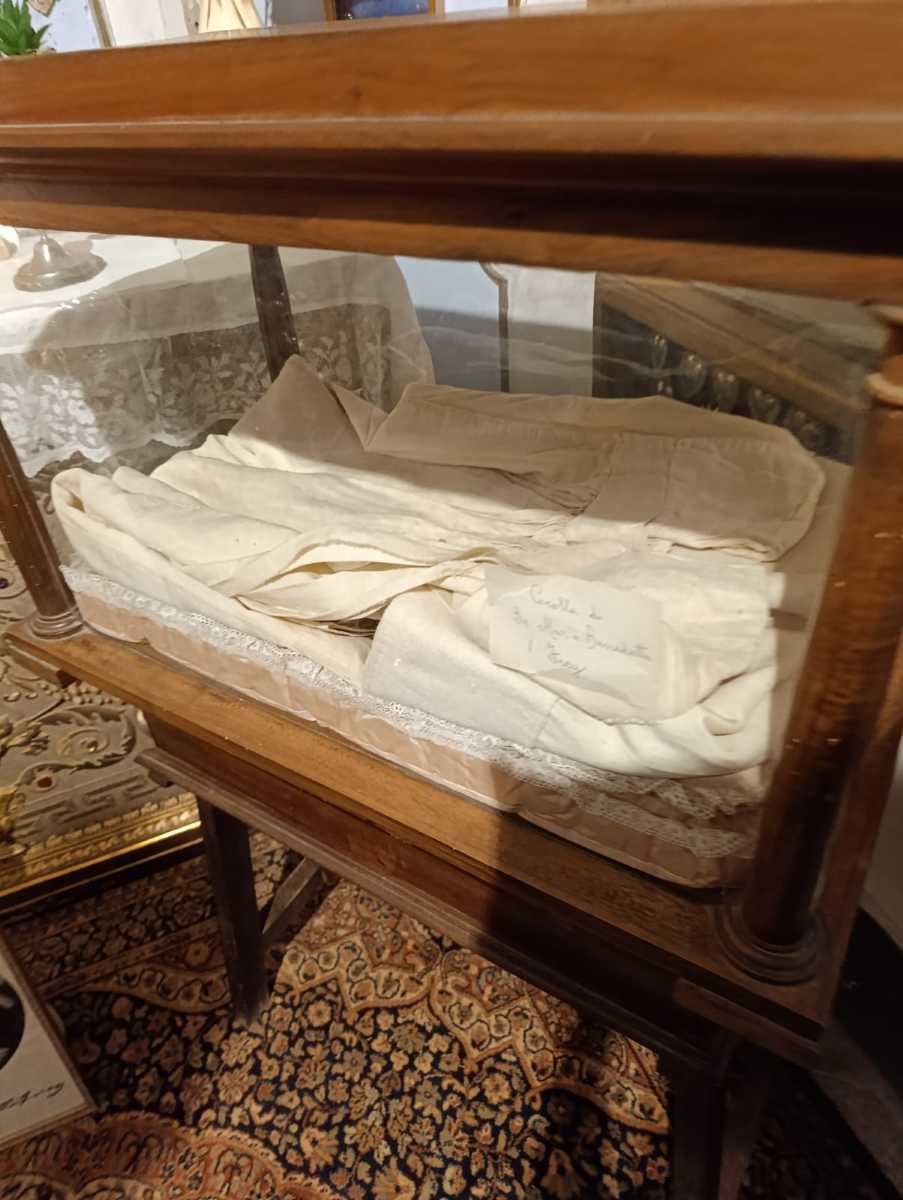
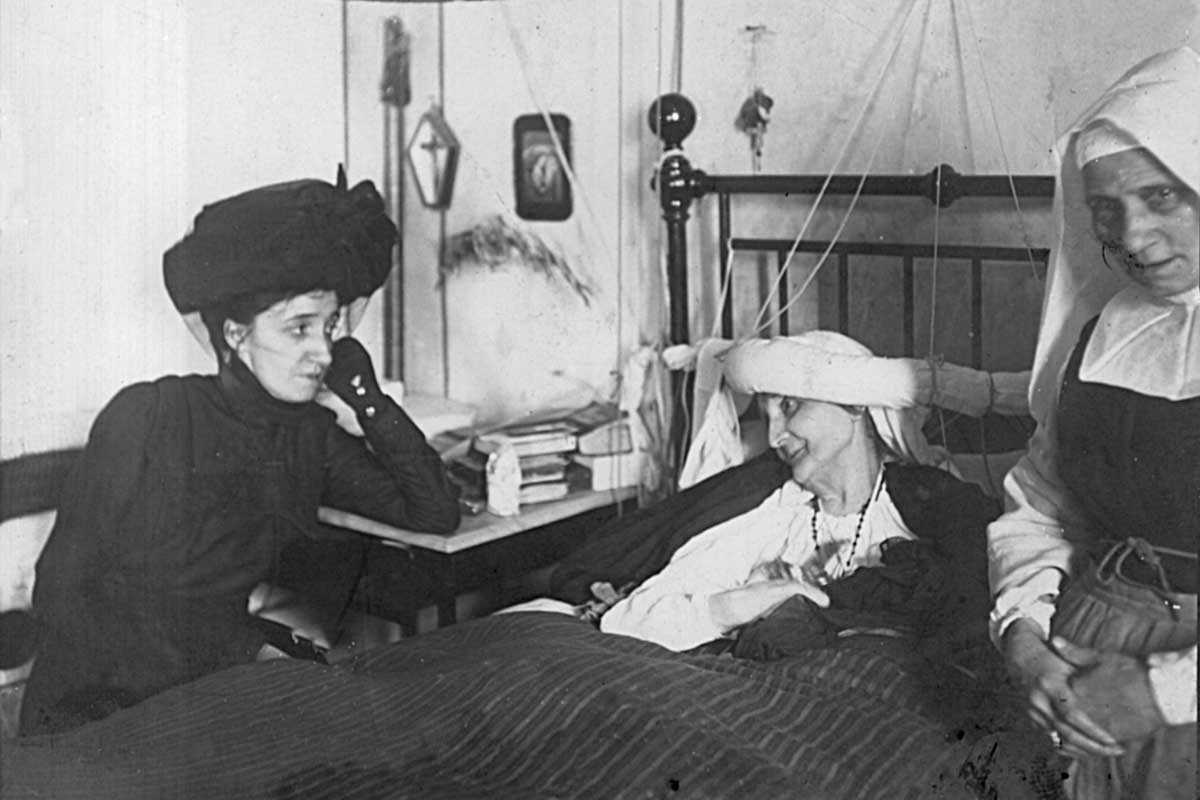
Living within the Monastery of the Duchess was the Venerable Servant of God, Sister Maria Benedetta Frey (born Ersilia Penelope in Rome in 1836 and died on May 10, 1913, at the age of 77). She passed away after 52 years of infirmity, spent completely bedridden. The fame of the ailing nun extended far beyond the monastery walls, spreading throughout Italy and Europe. Through the intervention of the Bishop, Pope Pius IX granted permission for Holy Mass to be celebrated inside her cell, with the altar positioned directly opposite her bed. In that very room, baptisms and confirmations were celebrated, and a priestly ordination even took place.
The entire city attended her funeral, and her body was initially buried in the Viterbo cemetery. On December 10, 1927, her remains were translated back to the Monastery of the Duchess and laid to rest in the small Chapel of the Infant Jesus.